
 العربية
 Español
 中文
中文 Deutsch
 Français
 Português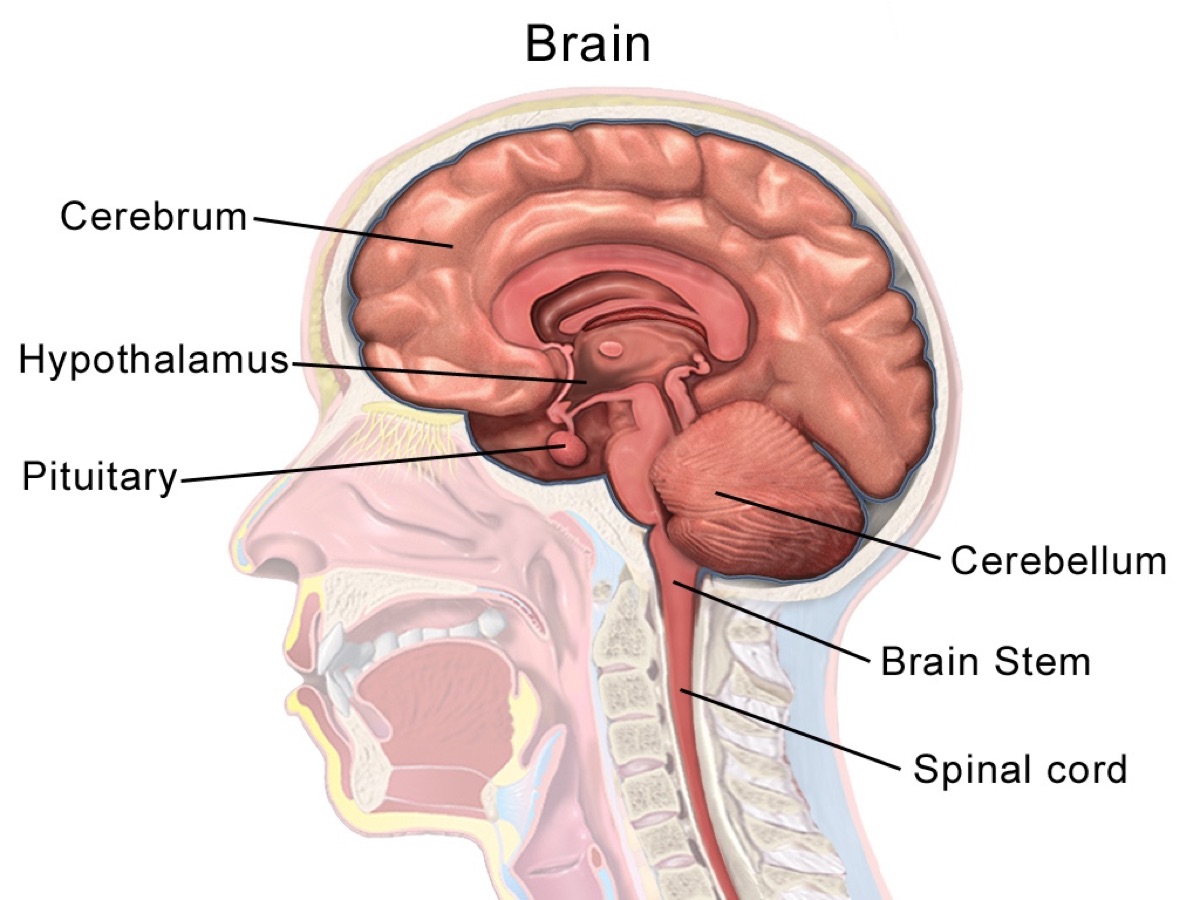
Right now, your brain is doing something quietly miraculous: it is letting you read these words while ignoring everything else - the hum of a device, motion at the edge of your vision, a dozen competing thoughts. That ability to lock onto what matters and tune out the rest is called selective attention, and it is so fundamental that we barely notice it. Now a team at Johns Hopkins University has found where a key part of it lives - and the answer is a surprise. It is not in the sophisticated prefrontal cortex that usually gets the credit. It is a tiny cluster of neurons buried in one of the oldest corners of the brain.
- What: a small group of inhibitory (GABAergic) neurons that act as the brain's built-in focus filter
- Where: an evolutionarily ancient region of the brainstem, wired into the superior colliculus - not the prefrontal cortex
- How they proved it: in mice, briefly silencing the neurons made the animals hyper-distractible; switching them back on the next day fully restored focus
- Deep roots: the same circuit is shared by birds, fish, turtles and frogs - attention is far older than the human cortex
- Why it matters: the failure mode looks exactly like a hallmark of ADHD, and the neurons likely exist in humans too
- Published: Nature Communications, June 24, 2026
1. The cortex was getting all the credit
For decades, the textbook story put attention near the top of the brain. The prefrontal cortex - the seat of planning and reasoning, most elaborate in primates - was assumed to be the conductor deciding where to point our focus. But there was always a puzzle: animals with no elaborate prefrontal cortex at all, from birds to fish, are superb at attending to the right thing at the right time. Something older had to be doing the work.
That is exactly what the Johns Hopkins team, led by postdoctoral fellow Ninad Kothari and senior author Shreesh Mysore, set out to find. As Kothari put it, “We were able to identify an evolutionarily old region in the brainstem which affords this ability.”
2. The experiment: a focus switch you can flip
The team trained mice on a visual selective-attention task: lock onto a target in the center of a screen, ignore distractions appearing off to the side, and earn a reward for responding to the right thing. Then they used precise tools to temporarily quiet a small cluster of inhibitory neurons deep in the brainstem - and watched what happened to the animals' focus.
The change was dramatic and specific. With the neurons silenced, mice that had easily ignored even strong distractions suddenly could not filter out even faint, weak ones. Crucially, this was not a problem with their eyesight or their movement - the breakdown was purely about attention: the ability to compare competing inputs and prioritize the one that mattered. And it was completely reversible.
| Focus-filter neurons | What the mouse does |
|---|---|
| ON (normal) | Locks onto the target, ignores even strong distractions |
| Silenced | Hyper-distractible - cannot tune out even faint distractions |
| Switched back on (next day) | Focus fully restored - ignores distractions again, even very strong ones |
As Mysore summarized the reversal: “A hallmark of ADHD is that even faint distractors draw attention away - and that’s exactly what we see here when these neurons are silenced, but the very next day, when the neurons are turned back on, the same animal can ignore distractors again, even very strong ones.”
3. An ancient “selection engine”
What makes the finding striking is how old this machinery is. These inhibitory neurons sit in a deep brainstem region tied to the superior colliculus - a hub for orienting the eyes and attention - and the same basic circuit shows up across the vertebrate family tree, in birds, fish, turtles and frogs. In other words, evolution worked out how to pay attention hundreds of millions of years before it layered our higher reasoning on top.
“This part of the brain is like an attentional selection engine,” Mysore said. “It helps solve the question: What is the most important information I should pay attention to right now?” Because animals without an elaborate cortex still attend beautifully, the result reframes attention as something rooted in the brain’s ancient core - not a luxury of the primate cortex.
4. Why this matters for ADHD (and maybe autism)
The everyday version of “the focus filter is offline” is familiar to millions of people: small, low-stakes distractions that keep capturing attention. That is a defining feature of ADHD - and it is precisely what appeared in the mice when these neurons fell quiet. The hopeful part is the flip side: because the deficit was fully reversible in the lab, the circuit is a concrete, identifiable target rather than a vague abstraction.
“All the evidence to date suggests that these neurons exist in humans too,” Mysore noted. If they do the same job in people, measuring or tuning their activity could eventually inform more targeted approaches to attention disorders - and the researchers suggest the work may have implications for autism as well.
What we still don’t know
- It was done in mice. The circuit is evolutionarily conserved and likely present in humans, but that still needs to be confirmed directly in people.
- This is a discovery, not a therapy. The study maps where the focus filter lives and that it is causal - it is not a treatment for ADHD or autism.
- How it talks to the rest of the brain. Exactly how this ancient brainstem hub coordinates with the cortex to steer attention is the next frontier.
Still, the headline is a genuinely lovely one: the power to concentrate - so easy to feel like a modern struggle - turns out to run on some of the oldest wiring we carry. Find the switch, and you can begin to understand the whole system.
Sources
- Kothari, Banerjee, Zhang, You & Mysore. “Evolutionarily old brainstem neurons are required for the control of selective spatial attention.” Nature Communications (2026), DOI 10.1038/s41467-026-72340-9
- EurekAlert / Johns Hopkins University: Scientists discover ancient neurons that control attention
- ScienceDaily: Scientists discover ancient brain cells that help block distractions
- MedicalXpress: Scientists discover ancient neurons that control attention
Curated by Jerry Cards - jerrycards.com. We research the week’s most consequential science, tech, and health news so you don’t have to. More at jerrycards.com/news. Image: sagittal brain illustration by BruceBlaus, Wikimedia Commons, CC BY-SA 4.0.