
 العربية
 Español
 中文
中文 Deutsch
 Français
 Português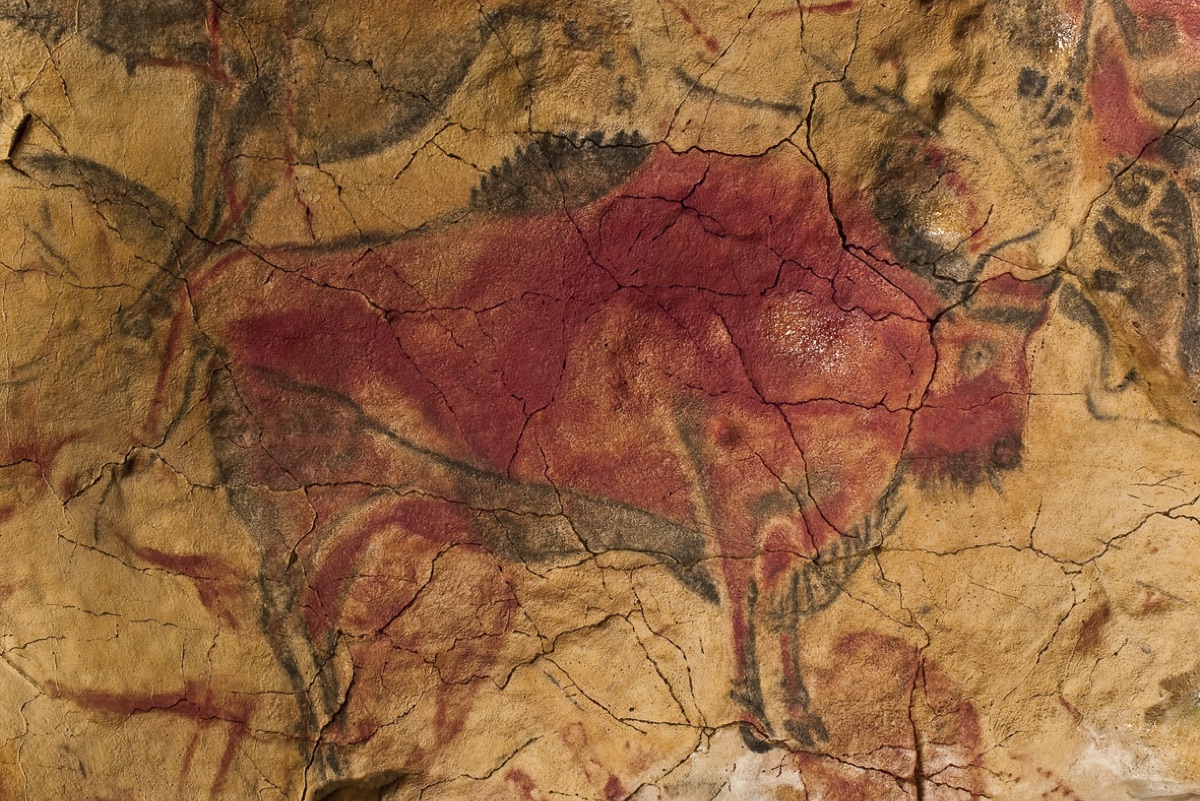
For tens of thousands of years, people pressed their hands to cave walls, blew pigment across the stone, and painted animals by firelight. It turns out they may have left something behind besides the art: themselves. In a world first, scientists have recovered authentic ancient human DNA directly from the walls of decorated caves - no skeleton required. The traces were faint, rare, and at least two thousand years old, but they were unmistakably human, and at least one came from beneath a painted red mark on the rock.
The work, published in Nature Communications, was carried out by a team from the Max Planck Institute for Evolutionary Anthropology in Leipzig together with the Spain-and-Portugal-led First Art project. It opens a genuinely new way to ask who was present in humanity's most famous painted caves - and to do it without disturbing a single brushstroke.
- The first: ancient human DNA recovered directly from cave walls and rock art
- Where: 11 caves on the Iberian Peninsula (Spain & Portugal), including Altamira, Escoural, and Covaron
- Sampling: 54 samples taken from 24 rock-art panels
- Hits: 5 samples yielded authentic ancient human mitochondrial DNA
- Age: at least 2,000 years old - and likely far older
- The people: 3 predominantly female, 1 predominantly male, 1 undetermined; 2 placed within the Western hunter-gatherer lineage of ancient Iberia
- Journal: Nature Communications, 2026 - DOI 10.1038/s41467-026-74234-2
1. A genuine first
Ancient DNA has transformed how we understand human history, but it has always depended on physical remains - a bone, a tooth, a sediment layer packed with shed genetic material. Painted caves are a different problem entirely. Their archaeological deposits are precious and protected, the art is irreplaceable, and you cannot exactly take a biopsy of a 20,000-year-old masterpiece. So the question of who actually made or visited the art has largely stayed out of reach for genetics.
This study asked whether the walls themselves might hold the answer. When people leaned on the rock, breathed against it, or blew and rubbed pigment onto the surface, did they deposit traces of their own DNA that could survive across millennia? To find out, the team sampled both pigmented and bare wall surfaces - along with sediments, bones, and even a prehistoric bird-bone tube thought to have been used as an airbrush to spray paint - and ran them through cutting-edge ancient-DNA extraction and sequencing.
2. The five samples that spoke
Of the 54 samples drawn from 24 rock-art panels, five returned authentic ancient human DNA. They came from two of the caves, and notably, most did not come from the paintings themselves but from the bare rock around and beneath them.
| Sample | Where | What it was |
|---|---|---|
| 1 | Escoural Cave (Portugal), Panel 11 | A calcite crust with pigment underneath |
| 2-3 | Escoural Cave, a deeper gallery | Unpigmented cave-wall surfaces |
| 4-5 | Covaron Cave (northern Spain) | Unpigmented surfaces beside rock art |
That the bare walls preserved DNA at all was the surprise. As senior author Matthias Meyer, a paleogeneticist at the Max Planck Institute, put it: “We were surprised to see that ancient DNA can be recovered not only from pigmented samples, but also from cave walls that show no visible evidence of past human activity.”
3. A direct human touch
The most striking result is not just that the DNA was human, but how it appears to have gotten there. Two of the five positive samples contained no detectable animal (faunal) DNA whatsoever - a rare and telling pattern. Caves are usually awash in the genetic residue of bats, rodents, and other animals, so a sample that is human and essentially nothing else points to DNA deposited directly by a person: through saliva, breath, or skin contact with the wall.
That fits neatly with how some of this art was actually made. As archaeologist and rock-art specialist Hipolito Collado Giraldo of Spain's Extremadura government noted, “We know that some of the art was applied to cave walls by blowing or rubbing pigment onto the surface.” Blowing pigment - to make a hand stencil, for instance - is practically a recipe for leaving your own saliva on the rock. The remaining three samples carried a mix of human and animal DNA, consistent with DNA that arrived more indirectly.
In a cave, the default expectation is a messy soup of many species' genetic material. When a sample comes back human and clean, the simplest explanation is that a human deposited it directly and recently enough (in deposition terms) to dominate the signal - exactly what you would expect from a person leaning in close and breathing on the wall as they worked.
4. So who were they?
Even from these faint traces, the genetics carried real information. Most of what survived was mitochondrial DNA, which is inherited down the maternal line and is far more abundant in a cell than nuclear DNA, making it the usual first thing to survive. Across the five samples, three were predominantly female, one predominantly male, and one could not be determined.
Two of the unpigmented samples from Covaron preserved enough nuclear DNA - the genome-wide kind that reveals deep ancestry - to place those individuals firmly within the Western hunter-gatherer genetic cluster, the population that ranged across ancient Iberia. In other words, the walls did not just say a human was here; in two cases they began to say which human lineage was here.
5. Cave walls as genetic archives
The promise is what makes this exciting. Skeletal remains are rare in painted caves, and the deposits that do exist are too valuable to dig through casually. If the walls themselves can preserve the DNA of the people who used them, archaeologists gain a way to ask who was present - their biological sex, their ancestry, perhaps one day their relationship to one another - while leaving both the art and the sediment untouched.
First author Alba Bossoms Mesa, a doctoral researcher at the Max Planck Institute, framed the limits and the leap in a single sentence: “Although we cannot directly connect the traces of ancient human DNA we have found to the creation of rock art, this is the first evidence for human DNA preservation on cave walls for thousands of years.” Meyer was blunter about where it leads: “This is just the beginning. We now know that cave walls are genetic archives of past human presence.”
What we still don't know
- Who, exactly? The team is careful to say the DNA proves human presence at the wall - not that it belonged to the artists. Connecting a specific person to a specific painting is the next, much harder goal.
- How old, exactly? The recovered DNA is at least ~2,000 years old and likely older, but cave walls were visited across many millennia, so dating a trace to a particular era is its own challenge.
- How often will it work? Five hits out of 54 samples is a real signal, but preservation is patchy and depends on favorable conditions; this is a proof of concept, not a turnkey method.
- Maternal-only, for now. Most of the DNA recovered is mitochondrial, which traces only the maternal line; richer nuclear DNA survived in just two samples.
Why it matters
Rock art is one of the most intimate things our ancestors left us - a direct line to the imaginations of people who lived before writing, cities, or agriculture. For a century we could admire the work but only guess at the artists. This study suggests the answer may have been hiding in plain sight, on the very surfaces they touched. The caves, it turns out, may have been quietly keeping a record of everyone who came to leave their mark.
Sources
- Bossoms Mesa, A. et al. “Investigating ancient human DNA preservation on cave walls and in rock art,” Nature Communications (2026) - DOI 10.1038/s41467-026-74234-2
- Max Planck Society: Ancient DNA found on cave walls
- Phys.org: Human DNA can survive on cave walls for thousands of years
- National Geographic: In a first, scientists extract ancient human DNA from cave walls
- Discover: Ancient human DNA on cave walls could reveal who touched these sites
Image: the polychrome bison of Altamira cave, northern Spain (Museo de Altamira y D. Rodriguez, CC BY-SA 3.0) - one of the decorated caves in the study. Curated by Jerry Cards - jerrycards.com. We research the week's most consequential science, tech, and discovery news so you don't have to. More at jerrycards.com/news.