
 العربية
 Español
 中文
中文 Deutsch
 Français
 Português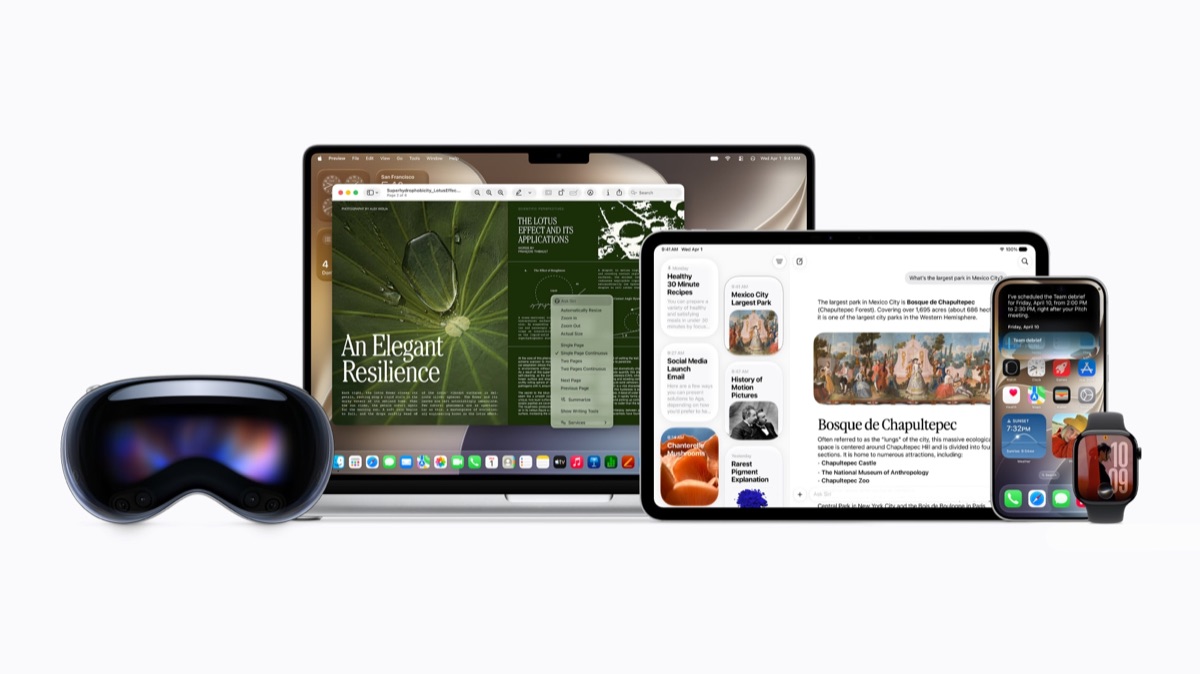
For seventy-six minutes on Monday morning, Apple tried to do three things at once: ship the Siri it promised two years ago, explain why that Siri is now built in collaboration with its oldest rival, and say goodbye to the chief executive who turned a $350 billion company into a $4 trillion one. By Tuesday's market close, investors had rendered a split verdict - a record all-time high during the keynote, followed by an 8.5% slide from that peak in about 27 hours.
The keynote streamed from Apple Park on Monday, June 8, 2026, at 10:00 a.m. PT (official runtime 1:16:13), opening a conference that ran June 8-12 with more than 100 sessions. Over 1,000 developers, designers, and students attended in person, and 350 Swift Student Challenge winners were honored. This piece breaks down everything that matters: what Siri AI actually is, what the Google deal does and does not mean, the regional and monetization fine print, the market reaction, and what changes for developers - with primary sources throughout.
- Six OS updates unified at version 27: iOS 27, iPadOS 27, macOS 27 “Golden Gate,” watchOS 27, tvOS 27, visionOS 27 - plus a developer preview of homeOS
- Headline announcement: Siri AI, a ground-up rebuild of Siri; user beta “later in 2026,” English first
- Apple Foundation Models are “custom-built in collaboration with Google and its Gemini models” - Apple's own words
- No new hardware; the closing slide listed 263 new features
- Developer betas June 8; public betas in July; free general release in fall 2026
- Tim Cook's final WWDC as CEO - John Ternus takes over September 1, 2026
- AAPL: record $317.40 intraday during the keynote, then roughly -8.5% from the peak by the June 9 close
1. Siri AI: The 2024 Promise, Shipped Two Years Late
Siri AI is not a feature update - it is a replacement. Apple's announcement (“Apple introduces Siri AI, a profoundly more capable and personal assistant”) describes a rebuilt assistant with:
- Multi-turn conversation with rich, card-based responses - you can go back and forth, refine, and interrupt
- Personal context: Siri AI can draw on your Messages, Mail, Photos, and third-party apps through an on-device semantic index (Spotlight) plus a new “App Toolbox” - Apple stresses this index lives entirely on the device
- Onscreen awareness: ask about whatever is currently on your screen
- Systemwide app actions: Apple's examples include “drafting an email from scratch, or editing and sharing a set of photos” - Siri executes inside apps rather than just opening them
- Live web knowledge, customizable voice expressiveness and pace, and systemwide auto-formatted dictation
- A dedicated Siri chatbot app on iPhone, iPad, and Mac (plus an Apple Watch app) with iCloud-synced conversation history
- Siri mode in Camera: point the camera at a plate of food and get nutrition information; Visual Intelligence expands to iPad, Mac, and Vision Pro
“Siri is now a profoundly more capable assistant that helps you find what you need and gets more done... It's also more conversational, so you can go back and forth like never before and get detailed, engaging answers.” - Mike Rockwell, the Apple VP who has led Siri since March 2025
The historical weight here is hard to overstate. Personal context, onscreen awareness, and in-app actions are the exact capabilities Apple announced at WWDC 2024, used to market the iPhone 16, delayed in March 2025, re-targeted to spring 2026, and never shipped. They now arrive two years late - and still as a beta. Tim Cook reportedly acknowledged as much, saying Apple Intelligence had “not yet delivered on everything we promised” and framing the rebuild as “not just an upgrade; it's a reinvention” (reported by The Next Web; the lines do not appear in Apple's releases).
2. The Google Deal: What Is Confirmed, What Is Reported
On the record. Apple's press release states that the new capabilities “are powered by the next generation of Apple Foundation Models, custom-built in collaboration with Google and its Gemini models for deeply integrated Apple Intelligence experiences.” Craig Federighi said on stage:
“This year, we embarked on a deep collaboration with Google, leveraging the technologies behind their Gemini family of models.”
A joint Apple-Google statement goes further: “Apple and Google have entered into a multi-year collaboration under which the next generation of Apple Foundation Models will be based on Google's Gemini models and cloud technology,” adding that Apple “determined that Google's AI technology provides the most capable foundation.”
Reported, not confirmed. Bloomberg's Mark Gurman reported (November 2025) that Apple is paying Google roughly $1 billion per year for a custom ~1.2-trillion-parameter Gemini mixture-of-experts model - about 8x larger than Apple's previous 150-billion-parameter cloud models. Gurman's original report had the model running on Apple's Private Cloud Compute servers; a later report from The Information said it instead runs on Nvidia Blackwell B200 GPUs in Google Cloud because it ran too slowly on Apple's own hardware. Apple confirmed the partnership at WWDC but has never confirmed the price, the parameter count, or the hardware. Gene Munster estimates the multi-year deal could total up to $5 billion. Apple reportedly evaluated OpenAI and Anthropic before choosing Google.
How the privacy architecture works
Apple's answer to the obvious question - does my data go to Google? - is a three-tier routing architecture:
- Tier 1 - on device: simple tasks run on the Apple Neural Engine and never leave the device
- Tier 2 - Private Cloud Compute (PCC): moderate requests go to Apple's own verifiable servers
- Tier 3 - Google Cloud: only the heaviest reasoning reaches the Gemini-based model - processing is stateless, personally identifiable information is stripped at the PCC layer before queries are forwarded, and the contract bars Google from training on Apple user data
AppleInsider adds an important nuance: Apple's foundation models contain “none of the models that Google deploys to their customers” - the collaboration worked through training and distillation, not a Gemini app wearing an Apple badge. Federighi's framing on stage: “We believe privacy in AI is non-negotiable.”
Per AppleInsider's breakdown, there are five models: AFM Core and AFM Core Advanced (on-device; Advanced is multimodal with a sparse architecture), AFM Cloud (the PCC base model), AFM Cloud Image (image generation), and AFM Cloud Pro (the agentic, Gemini-collaboration model in Google Cloud). Developer analyses estimate the on-device models at ~3B dense and ~20B sparse (activating only 1-4B parameters per prompt via instruction-following pruning) - Apple has not officially disclosed any parameter counts, so treat the numbers as secondary-source estimates.
3. The Fine Print: Waitlists, Soft Paywalls, and Two Missing Markets
The features impressed; the caveats moved the stock.
- No firm ship date. Siri AI arrives “as a beta later this year,” English first, with more languages “quickly” after. In iOS 27 developer beta 1 it sits behind an explicit waitlist (Settings > Siri > Join Waitlist).
- Apple's first soft AI paywall. Siri AI is free, but features that rely on “powerful server models” - image generation is named explicitly - carry daily usage limits, and “increased access is available with most iCloud+ subscription plans” (Apple's wording). The actual limits are undisclosed.
- The EU does not get it on iPhone. Apple published a standalone release - “Due to DMA, Siri AI delayed in EU for iOS 27 and iPadOS 27” - covering iPhone, iPad, and (via the paired-iPhone dependency) Apple Watch. Siri AI remains available in the EU on macOS 27 and visionOS 27. Federighi: “We're deeply disappointed that our EU users won't have Siri AI on iPhone or iPad when we share our new software releases later this year.”
- The EU fired back. On June 9, European Commission spokesperson Thomas Regnier rejected Apple's framing: “The decision not to roll out Siri AI in the EU is Apple's and Apple's only,” adding that “absolutely nothing in the DMA prohibits Apple from introducing new products.” Per the Commission, Apple did not submit a compliant technical solution but instead requested a blanket exemption from DMA interoperability obligations for at least 18 months - “That's not an option.” More than 450 million EU iPhone and iPad users are affected, with no timeline given.
- China gets nothing yet. Siri AI and the new Apple Intelligence features are unavailable in China while Apple works through regulatory requirements.
- Rivals stay - as options. ChatGPT integration survives, and new “Extensions” in iOS, iPadOS, and macOS 27 let users set Claude, ChatGPT, or others as their default assistant. Gemini, however, is now the system's cloud backbone.
The legal shadow nobody on stage mentioned
Two storylines hang over the deal. First, antitrust: a federal court found in 2024 that Google illegally maintained its search monopoly partly through default-placement deals with Apple, and the remedies order explicitly prohibits Google from exclusive contracts for Gemini distribution. The new arrangement layers a reported ~$1B/year AI pipeline on top of the existing ~$20B/year search-default relationship. Vanderbilt antitrust professor Rebecca Haw Allensworth argues it “essentially creates a second exclusive pipeline” routing the complex AI queries of some two billion devices through a single dominant provider. No enforcement action has been filed, and Apple's counterargument writes itself: Extensions let users pick Claude or ChatGPT as their assistant.
Second, OpenAI: Fortune reported in May that OpenAI is considering legal action against Apple, believing the 2024 ChatGPT-Siri integration - a no-cash barter deal - delivered far less than promised. WWDC 2026 formalized ChatGPT's demotion from headline partner to one extension among several.
4. OS 27: What Else Shipped
Design. Liquid Glass - 2025's divisive translucent redesign - was refined rather than replaced. A user-adjustable transparency slider (ultra-clear to fully tinted) replaces last year's binary toggle, with improved diffusion, contrast, and refraction, edge-to-edge macOS sidebars, and tighter corner radii. Hacker News' verdict on the slider was pointed: shipping it “shows just how bad” the original was.
Performance (Apple's claims). Apps launch up to 30% faster, photos load up to 70% faster after capture, AirDrop is up to 80% faster, external-drive transfers up to 5x faster, and Vision Pro Wi-Fi up to 3x faster, with CPU scheduler optimizations extending to older iPhones. These are vendor benchmarks - independent testing will follow the public betas.
AI in the everyday apps. An agentic Passwords app uses Apple Intelligence with Safari to visit sites and fix weak or compromised passwords for you; Safari adds AI tab organization and Notify Me page-change monitoring (restocks, price drops); Messages drafts smart replies in your own writing style; Phone gains “Call Context” pulled from Mail and Messages mid-call; Photos adds Reframe (perspective correction) and Extend (scene expansion); Image Playground turns photorealistic on Private Cloud Compute - with Google DeepMind SynthID watermarking on AI-generated and AI-edited images; Shortcuts and Calendar accept natural language; Wallet can build passes from screenshots; and Maps Flyover gets an AI-enhanced rebuild.
Parental controls - the sleeper announcement. Child accounts become mandatory for users under 13 (available to 18); Safari defaults to Ask to Browse approval for kids; Screen Time gains per-category Time Allowances (Social Media, Entertainment, Games, Other); Communication Safety expands to blur gore and violence, on by default for under-18s; and kids can get an Apple Watch without an iPhone. From July, every App Store app must self-classify its category and disclose social-media integration under an updated age-rating questionnaire. Dr. Sumbul Desai: “every child is unique. That's why we build simple and intuitive tools, based on expert guidance, to let parents tailor their kids' digital journey.”
homeOS and the autumn hardware tell. Apple previewed homeOS, a new operating system for the upcoming HomePad smart-home hub - effectively a HomePod with a 7-inch display on an A18 chip that runs FaceTime without an iPhone. Shipping the OS preview ahead of hardware is deliberate: developers get expanded HomeKit and Matter APIs before the HomePad's anticipated autumn 2026 launch, reportedly alongside an updated HomePod mini, a refreshed Apple TV 4K, and a Face ID security camera. Add the foldable-iPhone references (“foldState,” “angleDegrees”) already found in iOS 27 beta code, and September's event is shaping up to be hardware-heavy.
Health and services. Cycle Tracking adds perimenopause and menopause support with cycle-deviation notifications; Fitness+ adds a “Strong Through Menopause” program; iCloud Shared Albums finally reach full resolution - and Android and Windows; Apple Sports expands to 170+ countries; Apple Music adds lyrics translation and pronunciation.
5. Compatibility: Who Gets Left Behind
| OS | Supported | Dropped |
|---|---|---|
| iOS 27 | iPhone 11 and later (unchanged - unusually broad) | None |
| iPadOS 27 | Adds persistent menu bar, iPhone-app resizing | iPad Pro 11″ (1st gen), 12.9″ (3rd gen), Air 3, iPad 8, mini 5 |
| macOS 27 “Golden Gate” | Apple silicon only - first ever; includes the $599 MacBook Neo | The last four Intel Macs (MacBook Pro 16″ 2019, MacBook Pro 13″ 2020, iMac 2020, Mac Pro 2019); reportedly the last release with full Rosetta 2 |
| watchOS 27 | Series 9/10/11, Ultra 2/3, SE 3 (S9-class chip minimum) | Series 8 and older, Ultra 1, SE 2 - the biggest Watch cut ever (Apple's initial omission of Series 9 from the list was an error; Series 9 is supported) |
| tvOS 27 | Apple TV 4K gen 2 and later | Apple TV HD (2015), Apple TV 4K gen 1 (2017) |
| visionOS 27 | Both Vision Pro models | None |
Running the OS is not the same as running Siri AI, which requires iPhone 15 Pro/16 or later, M1+ iPads or the A17 Pro iPad mini, M1+ Macs or the A18 Pro MacBook Neo, Vision Pro, and Watch Series 9+/Ultra 2+/SE 3 (paired). The most powerful on-device model (AFM Core Advanced) needs an iPhone 17 Pro or iPhone Air, or an M4 iPad with at least 12GB of unified memory. That gap between “supported” and “full experience” is the engine of Morgan Stanley's upgrade-cycle thesis below.
6. For Developers: The Quiet Revolution
- SiriKit is formally deprecated. App Intents is now the only path into Siri AI, with a 2-3 year migration window - unmigrated apps are effectively invisible to the new assistant. App Intents gains App Schemas, a View Annotations API, Spotlight semantic-index integration, and a testing framework.
- The Foundation Models framework opens up. A new LanguageModel protocol lets any provider back a session - Anthropic and Google ship official Swift packages, so Claude or Gemini can swap in without code changes. Private Cloud Compute inference offers a 32,000-token context (vs 8,192 on-device), and developers in the App Store Small Business Program with under 2 million first-time downloads get PCC inference free (with per-user daily limits). The framework goes open source later this summer - for Apple, a remarkable sentence.
- Xcode 27 ships on-device AI code completion running entirely on the Neural Engine (source never leaves the machine), opt-in agentic coding with Anthropic, OpenAI, and now Google models, MCP support with 20+ built-in tools, and seven Apple-authored Agent Skills in the open SKILL.md format.
- Swift 6.4 and roughly 14-15 new frameworks arrive, including CoreAI (custom on-device models, PyTorch conversion - it “powers Siri under the hood”), MediaIntelligence, and VisualIntelligence. Apple's memory-safety push continues: the TrueType font engine and QUIC transport have been rewritten in Swift.
- App Store: cross-developer subscription Bundles and Suites, volume purchasing for businesses and schools, and - a milestone - the Mac App Store accepts Apple-silicon-only binaries. No commission changes.
7. The Market Verdict: A Record High and a Sell-Off in the Same Day
| When | AAPL | Move |
|---|---|---|
| June 8, intraday (during keynote) | $317.40 | Record all-time high |
| June 8, close | $301.54 | -1.89% (S&P 500 +0.30% that day) |
| June 9, close | $290.55 | -3.64% (-8.5% from the peak, ~27 hours later) |
| June 10, close | $291.58 | +0.35% (stabilizing) |
| June 11, pre-market | $292.93 | +0.46%; market cap $4.28T, trailing P/E ~35 |
Why sell a keynote this substantive? Gene Munster of Deepwater - who called it the most important WWDC in 43 years beforehand - put it simply: “Craig didn't give any timing updates on the new Siri... Apple provided no comfort that it would actually be ready in September.” And: it is “still a demo, they overpromised with demos two years ago.”
| Firm / Analyst | Rating / Target | Take |
|---|---|---|
| Wedbush - Dan Ives | Outperform, $400 | Apple “finally unveiled an AI strategy that will unleash the true monetization opportunity for AI”; AI could add $75-100/share |
| Morgan Stanley - Erik Woodring | Overweight, $330 → $360 (bull case $440) | ~1.3 billion existing iPhones cannot run full Siri AI - a historic upgrade-cycle setup |
| BofA - Wamsi Mohan | Buy, $380 | “Privacy-centric AI approach that can scale” |
| JPMorgan - Samik Chatterjee | Overweight, $325 | Fall US Siri launch is a holiday-quarter positive |
| UBS | Neutral, $296 | AI premium already priced in |
| Rosenblatt - Barton Crockett | Neutral, $276 | “This succeeds more as a defensive step than an offense maneuver that can stimulate meaningful sales” |
| KeyBanc - Brandon Nispel | Sector Weight | Updates “lacking... a slightly better standalone Siri, which is still worse than other LLMs” |
TipRanks consensus after the event: average target $320.83, with 18 Buy, 10 Hold, 1 Sell. The strategic framing making the rounds: after three keynotes in three weeks (Google I/O, Microsoft Build, WWDC), Microsoft owns orchestration, Google owns the model, and Apple owns distribution - roughly 2 billion devices - and rents the model. A widely circulated WSJ ranking placing Apple 56th in AI readiness among large caps sharpened the skeptics' case.
8. Tim Cook's Goodbye
The keynote's final minutes belonged to the outgoing CEO. “On a personal note,” Cook said, “some of the greatest highlights of my time as CEO have been events like this.” He called the job the honor of a lifetime, wiped away a tear, and received a standing ovation from the Apple Park crowd. Tellingly, Cook is not quoted in a single WWDC26 press release - the baton has already passed to Federighi, Eddy Cue, and Susan Prescott in Apple's official voice, and to John Ternus - 50 years old, a 25-year Apple veteran, and Apple's eighth CEO - on September 1.
| Cook era metric | August 2011 | 2026 |
|---|---|---|
| Market cap | ~$350B | $4.28T (~12x; $1T in 2018, $2T in 2020, $3T in 2022, $4T in 2025) |
| Stock return | - | ~+2,000%, vs ~+503% for the S&P 500 |
| Annual revenue | $108B (FY2011) | $416B+ (FY2025) |
What We Still Don't Know
- The deal terms. The $1B/year price, the 1.2T parameter count, and the Nvidia B200 hosting are reporting (Bloomberg, The Information), not Apple or Google statements.
- The Siri AI ship date. “Later in 2026” is the only commitment - the single biggest driver of the post-keynote sell-off.
- The daily usage limits. Apple has not disclosed the caps, or precisely which iCloud+ tiers raise them (“most” plans, per Apple).
- EU and China timelines. None given on either.
- Independent performance numbers. The 30%/70%/80% speed claims are Apple's own; public betas in July will bring real benchmarks.
What to Watch Next
- July: public betas at beta.apple.com - first independent tests of the speed claims and Liquid Glass changes
- September: the fall release of the version-27 family, the iPhone event (with foldable references already in beta code), and John Ternus's first weeks as CEO
- Autumn: the HomePad and the homeOS hardware wave
- “Later in 2026”: the Siri AI user beta - the date that decides whether Morgan Stanley's upgrade-cycle thesis or Rosenblatt's defensive-step framing wins
- Ongoing: the EU standoff, China approval, the reported OpenAI dispute, and antitrust scrutiny of the Gemini pipeline
Sources
- Apple Newsroom: Next generation of Apple Intelligence, Siri AI, and more · Apple introduces Siri AI · Apple Intelligence everyday experiences · Siri AI delayed in EU · Child safety features
- Joint Apple-Google statement · Bloomberg: Gurman on the $1B/year Gemini deal
- TechCrunch: everything announced · MacRumors recap · Engadget · AppleInsider: foundation models architecture
- TechTimes: EU Commission response · Fortune: OpenAI weighs legal action · Antitrust analysis of the Gemini-Siri deal
- AAPL price history (StockAnalysis) · Benzinga: analyst reactions · Morgan Stanley price-target raise
- Bloomberg: Cook's 15-year legacy by the numbers · Apple developer session: Foundation Models framework
Previously in this story: our Google I/O 2026 preview set up the three-keynote AI gauntlet that WWDC 2026 just closed.
Curated by Jerry Cards - jerrycards.com. We research the week's most consequential tech and science news so you don't have to.