
 العربية
 Español
 中文
中文 Deutsch
 Français
 Português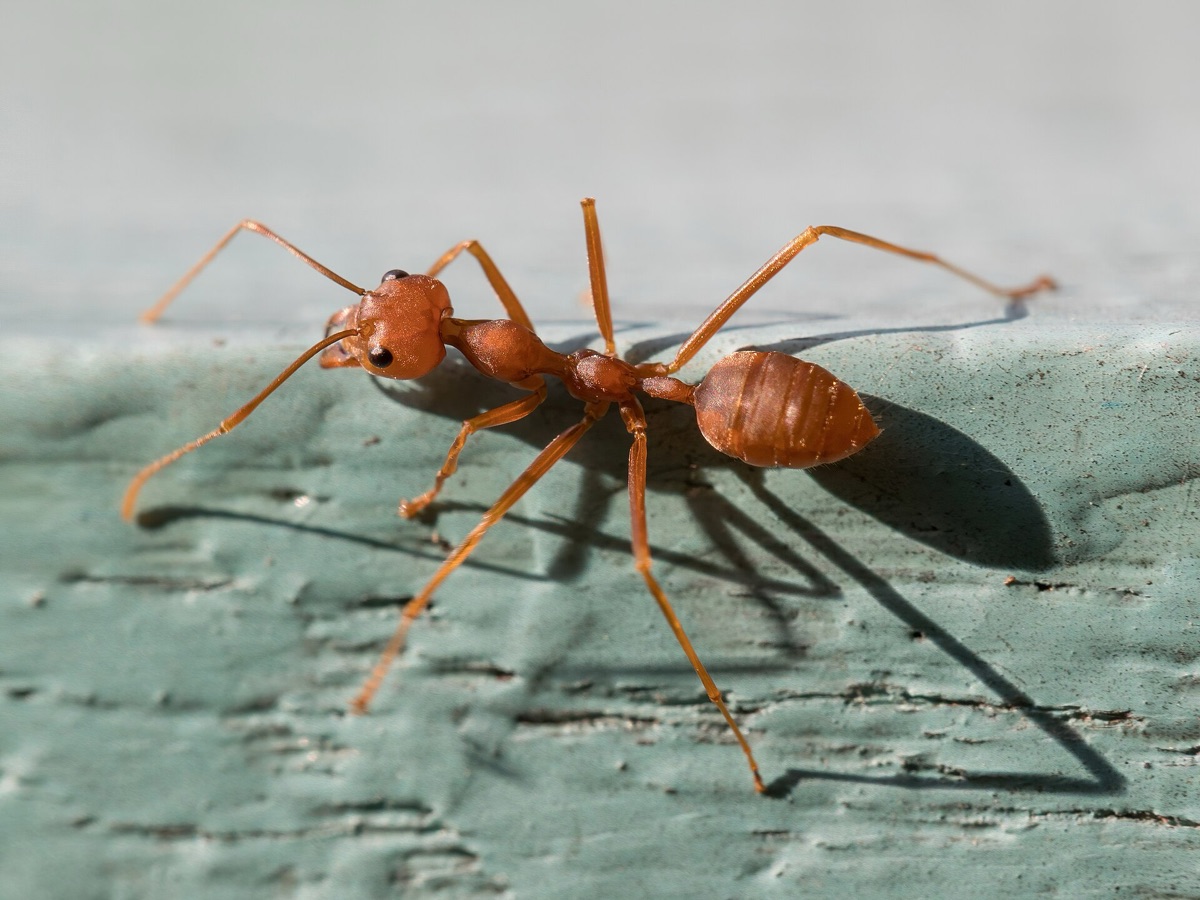
In the rainforests of northern Queensland lives a spider the size of a grain of rice that has, in effect, invented the catapult. It spends hours weaving a cone of silk, draws it back like a bow, and waits. When the right ant wanders into range, the trap fires in a blink - about 42 milliseconds - tearing the ant off the ground and slinging it skyward at more than 130 times the force of gravity. Scientists who described the animal in Current Biology have given it a fitting nickname: the ballista spider, after the ancient torsion-powered missile launcher.
What makes it remarkable is not just the violence of the launch but the precision of the design - and the fact that this spider has bet its entire existence on catching one, and only one, kind of prey.
- What: a newly described, as-yet-unnamed spider, genus Propostira
- Where: rainforest of northern Queensland, Australia (near Cooktown)
- The trick: a spring-loaded silk snare - a biological catapult
- Build time: up to 4 hours, bundling 15-60 silk tension lines into a cone
- Firing time: about 42 milliseconds
- The launch: the ant is flung ~28-30 cm upward at over 1,300 m/s² (>130× gravity)
- Prey: a single species - the green tree ant, Oecophylla smaragdina
- Record: the most powerful spring-actuated spider web ever measured
- Published: Current Biology, 22 June 2026 (DOI 10.1016/j.cub.2026.04.066)
1. How the trap is built
The hunt begins long before any ant appears. The spider descends more than 50 centimeters from its web on a dragline and lays an anchor point on a leaf, a twig, or the forest floor. Then it gets to work. Over a stretch of up to four hours, it spins and gathers between 15 and 60 separate silk tension lines, drawing them together into a slender cone near the ground.
This is the loaded spring. Each strand is stretched taut, storing elastic energy in the silk itself. Held in place by the spider, the whole cone sits cocked and ready - a drawn bow that can wait patiently for its target. The spider keeps one end clenched in its jaws, poised to release.
2. The 42-millisecond strike
When a green tree ant makes contact with the trigger, the cone detaches and the bundled lines snap back like a released bowstring. The entire event is over in roughly 42 milliseconds - several times faster than the human eye can register a change. Still gripping the trap, the spider and its silk haul the ant off the surface and fling it upward into the web, as far as about 28 to 30 centimeters away, where it is trapped.
The numbers behind that snap are extraordinary. The ant is accelerated at more than 1,300 meters per second squared - over 130 times the acceleration of gravity, far beyond anything a car, a sprinter, or even a fighter jet can deliver. The researchers calculated the snare's peak power output and found it dwarfs what muscle alone could ever produce, and exceeds every other spring-actuated spider web on record - including the celebrated slingshot spider, which famously catapults its entire body at prey.
Muscle is wonderful, but it has a speed limit: it can only release energy so fast. To move faster than muscle allows, many animals cheat physics with a trick called power amplification. They contract slowly to load energy into a biological spring - stretched tendon, a latch, or here, taut silk - and then release the latch so all that stored energy unloads in an instant. Because power is energy divided by time, squeezing the same energy into a far shorter burst multiplies the peak power enormously. The mantis shrimp's hammer punch, the trap-jaw ant's snapping mandibles, and the flea's jump all run on the same principle. The ballista spider's snare is one of the most extreme spring-and-latch systems ever found in the animal kingdom - and the first known to be built entirely from a web.
3. One spider, one prey: the ultimate specialization
Most predators keep their options open. The ballista spider does the opposite. It is the only spider known to hunt a single prey species - the green tree ant, Oecophylla smaragdina, a famously aggressive, abundant weaver ant of tropical Australia and Asia. The team described this single-minded focus as the ultimate specialization.
Why go to such extremes for one ant? Part of the answer is in the ant's feet. Green tree ants have sticky adhesive pads that grip surfaces hard. As lead author Professor Ajay Narendra explained, the contraction of the bundle of tension lines has to overcome a force of many times the ant’s body weight to lift it. A gentle tug would never peel the ant loose; only a violent, spring-powered yank can. The extreme trap and the extreme prey appear to have shaped each other - a tidy example of how a specialized challenge can drive a specialized, almost over-built solution.
4. Who found it, and where
The spider was first spotted by Greg Anderson, a biomedical researcher, spider taxonomist, and photographer, in the rainforests near Cooktown in far north Queensland. The detailed study of how the snare works was led by Professor Ajay Narendra and postgraduate researcher Pranav Joshi at Macquarie University in Sydney, with co-senior author Dr. Jonas O. Wolff of the University of Greifswald in Germany and collaborator Daniele Liprandi. The work draws on the Queensland Museum and QIMR Berghofer as well.
The genus, Propostira, was already known, but this Australian species had never been formally described - and certainly no one had documented its astonishing hunting method. For now it carries only the affectionate working name its behavior earned it.
What we still don’t know
- It has no formal name yet. The spider is described as an as-yet-unnamed Propostira species; a full taxonomic description is still to come.
- The kinematics come from a small sample. The peak acceleration and velocity figures were derived from only about five recorded firing events - striking, but worth confirming with more high-speed footage.
- How the silk stores so much energy - and exactly how the latch-and-release is triggered and timed - is still being worked out at the material and mechanical level.
- Why this prey, and only this prey, remains a question of evolution and ecology that further fieldwork will need to answer.
None of that dims the wonder. A rice-sized animal, with a brain smaller than a poppy seed, independently arrived at the same physics our engineers use to build catapults and crossbows - and pushed it to a record no other spider has matched. It is a good reminder that the natural world has been quietly solving hard engineering problems for a very long time.
Sources
- Narendra, Joshi, Liprandi, Anderson & Wolff, ‘A ballista-like prey-capture mechanism in a specialist ant-eating spider,’ Current Biology 36, R691-R692 (2026), DOI 10.1016/j.cub.2026.04.066
- ScienceDaily: This newly discovered ballista spider catapults ants into a deadly trap
- Phys.org: Newly described Australian ballista spider builds a spring-loaded snare
- Macquarie University (The Lighthouse): a high-powered web catapult
Curated by Jerry Cards - jerrycards.com. We research the week’s most fascinating science, tech, and business stories so you don’t have to. More at jerrycards.com/news. Image: green tree ant (Oecophylla smaragdina), the spider’s sole prey, by Basile Morin, Wikimedia Commons, CC BY-SA 4.0.