
 العربية
 Español
 中文
中文 Deutsch
 Français
 Português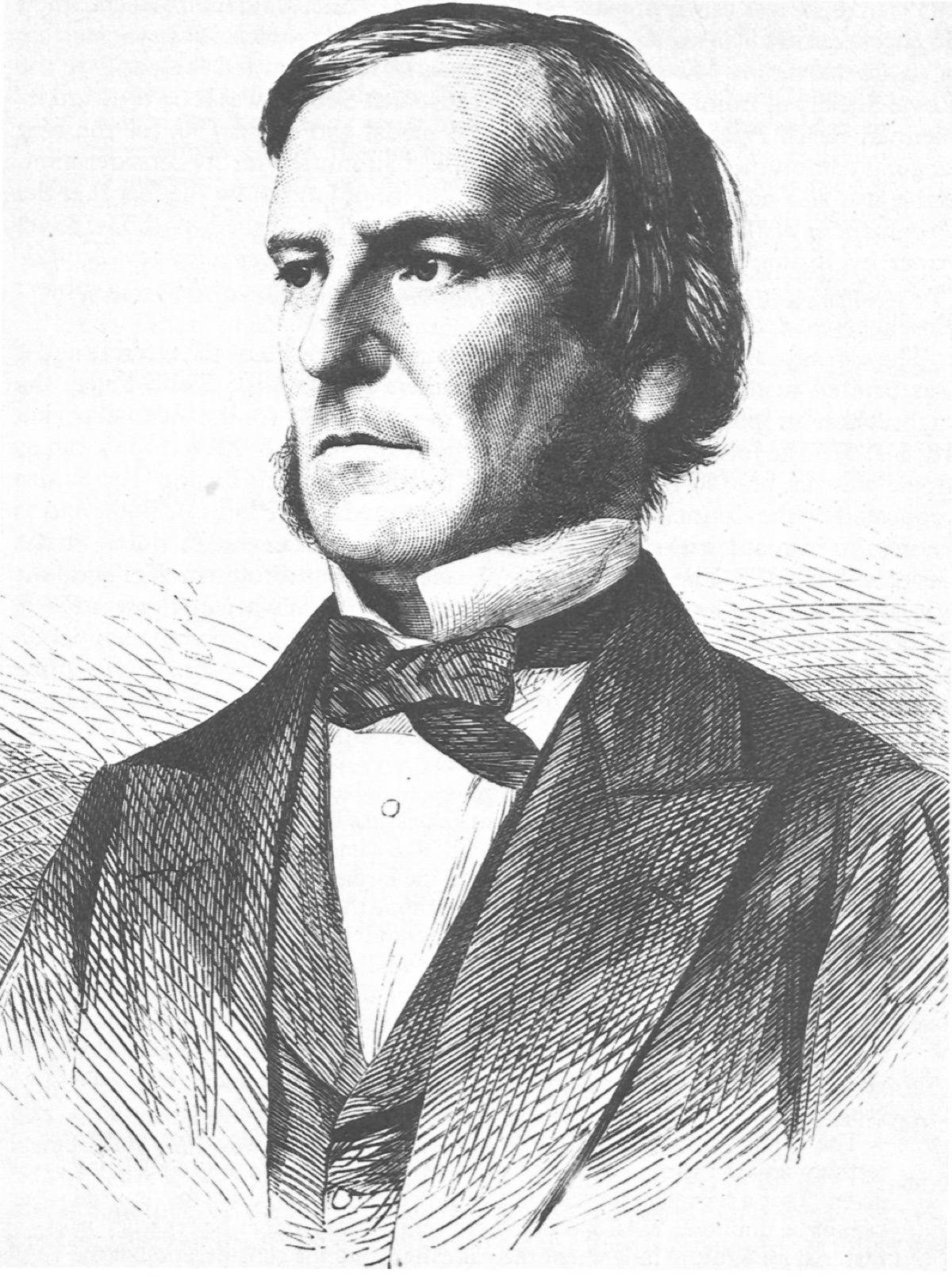
In 1854 a man who had never attended a university published a book arguing that the laws of human thought could be written as algebra. He was the son of a shoemaker, he had taught himself mathematics out of borrowed books, and he was, at the time, a professor in Cork largely because the older universities had no idea what to do with him.
The book was “An Investigation of the Laws of Thought, on Which are Founded the Mathematical Theories of Logic and Probabilities.” The author was George Boole. He thought he was studying the mind. What he had actually done — and he never knew it — was write the mathematics that every computer on Earth would run on. This is a tribute to that book: what it claimed, what it got right, what it did not invent, and the 85-year fuse it lit.
- Title: An Investigation of the Laws of Thought, on Which are Founded the Mathematical Theories of Logic and Probabilities
- Author: George Boole (1815–1864)
- Published: London: Walton and Maberly, 1854 (with Macmillan & Co., Cambridge)
- Predecessor: The Mathematical Analysis of Logic (1847), an 82-page monograph written in a matter of months
- Central move: represent classes and propositions as algebraic symbols, and reasoning as solving equations
- The key law: x² = x — idempotence, which restricts the meaningful values of a symbol to 1 and 0
- Why it matters: via Claude Shannon’s 1937 thesis, it became the logic of switching circuits — and then of every digital computer built since
1. The self-taught outsider
George Boole was born in Lincoln on 2 November 1815. His father John was a shoemaker with a serious amateur interest in science and in the mathematics of scientific instruments — an enthusiasm that outran the family’s means. There was no money for a university education, and Boole never received one.
From the age of sixteen he worked as an assistant schoolteacher, supporting his family, and taught himself mathematics in whatever hours were left. He later reflected, with some bitterness, that he had almost wasted five years trying to teach himself the subject instead of being taught by someone who already knew it. He read the hard people anyway: Lagrange, Laplace, the modern analysts.
It worked. In November 1844 the Royal Society awarded him its Royal Medal for a paper on a general method in analysis — a serious honour for a schoolteacher with no degree. In November 1849 he took up the post of first Professor of Mathematics at Queen’s College, Cork, in Ireland. The institution is now University College Cork, and its library carries his name.
2. A squabble, and an 82-page answer
Boole came to logic almost by accident. In early 1847 a very public and rather petty dispute broke out between Augustus De Morgan and the Scottish philosopher Sir William Hamilton over who deserved credit for an idea in logic. The row was trivial. Its effect was not: it sent Boole thinking about what logic actually was.
Within a few months he had written The Mathematical Analysis of Logic — 82 pages proposing something that sounds unremarkable now and was startling then. For two thousand years, since Aristotle, logic had been the property of philosophers: a discipline of words, categories and syllogisms. Boole proposed to hand it to the mathematicians. Let a symbol stand for a class of things. Let operations on those symbols stand for operations of reasoning. Then an argument is not a rhetorical performance to be judged — it is an equation to be solved.
The 1854 Laws of Thought is the mature version: the full system, the general method, and Boole’s attempt to extend the whole apparatus to probability.
3. The little law that forces the world into 1 and 0
Here is the hinge of the entire book, and it is one line.
Let x stand for a class — say, all sheep. What is the class of things that are sheep and sheep? Sheep. Selecting the same category twice changes nothing. In Boole’s notation, multiplication is that double selection, so:
This is called idempotence, and it is a very odd thing to find in an algebra. In ordinary arithmetic, x² = x is not a law — it is an equation, and it has exactly two solutions: x = 1 and x = 0. Boole noticed this and did not flinch from it. If his algebra of thought obeyed x² = x universally, then the only numbers his symbols could consistently take were 1 and 0. He read those as everything (the universe of discourse) and nothing (the empty class).
Boole even argued — in Chapter III of the Laws of Thought — that this idempotent law is a more fundamental law of thought than the ancient law of non-contradiction, which in his hands becomes a consequence rather than an axiom:
| The classical law | Boole’s equation | In plain English |
|---|---|---|
| Identity | x = x | A thing is what it is |
| Non-contradiction | x(1 − x) = 0 | Nothing is both a sheep and not a sheep |
| Excluded middle | x + (1 − x) = 1 | Everything is either a sheep or not a sheep |
Two thousand years of philosophical doctrine, rewritten as three short equations. And notice what has quietly happened: a system in which every symbol is 1 or 0, and in which reasoning is arithmetic on those two values. Boole thought he was describing the mind. He had just described a machine nobody had built.
4. What Boole did not invent
Here the tribute has to be honest, because the story is usually told too simply.
The algebra in the Laws of Thought is not quite the Boolean algebra taught today. Boole’s addition was a partial operation: x + y was only defined when the two classes were disjoint, with no overlap. Modern Boolean algebra uses inclusive union, where x + x = x always holds. Boole’s system also permitted expressions that had no interpretation as classes at all — intermediate terms that were mathematically legal and logically meaningless, which he passed through and out the other side like scaffolding.
- William Stanley Jevons (1864) rejected Boole’s partial addition and proposed inclusive union with the idempotent law x + x = x — the version we use.
- Charles Sanders Peirce (1880) developed the system further and gave it its name, writing it as ‘Boolian algebra’ before the spelling settled.
- Ernst Schröder (1890–1910) built it out at length into what became known as the Boole–Schröder algebra.
The thing that carries Boole’s name was finished by other people. That is not a demotion. It is what a foundational paper is: not the last word, but the first one that made the conversation possible.
5. The 85-year fuse
Boole died on 8 December 1864 at Ballintemple, County Cork, aged 49. He never saw a machine that used his algebra, and had no reason to imagine one.
For most of a century, his work belonged to logicians and philosophers. It was admired. It was not useful in any way an engineer would recognise. The fuse burned quietly.
Then, in 1937, a 21-year-old master’s student at MIT named Claude Shannon made the connection. Shannon had studied symbolic logic and Boolean algebra in mathematics courses at the University of Michigan — an unusual thing for an engineer to have in his head. At MIT he was working with the Differential Analyzer, a mechanical computer whose control circuits were built from banks of electromechanical relays. And a relay, Shannon noticed, has exactly two states.
Open or closed. Current or no current. 1 or 0.
Boole’s two values were not an abstraction about the mind at all. They were a description of a switch. Shannon’s master’s thesis, “A Symbolic Analysis of Relay and Switching Circuits,” showed that Boolean algebra could analyse and simplify any network of relays — and, running the argument backwards, that networks of relays could compute any Boolean expression. Circuit design stopped being an art passed between engineers by intuition and became something you could calculate. The thesis won the Alfred Noble Prize of the combined American engineering societies in 1940.
— Herman H. Goldstine, on Shannon’s 1937 thesis
6. Where Boole’s algebra is right now
It is not in a museum. It is in your pocket, several billion times over:
- Every transistor. The logic gates etched into a modern processor — AND, OR, NOT, and the NAND from which you can build all the rest — are Boole’s operations rendered in silicon. A chip does not merely use Boolean algebra; a chip is Boolean algebra, run at a few billion evaluations a second.
- Every program. Each
ifstatement, each&&and||, every condition that decides which branch runs, is an expression in his system. - Every search. The AND / OR / NOT of a database query or a search filter is still called a Boolean search, and is still exactly what he wrote down in 1854.
- Every neural network, at the bottom. The floating-point matrix multiplies behind a modern AI model are themselves compiled down to gates. The most sophisticated machine reasoning we have is, several layers down, sheep-and-not-sheep.
- The word itself. Programmers type
boolandbooleanthousands of times a day, most of them never thinking about the Lincoln schoolteacher it belongs to.
7. The family, and the point
One last thing worth recording, because it says something about the household. Boole married Mary Everest, a self-taught mathematician and educationalist in her own right, and they had five daughters — raised, after his early death, largely by her.
Alicia Boole Stott (1860–1940) became an authority on four-dimensional geometry, with no formal training whatsoever; she worked out that there are exactly six regular polytopes in four dimensions, and could visualise their three-dimensional cross-sections in a way trained mathematicians found uncanny. Lucy Everest Boole (1862–1904) became a chemist and pharmacist. Ethel Lilian (1864–1960), born the year her father died, wrote The Gadfly, a novel that became a sensation in Russia. Margaret’s son was the physicist G. I. Taylor. The self-teaching, evidently, was hereditary.
And the point is this. George Boole set out to find the laws of human thought and did not find them — the mind is not an algebra of 1s and 0s, and no one now thinks it is. He was, in the strictest sense, wrong about what he was doing.
He was also more consequential than almost anyone who was right. He built the mathematics of true and false so thoroughly that when a machine finally arrived that could physically embody it, the machine needed no new mathematics at all. It was already waiting, 85 years old, in a book about the mind.
Every device you own is running it right now.
- George Boole, An Investigation of the Laws of Thought, on Which are Founded the Mathematical Theories of Logic and Probabilities (London: Walton and Maberly, 1854) — full text at the Internet Archive
- George Boole, The Mathematical Analysis of Logic (1847)
- ‘George Boole,’ Stanford Encyclopedia of Philosophy — on the General Method, the Rule of 0 and 1, and how Boole’s algebra differs from modern Boolean algebra
- ‘The Algebra of Logic Tradition,’ Stanford Encyclopedia of Philosophy — Jevons, Peirce and Schröder
- Biographical detail: MacTutor History of Mathematics, George Boole; and MacTutor on the Boole children
- Claude E. Shannon, ‘A Symbolic Analysis of Relay and Switching Circuits,’ MIT master’s thesis, 1937 (published Transactions of the AIEE, 1938) — overview and Goldstine assessment
- MacTutor, Alicia Boole Stott