
 العربية
 Español
 中文
中文 Deutsch
 Français
 Português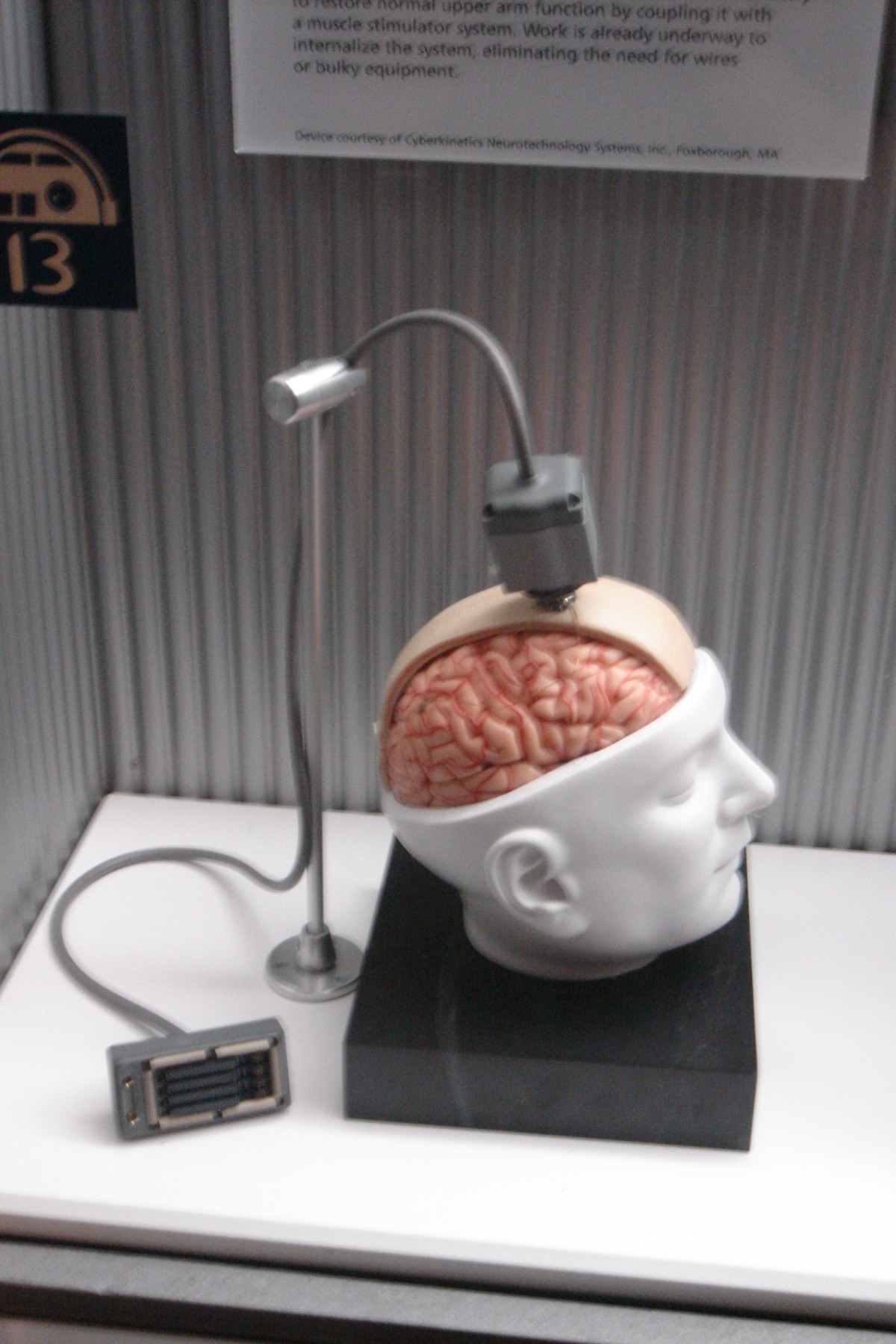
A man who lost the ability to speak to ALS has spent the better part of two years talking, working, and living online again — using only his thoughts. In a study published June 15, 2026 in Nature Medicine, researchers report that Casey Harrell, a 47-year-old participant in the BrainGate2 clinical trial, used an implanted brain–computer interface (BCI) independently, at home, with no researcher present, for nearly two years — turning the neural signals he makes when he tries to speak into text at 99% accuracy, and steering a computer cursor to run his whole digital life. It is, the authors argue, the moment a brain–computer interface stopped being a laboratory demo and became a dependable, everyday tool.
- Who: Casey Harrell, 47, living with ALS (BrainGate2 trial participant)
- What: an intracortical BCI used independently at home, unassisted, for nearly two years
- Speech: attempts to speak decoded to text at 99% accuracy from a 125,000-word vocabulary, at 56 words per minute
- Control: a second decoder moves a cursor — letting him run his entire computer (email, the web, his work)
- Scale: 3,800+ hours of near-daily use → 183,000+ sentences, ~2 million words
- Published: Nature Medicine, June 15, 2026 (UC Davis, Brown, Mass General Brigham)
1. From the lab bench to the living room
The headline here is not raw accuracy — the team had already reached that. It is independence. In the group’s earlier work, the same kind of implant decoded Harrell’s attempted speech with about 97% accuracy, but only when a member of the research team was physically present to set the system up and keep it running. That is the difference between an impressive demonstration and a tool you can actually rely on.
“In our previous study, we showed 97% accurate word decoding,” said neuroscientist Sergey Stavisky, co-senior author and co-director of the UC Davis Neuroprosthetics Lab. “But Harrell could only use the neuroprosthesis when someone from our research team was there to set it up.” The new result removes that asterisk: the BCI now runs itself, day after day, in Harrell’s own home, with no researcher in the room.
“For years, BCIs have been proof-of-concept devices that lived in highly controlled research labs,” said neurosurgeon David Brandman, co-principal investigator and co-director of the lab. This work, the team argues, shows the field may finally have crossed a threshold — from laboratory curiosity to practical, everyday assistive technology.
2. The numbers behind the milestone
| Measure | Result |
|---|---|
| Word accuracy (controlled testing) | 99% |
| Vocabulary available | 125,000 words |
| Speaking speed | 56 words per minute (near conversational) |
| Independent home use | 3,800+ hours over nearly 2 years |
| Total output | 183,000+ sentences, ~2 million words |
| User-rated sentence quality | 92% accurate or mostly correct |
| Implant | 256 electrodes across 4 microelectrode arrays |
Fifty-six words a minute is the figure that makes this feel human: it is within reach of relaxed natural conversation, and a world away from the slow, letter-by-letter eye-tracking and switch systems that many people with advanced ALS have had to rely on.
3. How it works
In 2023, Brandman surgically placed 256 microelectrodes across four small arrays into Harrell’s left precentral gyrus — the strip of motor cortex that orchestrates the movements of speech. ALS has left Harrell with weakness in his limbs (tetraparesis) and speech that is very hard to understand (dysarthria), but the intent to speak still produces clear, structured activity in that part of his brain.
When Harrell tries to talk, the arrays read those neural signals and machine-learning decoders translate them in two ways at once. One decoder is a speech neuroprosthesis that converts the signals into text on screen (which can then be spoken aloud by the computer). The other is a movement decoder that drives a cursor, so he can point, click, and operate a standard personal computer — writing email, browsing the web, and doing his work. Two modes, one implant.
ALS degrades the nerves that carry movement commands out to the muscles — but the cortical neurons that plan speech and movement remain active. A BCI listens directly to that planning activity, routing around the damaged pathway entirely. That is why someone who cannot move his mouth to form words can still “speak” through an electrode array.
4. In the participant’s own words
Harrell rated 92% of his sentences as accurate or mostly correct — and, tellingly, reported that the system “allows me to communicate more in my natural way than any other technology.” Lead author Nicholas Card, a postdoctoral scholar at UC Davis, summed up the engineering goal that matters most outside a lab: “The system worked well, was reliable and stable, and delivered consistent results.”
5. Why it matters — and what comes next
Roughly a step at a time, brain–computer interfaces are moving from headline-grabbing firsts toward something a person can simply own and use. Reliable, independent, long-term operation is the unglamorous milestone that has to be cleared before this technology can help the millions of people worldwide living with severe speech and motor impairment from ALS, brainstem stroke, and spinal-cord injury.
It is, fairly, still early. This is one participant using an investigational device that requires neurosurgery to implant, and the results now need to be reproduced across many more people. The BrainGate2 clinical trial is still enrolling, and groups around the world are racing to make the hardware smaller, wireless, and simpler to live with. But the direction of travel is unmistakable — and for anyone who has watched a loved one lose their voice, the sight of a man speaking his mind, on his own, for two years straight, is the kind of progress that speaks for itself.
Sources
- UC Davis Health: Brain-computer interface enables independent, accurate communication for man living with ALS
- Nature Medicine (June 15, 2026): Long-term independent use of an intracortical brain–computer interface for speech and cursor control · DOI 10.1038/s41591-026-04414-6
- EurekAlert! release · BrainGate2 clinical trial
Curated by Jerry Cards - jerrycards.com. We research the week’s most consequential tech, science, and health news so you don’t have to. More at jerrycards.com/news.