
 العربية
 Español
 中文
中文 Deutsch
 Français
 Português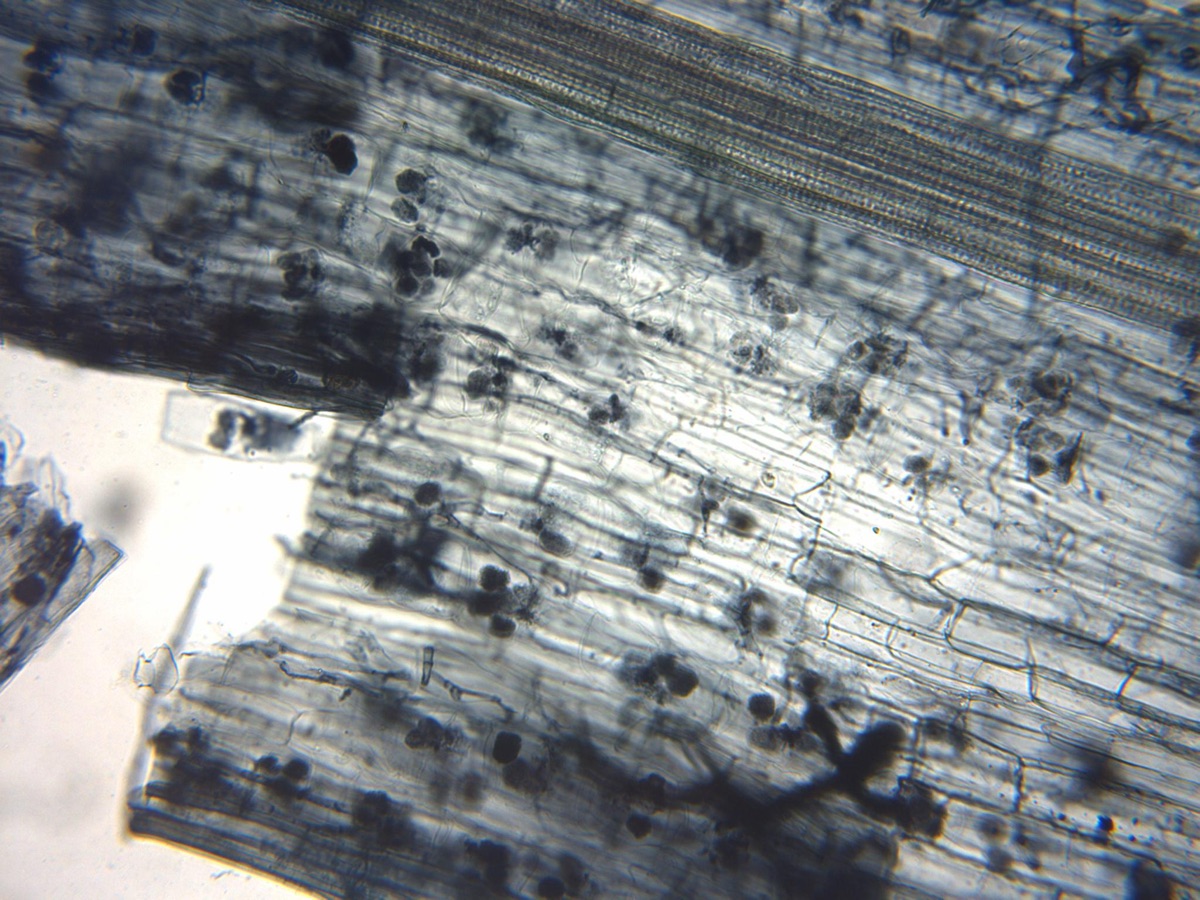
Take a single teaspoon of healthy soil. Inside it can be coiled up to 10 meters of living fungal thread. Now multiply that across every forest, grassland, tundra, and field on Earth, and you arrive at a number that is almost impossible to picture: roughly 110 quadrillion kilometers of fungal network woven through the world’s soils — enough, if stretched end to end, to span the distance from the Earth to the Sun almost a billion times over. For the first time, scientists have mapped this hidden planetary system, and the result is one of the most quietly astonishing pictures of life on Earth ever produced.
The study, “Global density and biomass of arbuscular mycorrhizal fungal networks,” was published in Science on June 11, 2026, by researchers at the Society for the Protection of Underground Networks (SPUN) and an international team of collaborators. Here is what they found, how they mapped the invisible, and why it matters for the climate.
- What: first global map of arbuscular mycorrhizal (AM) fungal networks, in Science (DOI 10.1126/science.adu4373)
- Total length: ~110 quadrillion km (~68 quadrillion miles) — almost a billion times the Earth–Sun distance
- Mass: ~300 megatons of carbon — four to six times the weight of all living humans
- Reach: symbiosis with ~70% of plant species; up to 10 m of thread per teaspoon of soil
- Climate: helps draw an estimated 4 billion tons of CO₂-equivalent into soils each year (~11% of human CO₂ emissions)
- Built from: 16,000+ soil cores and robotic imaging of 300,000+ living hyphae
1. The Scale Is Almost Unbelievable
Arbuscular mycorrhizal fungi are not mushrooms you can see. They are microscopic threads — called hyphae — that grow in and around plant roots, forming a branching, web-like web that scientists sometimes call the “Wood Wide Web.” The new study is the first to estimate, at planetary scale, just how much of this network exists.
| Measure | Estimate | To put it in perspective |
|---|---|---|
| Total network length | ~110 quadrillion km | Almost a billion times the Earth-to-Sun distance |
| Network biomass | ~300 megatons of carbon | 4–6× the mass of every living human |
| Density in soil | Up to 10 m per teaspoon | A hidden mesh in a single spoonful of dirt |
| Plant partners | ~70% of plant species | The default partnership of land plants |
“There could be up to 10 meters of mycorrhizal network in just a teaspoon of soil,” said lead author Dr. Justin Stewart of SPUN. Scale that handful up to the whole planet, and the totals climb into the quadrillions.
A mycorrhiza (from the Greek for “fungus-root”) is a symbiotic partnership between a fungus and a plant root. Arbuscular mycorrhizal (AM) fungi, of the ancient group Glomeromycota, grow tree-like structures called arbuscules inside root cells — the trading posts where the fungus hands over water and mineral nutrients and the plant pays in carbon-rich sugars. This partnership is more than 400 million years old and helped plants colonize land in the first place.
2. Not a Footnote to Life - Its Supply Chain
These fungi do the quiet logistical work that keeps ecosystems running. By threading far beyond what roots can reach on their own, AM fungi can extend a plant’s effective foraging area by up to 100 times and supply more than 80% of its phosphorus, along with nitrogen, other minerals, and water. In return, plants pump sugars and fats down into the network — the carbon currency that builds and feeds the fungi.
That exchange makes the underground web one of the most important nutrient markets on the planet. “This study is an exciting step toward understanding how this planetary circulatory system operates,” said co-author Dr. Merlin Sheldrake, the biologist and author who has long championed the hidden world of fungi.
3. How Do You Map Something Invisible and Underground?
The honest answer is: with a lot of dirt, robots, and machine learning. The team’s approach combined three ingredients:
- 16,000+ soil cores assembled from ecosystems all over the world — deserts, tundra, grasslands, and forests — to measure how dense AM networks actually are on the ground.
- Robotic imaging of 300,000+ living hyphae grown in the laboratory, used to calibrate exactly how much fungal thread the measurements correspond to.
- Machine-learning models that learned the relationship between environment and network density, then predicted it everywhere — producing a global map at 1 square-kilometer resolution.
“With the emergence of new technologies in high-resolution imaging, machine learning and robotics, we are starting to reveal what has long been hidden under our feet,” said co-lead author Dr. Corentin Bisot of the AMOLF biophysics institute in Amsterdam. The interactive result — a Mycorrhizal Infrastructure Map designed with data visualizer Moritz Stefaner — lets anyone explore the underground for the first time.
4. The Climate Angle: A Living Carbon Pump
The map is not just a curiosity — it is a climate story. As plants feed carbon into their fungal partners, that carbon moves into the soil, where much of it can be stored. The researchers estimate that AM networks help route on the order of 4 billion tons of CO₂-equivalent into soils every year — roughly 11% of humanity’s annual CO₂ emissions. About 40% of the global AM biomass sits in the world’s wild grasslands, ecosystems that are easy to overlook precisely because they are not forests.
A carbon sink this large, this alive, and this responsive to how we treat the land is an opportunity. Healthy soils with thriving fungal networks hold more carbon, retain more water, and grow more resilient plants. Protecting and restoring these networks is one of the few climate levers that also improves food systems and biodiversity at the same time.
5. The Most Useful Finding: A Map for Protection
Because the data is now mapped at fine resolution, the team could ask a practical question: are the richest underground hotspots actually protected? The striking answer is that roughly 95% of the fungal biodiversity hotspots fall outside existing protected areas — meaning the conservation system built for visible nature has largely missed the one beneath it.
The researchers frame this not as bad news but as a roadmap. For the first time, governments, farmers, and land managers can see where the most valuable underground infrastructure lives and act to safeguard it. The map also shows that AM network density in croplands runs about half that of wild ecosystems — pointing to a clear opportunity for regenerative farming practices that rebuild the fungal web while improving yields and soil health.
“Fungi have been ignored in climate and conservation for too long,” said SPUN executive director Dr. Toby Kiers. “Now is the time to change that trajectory.”
What We Still Don’t Know
- These are estimates, not a census. The totals come from models calibrated on samples; the headline figures are best-available approximations, and future sampling will refine them.
- Coverage is uneven. Some regions and ecosystems are far more heavily sampled than others, so predictions are more confident in well-studied areas.
- The carbon question is still open. Exactly how much of the carbon routed into soils stays there — and for how long — remains an active area of research.
- This map is AM fungi only. It covers arbuscular mycorrhizal fungi; other fungal groups (such as the ectomycorrhizal fungi that partner with many trees) are a separate, equally important story.
The Takeaway
A second, living infrastructure runs beneath the visible world — a fungal network long enough to reach the Sun and back hundreds of millions of times, holding hundreds of megatons of carbon, feeding most of the plants on Earth, and helping regulate the climate. We have walked on top of it for all of human history without a map. Now we have one — and with it, the chance to protect the hidden half of nature.
Sources
- Stewart, Bisot, et al., “Global density and biomass of arbuscular mycorrhizal fungal networks,” Science (2026), DOI 10.1126/science.adu4373
- EurekAlert! / SPUN: first global map of mycorrhizal fungi reveals true scale of underground networks
- University of Sheffield: first global map of underground fungi networks · Phys.org: first global map of mycorrhizal fungi
- Society for the Protection of Underground Networks (SPUN)
Curated by Jerry Cards - jerrycards.com. We research the week’s most consequential science, tech, and health news so you don’t have to. More at jerrycards.com/news.