
 العربية
 Español
 中文
中文 Deutsch
 Français
 Português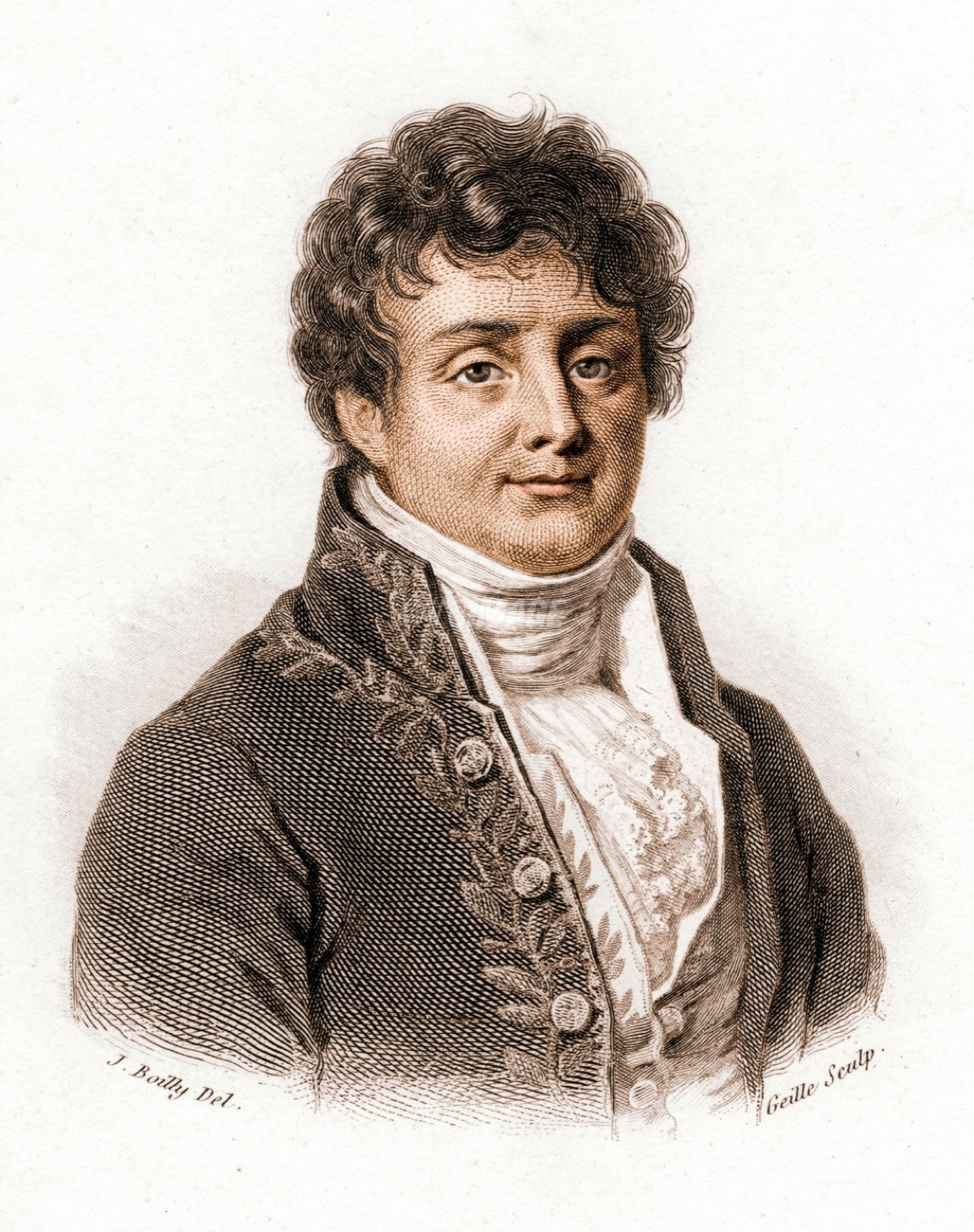
The song playing in your earbuds, the photo you just scrolled past, the Wi-Fi carrying this page to your screen, and the MRI scan that can look inside a living body without a single cut - all of them run on one idea, and that idea was first written down in a book about how heat creeps through a lump of iron. In 1822 the French mathematician Jean-Baptiste Joseph Fourier published Théorie analytique de la chaleur - The Analytical Theory of Heat - and buried in its solution to a dry problem in physics was one of the most quietly powerful discoveries in the history of mathematics: that almost any signal, however complicated, can be broken down into a sum of simple, smooth waves.
That single insight - today we call it Fourier analysis - became the mathematical engine of the digital age. This is a tribute to the heat study that taught the world how to listen to any signal.
- Who: Jean-Baptiste Joseph Fourier (1768–1830), French mathematician and physicist - and, in his day job, one of Napoleon’s prefects
- The book: Théorie analytique de la chaleur (The Analytical Theory of Heat), Paris, 1822, building on a memoir he first submitted in 1807
- The problem: how does heat flow and spread through a solid body over time?
- The big idea: any repeating pattern can be written as a sum of sine and cosine waves - a Fourier series - and any signal at all can be split into the pure frequencies it contains
- The legacy: audio (MP3), images (JPEG), Wi-Fi and 5G, MRI scanners, spectroscopy, noise-cancelling headphones, voice assistants, radio astronomy and quantum mechanics
1. A revolutionary, an Egyptian adventure, and a question about heat
Fourier’s life reads less like a mathematician’s than an adventurer’s. Born in Auxerre in 1768, the son of a tailor, he was orphaned at nine and educated by Benedictine monks. He came of age during the French Revolution, served on a local revolutionary committee, and was briefly imprisoned during the Terror. In 1798 he sailed with Napoleon’s expedition to Egypt as a scientific adviser and became secretary of the new Institut d’Égypte. On his return Napoleon appointed him, in 1801, prefect - governor - of the Isère department, based in Grenoble, and later made him a baron.
It was there, amid road-building and marsh-draining, that Fourier turned to the physics of heat: how warmth flows from hot to cold, spreads through a metal bar or a whole planet, and slowly evens out over time. Everyone could see heat diffuse; nobody had a mathematics for it. Fourier set out to write one, and in doing so derived what we now call the heat equation and Fourier’s law of conduction - heat flows down a temperature gradient, faster where the gradient is steeper.
2. The outrageous claim: every shape is a chord of waves
Solving the heat equation for a real object - say, a metal ring warmed unevenly and then left alone - meant handling a temperature pattern of any shape, including sharp jumps and corners. Fourier’s brilliant, almost reckless move was to claim that any such pattern, however jagged, could be rebuilt as an infinite sum of the smoothest curves in mathematics: sines and cosines of different frequencies, each with its own size.
Picture pure musical tones. A single sine wave is one clean pitch. Add the right blend of a fundamental and its higher harmonics - each a simple wave - and you can reconstruct the rasp of a violin, the buzz of a square wave, even a straight-edged staircase. Fourier was saying the same thing about everything: give me the right recipe of pure waves and I can build any signal you like. And once a temperature profile was broken into these waves, the physics became easy - each wave simply fades away at its own steady rate, and adding them back up gives the temperature at any later moment.
A complicated repeating signal = wave₁ + wave₂ + wave₃ + … Each ‘wave’ is a pure sine or cosine of a different frequency, and the whole art is working out how much of each one to add. Stack enough pure tones in the right amounts and you can rebuild any shape - even one with sharp corners.
3. A prize, a feud, and a fifteen-year wait
The idea was too radical for its time. When Fourier submitted his first memoir, On the Propagation of Heat in Solid Bodies, to the Paris Institute in 1807, the greatest mathematician of the age, Joseph-Louis Lagrange, blocked its publication. The objection cut deep: it seemed impossible that a sum of smooth, endlessly rolling sines could ever equal a function with a sharp corner or a sudden jump. Lagrange had wrestled with trigonometric series decades earlier, and he did not believe it.
In 1811 Fourier entered his revised work in a prize competition set by the Academy of Sciences on exactly this subject - and won. But the judges, Lagrange and Laplace and Legendre among them, attached a stinging note: the memoir left ‘something to be desired on the score of generality and even rigour.’ Stung but certain he was right, Fourier waited. Only in 1822 - after Lagrange had died, and as Fourier’s own standing rose (he became permanent secretary of the Academy that same year) - did the full theory finally appear as a book.
The remarkable thing is that Fourier was right, even though he could not fully prove it. The rigour arrived in 1829, when Peter Gustav Lejeune Dirichlet proved precise conditions under which a Fourier series truly converges to the function it represents. The last wrinkle - the little overshoot a finite sum makes right at a jump - was pinned down later still and is now called the Gibbs phenomenon. Fourier’s instinct had run a full generation ahead of the proofs.
4. From heat to everything: the frequency domain
Fourier had cracked open repeating signals. The natural next step - generalising from patterns that repeat to any signal at all, even a one-off pulse - is the Fourier transform. It takes a signal recorded over time and reveals the recipe of frequencies hidden inside it: a spectrum. Feed it a chord, and it hands you back the individual notes. Feed it a photograph, and it tells you how much fine detail versus broad shading it holds.
This move between two ways of seeing the same thing - the time (or space) domain and the frequency domain - is the single most useful trick in all of applied mathematics. Problems that look hopeless in one view become simple in the other. Want to strip a 60-hertz hum from a recording, sharpen a blurry image, or send a thousand phone calls down one cable at once? Step into the frequency domain, do the easy thing, and step back. That doorway is Fourier’s.
5. The algorithm that put Fourier in your pocket
For a century and a half, Fourier analysis was a mathematician’s tool - too slow to compute by hand for real data. Then in 1965 two American researchers, James Cooley and John Tukey, published the Fast Fourier Transform (FFT): a clever shortcut that computes a Fourier transform hundreds or thousands of times faster than the brute-force method. (Carl Friedrich Gauss had quietly discovered the same trick around 1805 to track the orbits of asteroids, but never published it.)
The FFT is routinely listed among the most important algorithms of the twentieth century, and for good reason: it is what makes Fourier analysis cheap enough to run, billions of times a second, inside the chips in your phone, your headphones, your car and your hospital’s scanners. Without Fourier’s idea there is no spectrum; without the FFT there is no doing it in real time.
6. Where Fourier hides today
Once you know the pattern, you see it everywhere. Nearly every technology that records, compresses, transmits or cleans up a signal is standing on Fourier’s idea:
| Technology | How Fourier is at work |
|---|---|
| Digital music (MP3, AAC) | Sound is split into its frequencies; the ones your ear cannot hear are thrown away, shrinking the file - using a close relative of the Fourier transform |
| Digital images (JPEG) | Each block of a photo is turned into frequencies (the discrete cosine transform, a Fourier cousin), and the fine detail you won’t miss is discarded |
| Wi-Fi, 4G and 5G, DSL | Data is spread across many frequencies at once (OFDM), packed and unpacked by the FFT millions of times a second |
| MRI scanners | The machine measures the body in the frequency domain and runs an inverse Fourier transform to build the image - no Fourier, no MRI |
| Spectroscopy & chemistry | Fourier-transform infrared (FTIR) instruments identify molecules by their frequency fingerprints |
| Noise-cancelling & voice AI | Sound is analysed frequency by frequency to erase a hum, or turned into the spectrograms that voice assistants read |
And it runs deeper than gadgets. The X-ray photographs that revealed the double helix of DNA were read using Fourier transforms - a diffraction pattern is, mathematically, the Fourier transform of the crystal that made it. In quantum mechanics, a particle’s position and momentum are Fourier transforms of one another, which is exactly where Heisenberg’s uncertainty principle comes from. Fourier’s waves reach from the music in your ears to the structure of matter itself.
7. The man who also found the greenhouse effect
Fourier’s curiosity did not stop at heat in metal. In the 1820s he asked a bigger question - why is the Earth as warm as it is? - and reasoned that the planet ought to be far colder than it is, given its distance from the Sun, unless something in the atmosphere held back part of the escaping heat. In working this out he became the first person to describe what we now call the natural greenhouse effect: the atmospheric blanket that keeps our world warm enough to be alive. Once again, Fourier had found a hidden mechanism decades before anyone could measure it.
He never married, and he died in Paris in 1830. But his name endures in the places that honour the builders of the modern world: it is carved among the seventy-two scientists on the Eiffel Tower, and a university in his beloved Grenoble long bore his name. Lord Kelvin, who read Fourier’s book as a teenager and never quite got over it, called the Analytical Theory of Heat ‘a great mathematical poem.’
Fourier himself left the best summary of why any of it mattered, in a line from the book’s opening pages:
‘The profound study of nature is the most fertile source of mathematical discoveries.’
— Joseph Fourier, The Analytical Theory of Heat, 1822
He set out to understand something as ordinary as a warm iron bar cooling on a bench. He ended up handing us the language in which the entire digital world would learn to speak. Every time a song streams, a photo loads, a phone finds a signal, or a scanner sees inside a beating heart, a two-hundred-year-old idea about heat is quietly at work.
Sources & further reading
- Wikipedia: Joseph Fourier · Fourier series · Fourier transform
- Wikipedia: Fast Fourier transform · Cooley–Tukey FFT algorithm · The 72 names on the Eiffel Tower
- MacTutor History of Mathematics (University of St Andrews): Joseph Fourier - on the 1807 memoir, Lagrange’s objection, the 1811 prize and the 1822 book
- Image: engraved portrait of Joseph Fourier by Julien-Léopold Boilly, public domain, via Wikimedia Commons
Curated by Jerry Cards - jerrycards.com. Our 致敬 (tribute) series celebrates the landmark papers and discoveries that quietly built the modern world. More at jerrycards.com/news.