
 العربية
 Español
 中文
中文 Deutsch
 Français
 Português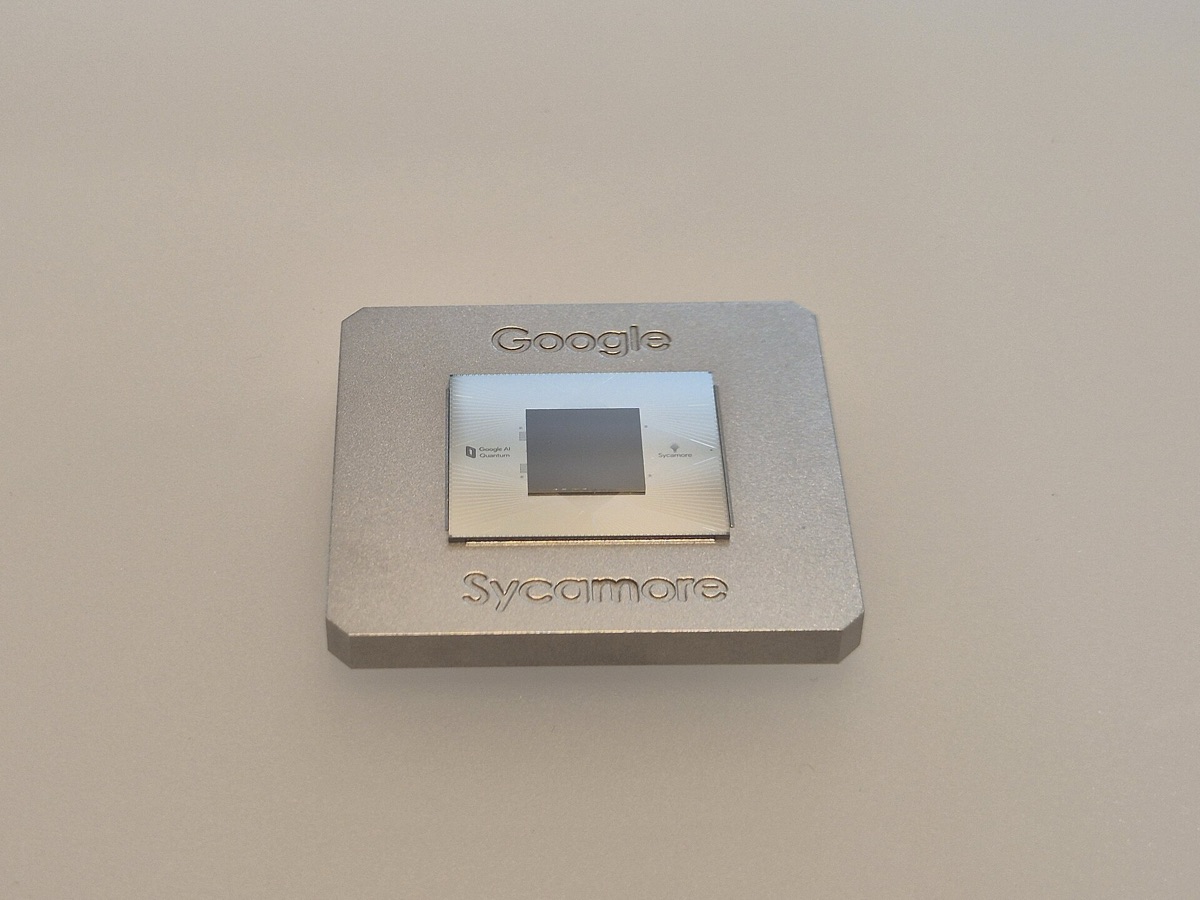
For years, the biggest asterisk hanging over quantum computing was a simple question: how would anyone know if it actually worked? The field's most famous milestone - Google's 2019 ‘quantum supremacy’ - produced an answer no ordinary computer could check. Now Google says it has cleared that bar. Writing in Nature, the Google Quantum AI team reports running an algorithm they call Quantum Echoes on their 105-qubit Willow chip about 13,000 times faster than the best known classical method on one of the world's fastest supercomputers - and, for the first time, in a way that is repeatable and verifiable. It is being called the first verifiable quantum advantage.
- What: the first claim of a verifiable quantum advantage - a real, repeatable measurement, not just a hard-to-check demo
- Who: Google Quantum AI, on the 105-qubit Willow superconducting processor (65 qubits used in the run)
- How fast: about 13,000x faster than the best known classical algorithm on a leading supercomputer - roughly two hours on Willow versus years on the supercomputer
- The algorithm: “Quantum Echoes,” a second-order out-of-time-order correlator (OTOC) that measures how quantum information scrambles
- Bonus: in a proof-of-principle with UC Berkeley, it was used like a super-powered NMR machine to read the 3-D shape of molecules
- Published: Nature 646, 825–830 (2025), “Observation of constructive interference at the edge of quantum ergodicity,” DOI 10.1038/s41586-025-09526-6 (announced Oct 22, 2025)
1. What Willow actually did
Picture a room full of people who start a rumor. At first, only a few know it; moments later, everyone does - the information has scrambled through the crowd. Quantum systems scramble information in a similar way, and physicists measure it with a tool called an out-of-time-order correlator, or OTOC. Google's twist, nicknamed Quantum Echoes, is like sending a signal into the quantum crowd, then perfectly reversing time to watch it come back - and reading how the ‘echo’ is subtly reshaped by the tiniest disturbance along the way.
Running that on 65 of Willow’s 105 superconducting qubits, the team computed a second-order OTOC that stays sensitive to the system’s behavior over long timescales - a regime that is punishing to simulate on a classical computer. Google estimates the job ran roughly 13,000 times faster than the best known classical method on one of the world’s fastest machines: what took Willow about two hours would take a leading supercomputer on the order of years (for the toughest data points, Google pegs the Frontier supercomputer at an estimated 3.2 years each).
2. The word that matters: ‘verifiable’
Raw speed is not new. What makes this result land is that it is checkable. In 2019, Google’s Sycamore chip performed a task called random circuit sampling and declared “quantum supremacy” - but the output was, in effect, a fingerprint of noise: astronomically hard to reproduce, hard to confirm, and of no practical use. Over the following years, cleverer classical algorithms chipped away at that lead, muddying the claim.
Quantum Echoes is a different kind of result. It produces a concrete, deterministic quantity that can be measured again and again - and, critically, a second quantum computer running the same algorithm should get the same answer. That reproducibility is what turns a jaw-dropping demo into a trustworthy scientific measurement.
| 2019: ‘Quantum supremacy’ | 2025: Verifiable quantum advantage | |
|---|---|---|
| Chip | Sycamore (53 qubits) | Willow (105 qubits) |
| Task | Random circuit sampling | Quantum Echoes (second-order OTOC) |
| Output | Random-looking samples | A concrete, repeatable number |
| Can it be checked? | Extremely hard to verify | Yes - repeatable on another quantum computer |
| Useful? | A benchmark only | Doubles as a real measurement tool |
3. From benchmark to molecular ruler
The most exciting part may be what Quantum Echoes can do. Working with the University of California, Berkeley, the team pointed the algorithm at real chemistry, using it like a super-powered nuclear magnetic resonance (NMR) machine. NMR is the same physics behind an MRI scan; here it was used as a molecular ruler, reading out the 3-D geometry of molecules with 15 and 28 atoms and reaching distances that are hard for conventional NMR to measure.
That is the punchline: the very algorithm that beat a supercomputer is also a plausible instrument for chemistry, materials science, and drug discovery - probing how information and structure are arranged inside molecules, magnets, and other complex systems.
There is a neat thread running through this hardware. Just two weeks before the paper appeared, Michel Devoret - Google Quantum AI’s chief scientist - shared the 2025 Nobel Prize in Physics with former Google hardware lead John Martinis and UC Berkeley’s John Clarke. Their 1980s experiments showed that the strange rules of quantum mechanics could be revealed and controlled in a macroscopic electrical circuit built around a Josephson junction - the very foundation of the superconducting qubits inside Willow. The prize honored the theory; Willow is the technology it grew into.
4. The honest caveats
This is a milestone, not a finish line, and the researchers and outside experts are candid about what it is not. The molecular-structure demonstration is a proof-of-principle: it matched established techniques but does not yet outperform them outright. And while the result is verifiable in principle, an independent quantum computer still has to run the same algorithm and confirm it.
MIT quantum-information theorist Aram Harrow, who was not involved, called it “a decent candidate” for a verifiable quantum advantage - genuine praise, with the honest asterisk that future classical algorithms could still narrow the gap, as they did after 2019. In quantum computing, today’s advantage is always a target for tomorrow’s cleverness. That is how the field makes progress.
What we still don't know
- Whether an independent group reproduces it - the reproducibility that makes this result ‘verifiable’ still has to be exercised by someone other than Google.
- How much classical methods can catch up, as they partly did with the 2019 claim.
- Which application arrives first - a practical quantum tool for chemistry and materials, or the next, larger benchmark on the road to fault-tolerant machines.
Sources
- Google Quantum AI, “Observation of constructive interference at the edge of quantum ergodicity,” Nature 646, 825–830 (2025), DOI 10.1038/s41586-025-09526-6
- Google: Our Quantum Echoes algorithm is a big step toward real-world applications · Google Research: A verifiable quantum advantage
- Nature News: Google claims ‘quantum advantage’ again - with the experts’ caveats · Science News: Quantum ‘echoes’ reveal the potential of Google’s quantum computer
- Google: Googler Michel Devoret awarded the 2025 Nobel Prize in Physics
Curated by Jerry Cards - jerrycards.com. We research the week’s most consequential tech, science, and business news so you don’t have to. More at jerrycards.com/news.