
 العربية
 Español
 中文
中文 Deutsch
 Français
 Português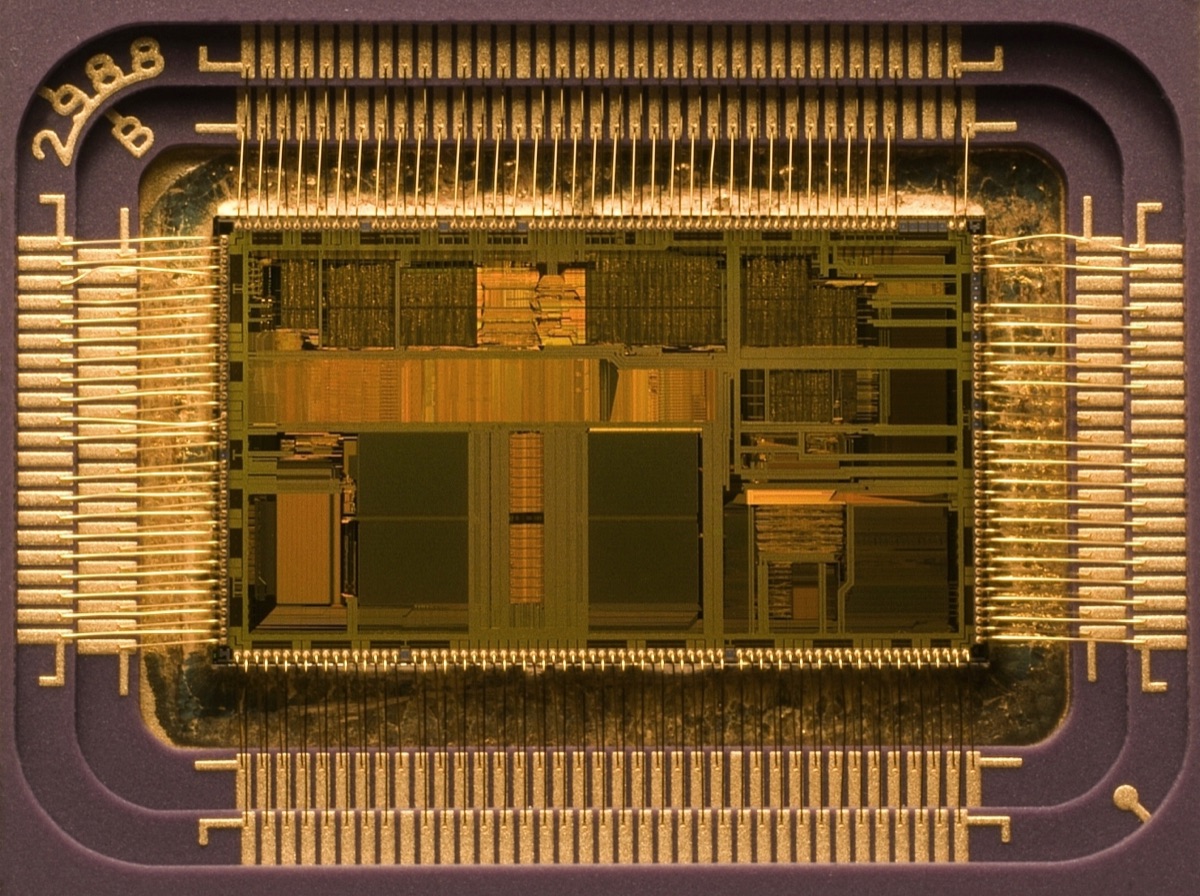
Some of the best breakthroughs come from handing a tool a job it was never designed for. A team at the Harvard John A. Paulson School of Engineering and Applied Sciences (SEAS) has turned a silicon chip into a machine that writes DNA - and the chip in question was originally built to do something entirely different: eavesdrop on the electrical chatter of living brain cells. Published in Nature Electronics on June 17, 2026, the work grew 64 distinct strands of DNA side by side on a single chip, in plain water, with no toxic solvents - and, as a flourish, encoded a short line of text into the molecules it made. It is a small, elegant proof of concept that points at two very large futures: greener DNA manufacturing for medicine and biology, and, further out, using DNA itself as an archive for the world's data.
- Who: Prof. Donhee Ham's lab at Harvard SEAS, with the Broad Institute, DNA Script, and POSTECH
- What: a semiconductor chip that synthesizes DNA using a water-based enzyme instead of harsh chemistry
- Scale: 64 different DNA sequences in parallel, up to 39 letters (nucleotides) each - roughly 5x the previous record (~12)
- Demo: encoded a 169-byte line of text into the DNA it wrote
- Where: Nature Electronics, June 17, 2026 (DOI 10.1038/s41928-026-01662-9)
From neurons to nucleotides
The chip started life in neuroscience. Jeffrey Abbott, then a PhD student in Ham's lab, designed the silicon electronics to record the electrical activity of large populations of neurons - thousands of tiny electrodes, each able to sense and inject precise currents at a single point. Its defining talent was fine, localized control of electricity across a dense grid of sites.
That talent, the team realized, did not have to be pointed at cells. “A defining feature of the chip was precision current injection,” Ham has said of the leap. “We wondered whether that same current control could be redirected from cells to molecules. It worked.” To make the switch, the researchers swapped the neuron-facing electrodes for a new design - pairs of concentric rings - and turned a listening device into a writing device.
The trick: chemistry you can switch on with electricity
Writing DNA means adding one chemical letter - A, T, C, or G - to a growing strand, over and over, in the right order. This chip does it enzymatically: an enzyme stitches the next base on, and a protective cap keeps it from adding more than one at a time. The clever part is how the chip tells one spot to react while its neighbors sit still.
Each synthesis site holds a DNA strand anchored at the center, surrounded by two concentric ring electrodes:
- The inner ring releases protons, briefly lowering the pH in a tiny bubble around that one strand - the acidic cue that lets the next base be added.
- The outer ring does the opposite: it consumes stray protons drifting outward, walling the acid in so it never reaches neighboring sites.
Because each site is addressed electronically, the chip can march through its grid one cycle at a time, building 64 different sequences in parallel without their chemistries bleeding into one another. No robots pipetting reagents; no plumbing of harsh solvents - just electrical currents choreographing chemistry across a chip.
Why a water-based chip matters
Almost all synthetic DNA today - the made-to-order strands that power PCR tests, gene editing, vaccines, and research worldwide - is built with phosphoramidite chemistry. It is fast and precise, but it relies on hazardous organic solvents and is generally confined to specialized, centralized facilities. Enzymatic synthesis, done in water, has long been the greener dream; the catch was scale, with prior chip-style enzymatic methods topping out around a dozen strands at once.
Jumping from roughly 12 to 64 parallel strands - all on a manufacturable semiconductor - is the point. It hints at a path to make DNA production cleaner, cheaper, and more distributed, closer to a benchtop appliance than a chemical plant.
| Conventional synthesis | This chip | |
|---|---|---|
| Chemistry | Phosphoramidite, organic solvents | Enzyme, water-based |
| Setting | Centralized facilities | A single semiconductor chip |
| Parallel strands | Very high (industrial) | 64 (vs ~12 prior enzymatic) |
The tantalizing endgame: data written in DNA
To show the idea in action, the team encoded a 169-byte line of text into the DNA the chip synthesized - a miniature demonstration of DNA data storage. The appeal is easy to see: DNA is extraordinarily information-dense and remarkably durable, capable in principle of holding enormous amounts of data in a vanishingly small volume, stable for very long stretches of time. The bottleneck for DNA storage has never really been reading it back - sequencing is cheap and fast - but writing it affordably and at scale. A chip that writes DNA electronically is exactly the kind of tool that problem has been waiting for. Near-term, the researchers point to diagnostics and synthetic biology; the archive-the-world's-data vision is the long game.
The honest limits
The researchers are refreshingly candid about how early this is. Sixty-four strands of up to 39 letters is a proof of principle, not a product, and it is orders of magnitude short of what practical DNA data storage would demand. Notably, the wall they hit was not the electronics.
“The limitation came from the deprotection chemistry, not from the silicon,” said co-author Han Sae Jung. “That leaves a clear next step for the field - develop a more direct, acid-driven deprotection chemistry that can keep pace with the chip.” In other words: the chip is ready; the chemistry has to catch up. At higher densities, the chemical byproducts of adding each base drift into neighboring sites and blur the boundaries - a chemistry problem, not a silicon one.
That is an unusually encouraging kind of limitation. It means the hard, expensive part - a scalable, manufacturable platform that can address thousands of reactions independently - already exists. The remaining work is to invent chemistry worthy of it. A chip built to listen to the brain has learned to write the code of life; the rest, as these things go, tends to compound.
Sources
- Harvard SEAS: Making DNA on a semiconductor chip
- Nature Electronics: Parallel enzymatic DNA synthesis using a semiconductor chip (DOI 10.1038/s41928-026-01662-9, June 17, 2026)
- Phys.org: Semiconductor chip writes 64 DNA sequences in water, setting a new enzymatic benchmark
- ScienceDaily: Harvard scientists turn a silicon chip into a DNA writing machine
Curated by Jerry Cards - jerrycards.com. We track the week's most consequential tech and science so you don't have to. More at jerrycards.com/news.