
 العربية
 Español
 中文
中文 Deutsch
 Français
 Português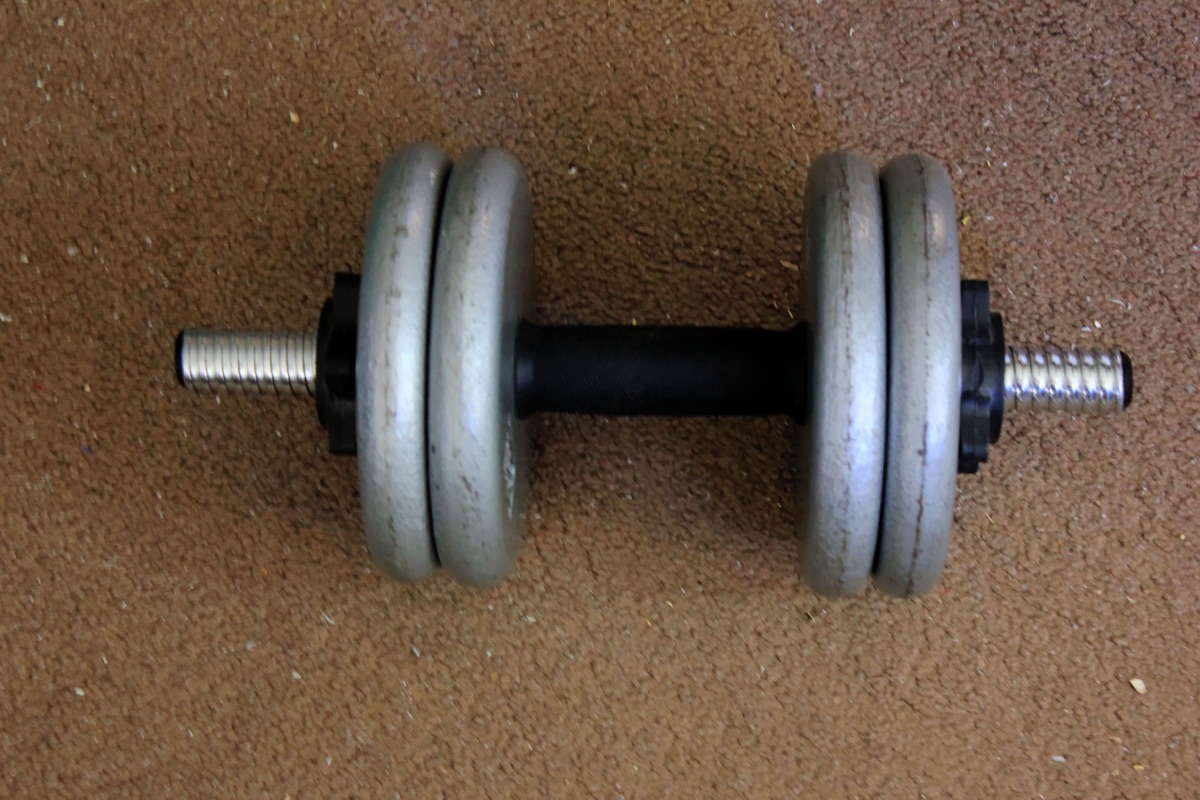
For years, the message about exercise and a long life leaned on cardio - run more, walk more, get your steps in. A major new Harvard study reframes the picture, and the headline is unusually encouraging: lifting weights for a modest 90 to 120 minutes a week is linked to a meaningfully longer life, and doing more than that adds almost nothing. In other words, the dose of strength training that protects your heart, your brain, and your years is smaller and more achievable than most people assume.
Researchers at the Harvard T.H. Chan School of Public Health followed 147,374 adults for up to three decades and mapped, with unusual precision, exactly how much resistance training it takes to move the needle on lifespan. Here is what they found, how they found it, and how to put it to work this week.
- Who: 147,374 adults (31,540 men, 115,834 women)
- How long: up to 30 years of follow-up; 35,798 deaths recorded
- Cohorts: Health Professionals Follow-up Study + Nurses' Health Studies I and II
- The sweet spot: 90 to 120 minutes of resistance training per week
- Linked to: 13% lower all-cause mortality, 19% lower cardiovascular mortality, 27% lower neurological-disease mortality
- The catch that is good news: benefits plateaued after ~120 minutes - more lifting did not add more years
- Published: British Journal of Sports Medicine, 2026 (vol. 60, issue 12)
1. The Sweet Spot: 90 to 120 Minutes a Week
The central finding is a dose. Compared with people who did no resistance training at all, those who logged 90 to 119 minutes per week had the largest reductions in the risk of dying during the study, even after the researchers accounted for how much aerobic exercise people were doing.
| Cause of death | Risk reduction | Hazard ratio (95% CI) |
|---|---|---|
| All causes | 13% lower | 0.87 (0.81-0.95) |
| Cardiovascular disease | 19% lower | 0.81 (0.67-0.97) |
| Neurological disease | 27% lower | 0.73 (0.58-0.92) |
A hazard ratio below 1.0 means lower risk: an HR of 0.87 corresponds to a 13% lower chance of dying in the follow-up window than a comparable person who did no strength training. The 95% confidence intervals all sit below 1.0, meaning the protective associations are statistically robust, not noise. The neurological-disease signal - a 27% lower risk, covering conditions such as Alzheimer's and Parkinson's - is the largest of the three.
A hazard ratio compares the rate of an event - here, death - between two groups over time. HR 1.0 means no difference. HR 0.87 means a 13% lower rate. The figures in parentheses are the 95% confidence interval - the range the true value is very likely to fall within. When that whole range stays under 1.0, the benefit is considered statistically significant.
2. Why This Study Carries Weight
Single exercise studies are easy to over-read. This one is hard to dismiss, for three reasons: scale, duration, and pedigree.
The analysis pooled three of the most respected long-running cohorts in medicine - the Health Professionals Follow-up Study and the Nurses' Health Study I and II - which have tracked the diet, activity, and health of tens of thousands of clinicians since the 1980s and 1990s. Participants reported their physical activity repeatedly over the years, and the researchers followed them for up to 30 years, recording 35,798 deaths. That combination of a very large sample and a very long horizon is exactly what you need to separate a real longevity signal from short-term flukes.
Because the participants are health professionals, their records are unusually detailed and reliable. The trade-off - which the authors are candid about - is that a group of nurses and doctors is healthier and more health-literate than the general population, so the exact numbers may not transfer perfectly to everyone. The direction and size of the effect, however, line up with a broad body of earlier research linking muscle strength to survival.
3. More Is Not Better: The Plateau
Perhaps the most practical takeaway is what happened above the sweet spot. Once people passed roughly 120 minutes a week, the all-cause mortality benefit stopped improving. The curve flattened. Three hours of lifting did not beat two.
This is genuinely freeing. It means the goal is not heroic - it is repeatable. Ninety to 120 minutes a week works out to something like 15 to 20 minutes a day, or three to four short sessions. For cancer mortality, the data pointed the same direction from the very bottom of the dose range: even 1 to 59 minutes a week of resistance training was associated with modestly lower cancer death rates. The recurring theme is that the first steps deliver the biggest returns, and you do not need to overhaul your life to capture them.
4. The Real Winner: Strength Plus Cardio
Strength training did not replace aerobic exercise in this study - it amplified it. When the researchers looked at people who did both, the numbers got dramatically better. The lowest mortality of all belonged to those who combined a high level of aerobic activity with regular strength work, whose risk of early death was roughly 45% lower than people who did neither (hazard ratio around 0.55).
| Activity pattern | Risk of early death (vs. doing neither) |
|---|---|
| Strength training, 90-120 min/week | ~13% lower (all causes) |
| High aerobic activity | ~42-47% lower |
| Both combined | up to ~45% lower |
The message is not strength versus cardio - it is strength and cardio. They protect the body through overlapping but distinct routes, and stacking them is the strongest play of all. Walking, cycling, swimming, or tennis on top of a couple of short lifting sessions is the combination that did best.
5. Why Lifting Protects the Heart and Brain
This was an observational study, so it shows a strong association rather than proving cause and effect. But the biology that likely underpins it is well established. Resistance training:
- Builds and preserves muscle. After about age 30, adults lose muscle steadily; strength training is the most direct way to slow or reverse that decline, protecting mobility and independence later in life.
- Improves how the body handles sugar. Muscle is a major sink for blood glucose, so more trained muscle tends to mean better insulin sensitivity - a key lever on cardiovascular and metabolic risk.
- Strengthens the cardiovascular system. Regular resistance work is associated with healthier blood pressure, better cholesterol profiles, and less visceral fat.
- Supports the brain. Physical activity boosts blood flow and growth factors tied to brain health, and higher muscle strength has been repeatedly linked to lower rates of cognitive decline - a plausible thread behind the striking 27% lower neurological-disease mortality.
- Target ~90-120 minutes a week. That is the band where the longevity benefit peaked.
- Break it up. Three to four sessions of 20-30 minutes - or even 15 minutes most days - all count.
- No gym needed. Dumbbells, resistance bands, or household items like full water bottles work; so do bodyweight moves (squats, push-ups, lunges).
- Cover the big movements. Push, pull, squat, hinge, and carry hit the major muscle groups efficiently.
- Add cardio. Pairing strength with walking, cycling, or swimming was the single best pattern in the study.
- Start small if you are new. The data suggest even modest amounts matter - momentum beats intensity.
What the Study Can and Cannot Tell Us
- It shows association, not proof. People who lift weights may differ in other healthy ways; the researchers adjusted for many factors, but observational studies cannot fully rule out all of them.
- Activity was self-reported. Questionnaires are imperfect, though they were collected repeatedly over decades, which improves reliability.
- The cohort skews health-literate. Findings from nurses and doctors should generalize cautiously to the wider population - but the effect is large and consistent with prior evidence.
None of these caveats dents the core, upbeat message: a manageable amount of strength training is associated with living longer and better, and the bar to entry is lower than the fitness world often implies. As senior author Edward Giovannucci, professor of nutrition and epidemiology, summed it up: “For people who are less active, the key message is that small amounts can still matter. Building a routine gradually may be more important than trying to do a lot at once.”
Sources
- Zhang Y, Lee DH, Rezende LFM, Ma Y, Giovannucci E. Long-term resistance training with all-cause and cause-specific mortality: assessing dose-response and joint associations with aerobic physical activity. British Journal of Sports Medicine 2026;60(12):874-883 · PubMed
- Harvard T.H. Chan School of Public Health: Moderate amount of strength training each week could boost longevity
- ScienceDaily: Scientists found the strength training sweet spot for a longer life · U.S. News & World Report
Curated by Jerry Cards - jerrycards.com. We research the week's most consequential tech, science, and health news so you don't have to. More at jerrycards.com/news.