
 العربية
 Español
 中文
中文 Deutsch
 Français
 Português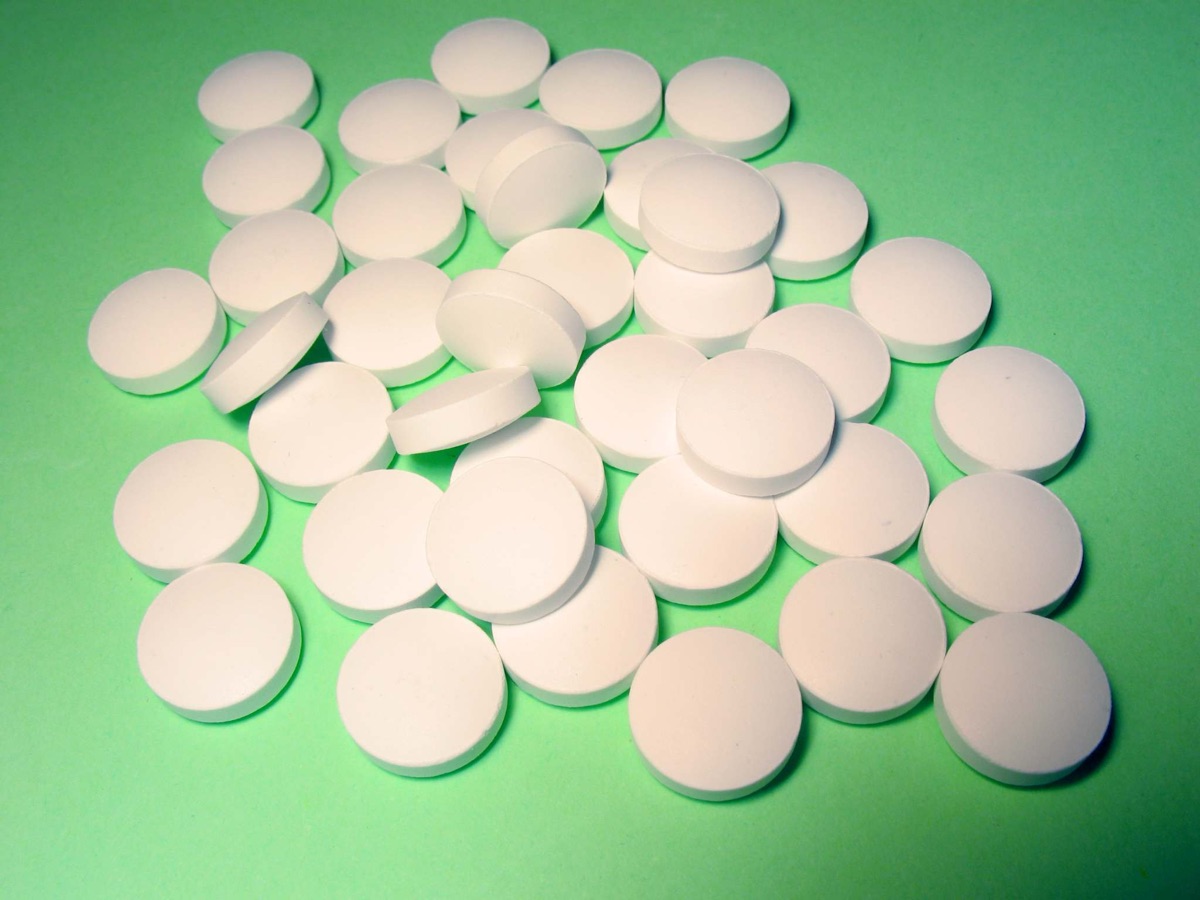
Here is a sentence that should not be true: a group of older adults was handed a bottle of pills, told plainly that the pills were inert - sugar, nothing active inside - and three weeks later they were measurably calmer, slightly sharper, and a touch stronger than a group that took nothing at all. No deception. No drug. Just an honest pill and the simple ritual of taking it.
That is the headline finding of a new randomized controlled trial from the Universita Cattolica del Sacro Cuore in Milan, and it lands on one of the most counter-intuitive ideas in modern medicine: the placebo effect - the body responding to the expectation of help rather than to any active ingredient - may work even when you are told, up front, that the help is empty. It is good news in the most literal sense, because it suggests a sliver of the mind's power over the body might be available to us cleanly, ethically, and at almost no cost.
- Who: 90 healthy older adults, randomized into three groups
- How long: a three-week course of a daily pill (or nothing)
- The three arms: a do-nothing control, a deceptive placebo (told it was a multivitamin), and an open-label or honest placebo (told it was inert but could still help via mind-body effects)
- Standout result: the honest-placebo group reported significantly lower perceived stress than both other groups
- Also seen: gains in short-term memory and physical-performance scores in the placebo groups
- Big idea: the deception added little - the benefit seems to come from expectation and ritual, not from being fooled
1. The strange thing about an “honest” placebo
For most of medical history, a placebo only counted if you did not know it was one. The mental model was simple: you believe you are getting a real treatment, that belief triggers a response, and the moment the curtain is pulled back the magic dies. Telling someone “this is a sugar pill” was assumed to be the same as giving them nothing.
Over the last decade and a half, that assumption has been quietly dismantled. Starting with a landmark 2010 Harvard trial in irritable bowel syndrome, researchers have repeatedly found that open-label placebos - pills openly and honestly described as inert - can still ease symptoms in conditions like chronic low-back pain, cancer-related fatigue, and allergic rhinitis. The catch was that almost all of this work involved people who were already suffering and looking for relief. The open question: would an honest placebo do anything for healthy people, on the everyday business of memory, mood, and physical vigor as they age?
2. The experiment
The Milan team, led by Diletta Barbiani with Alessandro Antonietti and senior author Francesco Pagnini, recruited 90 healthy older adults and randomly assigned them to one of three conditions for three weeks. Crucially, the design pitted an honest placebo directly against a deceptive one - letting the researchers separate the effect of the lie from the effect of the pill ritual itself.
| Group | What they were given | What they were told |
|---|---|---|
| Control | Nothing | No pill, no intervention |
| Deceptive placebo | Inert sugar pill | That it was an active multivitamin |
| Open-label (honest) placebo | Inert sugar pill | That it contained no active ingredient, but that the act of taking it can trigger genuine mind-body responses |
Before and after the three weeks, participants completed a battery of measures: objective tests of short-term memory and selective attention (a Stroop-style task), physical-function assessments, and a stack of self-report questionnaires covering perceived stress, psychological well-being, sleepiness, fatigue, optimism, self-efficacy, and beliefs about aging.
3. What happened
The cleanest, most robust result was about stress. The honest-placebo group ended the three weeks reporting significantly lower perceived stress than both the control group and - tellingly - the deceived group. The people who knew their pill was a placebo felt less stressed than the people who thought they were taking a real multivitamin.
Beyond stress, the cognitive and physical signals were positive but more nuanced. Short-term memory improved in the honest-placebo group relative to the do-nothing controls (though it was not statistically distinguishable from the deceptive group). On selective attention, all three groups improved over time - a classic practice effect from taking the same test twice. Physical-performance scores rose by roughly 9% in the honest-placebo group and about 7% in the deceptive group, and various cognitive measures climbed by figures in the high single digits to low twenties percent across the placebo arms - but several of these between-group differences did not reach statistical significance in a sample this small. The signal points one way; the certainty is still modest.
Senior author Francesco Pagnini framed the magnitude as meaningful, describing the effects as comparable to those seen in some experimental studies on physical activity and cognitive training. The point is not that a sugar pill rivals exercise - it is that an honest sugar pill produced changes in the same ballpark, with no active ingredient and no deception.
4. Why would an honest placebo work at all?
If it is not the lie doing the work, what is? The researchers point to a cluster of mind-body mechanisms that do not depend on being fooled:
- Expectation. Being told a pill can help - even an inert one - sets up a credible expectation of benefit, and expectation alone reliably shifts how the brain processes stress, attention, and bodily sensation.
- Ritual and agency. The daily act of taking a pill is a small, repeated signal that you are doing something for your health. That sense of control and self-efficacy is itself protective against stress.
- A believable story. The honest framing came with a plausible explanation (placebos work through real psychological and physiological pathways), and a credible rationale appears to foster the trust and engagement that lets the effect take hold.
In short, the machinery of the placebo response - calmer stress physiology, sharper engagement, a felt sense of agency - can be switched on by an honest invitation, not only by a convincing deception.
5. Why this is genuinely good news for aging
Stress is not a trivial target. Chronically elevated stress is woven into cognitive decline, poor sleep, and cardiovascular strain - exactly the burdens that accumulate with age. A tool that nudges perceived stress downward, costs almost nothing, carries no pharmacological side effects, and requires no deception is the kind of thing that is easy to imagine adding to a healthy-aging toolkit.
The ethical angle is the quiet breakthrough here. Deceptive placebos are powerful but largely off-limits in real care - you cannot routinely lie to patients. An open-label placebo sidesteps that problem entirely. It hints at a future where clinicians might honestly offer expectation and ritual as a legitimate, low-risk complement to standard care.
This is about complementing, never replacing, real medicine. Nobody in this study skipped treatment for a disease in favor of a sugar pill - they were healthy adults, and the placebo sat alongside ordinary life. The promising idea is an honest, additive tool for everyday well-being, not a substitute for exercise, sleep, social connection, or a doctor's care.
What we still don’t know
The authors are commendably upfront about the limits, and so should any honest write-up be:
- It is small and first-of-its-kind. Ninety healthy older adults is a modest sample, and several promising differences did not reach statistical significance - some results could soften in a larger trial.
- No biology under the hood. The study leaned on questionnaires and behavioral tests; it did not measure objective markers like cortisol or heart-rate variability, so the physiological story is inferred, not shown.
- Design caveats. It excluded older adults already taking medication, did not include a baseline cognitive screen, was not pre-registered, and tested many outcomes at once - all of which raise the odds that some positive findings are statistical noise.
- Durability is unknown. Three weeks is a snapshot. Whether an honest placebo keeps working over months - or fades as the novelty wears off - is an open question.
None of this dims the central, hopeful idea. It simply means the right posture is curiosity, not certainty: a promising first signal that some of the mind's quiet influence over the body may be available to us plainly, with no trick required.
Sources
- Barbiani D., Antonietti A., Pagnini F. “Placebo mechanisms in aging: A randomized controlled trial comparing deceptive and open-label placebos on psychological, cognitive, and physical functioning in older adults.” International Journal of Clinical and Health Psychology, 2026, article 100673. DOI: 10.1016/j.ijchp.2026.100673
- MedicalXpress: Sharper mind and body in older adults with a fake supplement in just three weeks · News-Medical: Taking a placebo knowingly still improves stress and memory
- SciTechDaily: This “fake” pill improved memory and physical performance in just three weeks
- Background: Kaptchuk T.J. et al. (2010), “Placebos without deception” (open-label placebo in IBS), PLoS ONE
- Image: plain white tablets by David Richfield, Wikimedia Commons (File:FlattenedRoundPills.jpg), CC BY-SA 3.0
Curated by Jerry Cards - jerrycards.com. We research the week's most consequential science, health, and tech news so you don't have to. More at jerrycards.com/news.