
 العربية
 Español
 中文
中文 Deutsch
 Français
 Português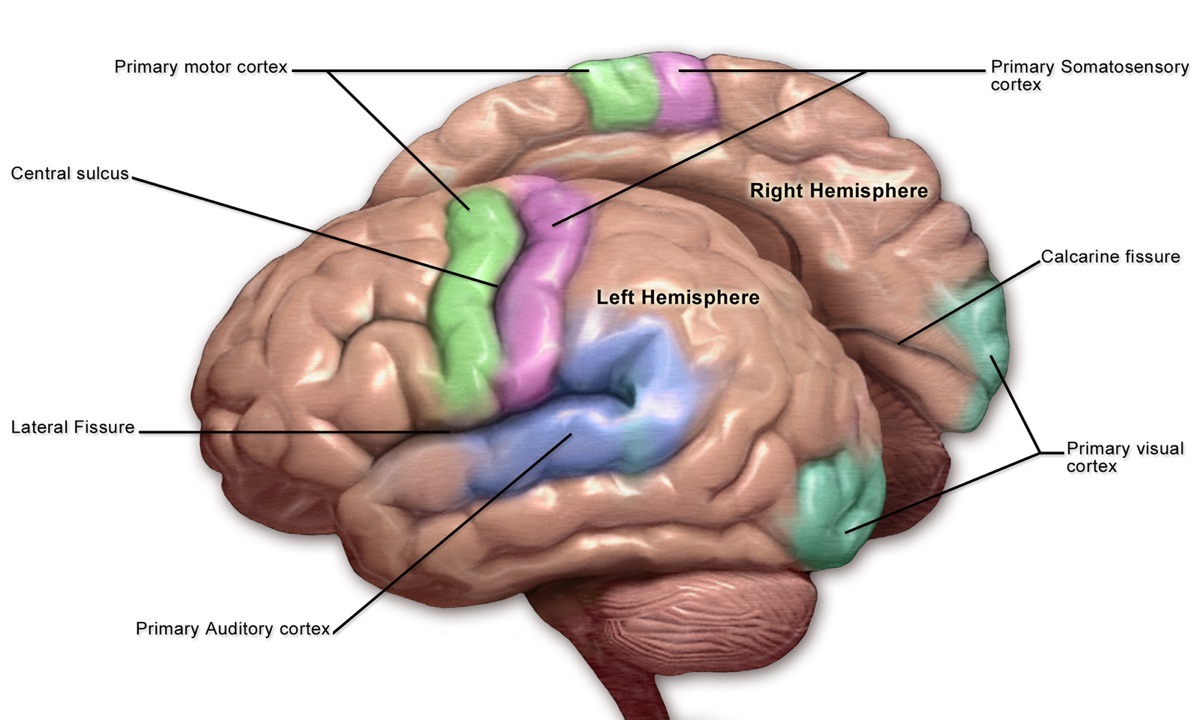
For a hundred years, the story of how we learn to talk had a clear lead character: the motor cortex, the strip of brain that fires the muscles of the lips, jaw and tongue. A new study in the Proceedings of the National Academy of Sciences (PNAS), from researchers at McGill University and Yale, gently but firmly demotes it. When the team taught people a new way of speaking and then briefly switched off different parts of the brain, the memory of that new speech pattern survived only when the sensory regions were left intact. Knock out the motor cortex, and the freshly learned skill was barely touched. It is a small, elegant experiment with a big implication: we appear to store newly learned speech in what we hear and feel, not in the muscles that move.
- Who: Nishant Rao (Yale), Rosalie Gendron and Timothy F. Manning (McGill), senior author David J. Ostry (McGill)
- What: healthy adults learned a new speech pattern via real-time altered auditory feedback; TMS then briefly disrupted one region at a time
- Result: disrupting the auditory or somatosensory cortex impaired next-day memory of the new pattern; disrupting the motor cortex did not
- Meaning: the brain stores newly learned speech in its sensory maps - sound and the feel of the mouth - not in motor areas
- Where: PNAS 2026, DOI 10.1073/pnas.2525468123; funded by the U.S. National Institute on Deafness and Other Communication Disorders
1. The century-old assumption
Speaking is one of the most intricate motor acts the human body performs - roughly 100 muscles coordinated in fractions of a second. So it was natural to assume that learning and remembering those movements lived in the brain's motor machinery: the primary motor cortex and its neighbours in the frontal lobe, the regions that send the commands to the articulators. Decades of sensorimotor neuroscience leaned on that frontal-motor-first picture.
But there has always been a competing clue. We monitor our own speech constantly through two senses: hearing (we adjust when our voice sounds wrong) and somatosensation (the touch-and-position feedback from the tongue, lips and jaw). The question the McGill-Yale team set out to answer was blunt: when you learn a new speech movement, where does the memory of it actually live?
2. The experiment: trick the ear, then test the brain
The design has two moving parts. First, learning: the researchers altered the sound of each participant's own voice in real time and played it back through headphones. When you hear yourself saying something subtly different from what you intended, you automatically adjust your articulation to compensate - a fast, reliable, and measurable form of speech motor learning. Within minutes, people are speaking in a slightly new way.
Second, disruption: immediately after learning, the team used transcranial magnetic stimulation (TMS) - brief magnetic pulses delivered through the scalp - to temporarily interfere with one of three target regions. Then they brought participants back 24 hours later to measure how much of the newly learned speech pattern had stuck. TMS is the right tool here because it lets researchers ask a causal question - is this region necessary for the memory? - rather than just watching which areas light up.
Transcranial magnetic stimulation (TMS): a non-invasive method that uses a magnetic coil to induce a small electric current in a targeted patch of cortex, briefly nudging its activity up or down - here, used to transiently disrupt a region so its role can be tested.
Auditory cortex (superior temporal gyrus): the brain's primary sound-processing map, including how your own voice should sound.
Somatosensory cortex: the touch-and-position map; for speech, the felt sense of where the tongue, lips and jaw are.
Primary motor cortex: the region that issues movement commands to the speech muscles.
3. The result: the senses hold the memory
The pattern was clean and, to many, surprising.
| Region briefly disrupted by TMS | Its everyday job | Effect on next-day memory |
|---|---|---|
| Auditory cortex (superior temporal gyrus) | processing sound, incl. your own voice | memory significantly impaired |
| Somatosensory cortex | the felt position of tongue, lips, jaw | memory significantly impaired |
| Motor cortex | commanding the speech muscles | little to no effect |
Read together, the three conditions tell a single story. The new speech skill was retained only when the sensory regions were left undisturbed. The motor cortex - long cast as the star - turned out to be, in the researchers' framing, more of an executor than a librarian. It performs the movement, but it is not where the freshly learned movement is kept.
“Sensorimotor neuroscience has traditionally focused on frontal motor areas as the principal drivers of movement. This study changes that understanding.”
- David Ostry, senior author, McGill University
Lead author Nishant Rao put the same point from the memory side: “our study challenges the assumption that new speech memories are solely reliant on changes in motor areas of the brain.”
4. Why this makes sense: a target, then a movement
The result is counter-intuitive only if you assume movement memory must live in the movement system. Flip the logic and it fits neatly. To say a word correctly, your brain needs a target: this is what it should sound like, and this is how my mouth should feel getting there. Those targets are written in sensory terms. The motor commands are simply whatever it takes to hit them on a given day - and they can vary with fatigue, posture, or a mouthful of food. Storing the goal in sensory coordinates, and re-deriving the motor commands on the fly, is a robust way to build a skill.
The work also dovetails with a broader thread from Ostry's lab. Earlier research from the group showed that consolidating newly learned arm movements depends on the somatosensory cortex - hinting that the brain may use a shared, sensory-anchored strategy to lay down motor memories across very different behaviours, from reaching to speaking.
5. What it could change
- Speech therapy. If the memory of a speech movement is sensory, then sharpening what a learner hears and feels - not just drilling the motor act - may be the more direct route to lasting change. That reframes how clinicians might structure practice for everything from accent and articulation work to developmental speech disorders.
- Stroke and aphasia rehabilitation. Helping people rebuild speech after brain injury might lean on sensory-first strategies, recruiting intact auditory and somatosensory pathways to re-anchor the targets.
- Brain-to-speech technology. Devices that restore communication for people who cannot talk - an area moving fast in 2026 - may do better by reading and supporting sensory representations and feedback loops, not motor commands alone. A system that knows the intended sound and feel has a richer target to aim at.
What we still don't know (the honest caveats)
- This was a focused laboratory task in healthy adults - a specific speech-adaptation paradigm - not full language learning or clinical recovery. Generalising to those settings is the next step, not a settled conclusion.
- TMS shows that a region is necessary for retaining the new pattern; it does not draw the entire circuit or rule out contributions from areas that were not targeted.
- The precise effect sizes and statistics live in the peer-reviewed PNAS paper; press summaries (and this article) describe the direction of the findings rather than every number.
- This is foundational neuroscience - a shift in where to look - not a therapy available today. The clinical payoff, if it comes, is downstream.
When you learn a new way of speaking, your brain seems to file it under how it should sound and feel - in the sensory cortex - rather than under how to move. The mouth does the talking; the senses remember.
Sources
- Rao N., Gendron R., Manning T. F., Ostry D. J. “Sensory basis of speech motor learning and memory.” PNAS 2026. DOI 10.1073/pnas.2525468123
- ScienceDaily: New brain study reveals speech learning works differently than we thought
- SciTechDaily: Brain study overturns long-held beliefs about how humans learn speech · Neuroscience News: Speech memories depend on sensation and sound over motor control
- Background: Ostry lab work on the somatosensory cortex and the consolidation of newly learned movements, Journal of Neuroscience (2024).
Curated by Jerry Cards - jerrycards.com. We read the week's most consequential science, health and tech research so you don't have to. More at jerrycards.com/news.