
 العربية
 Español
 中文
中文 Deutsch
 Français
 Português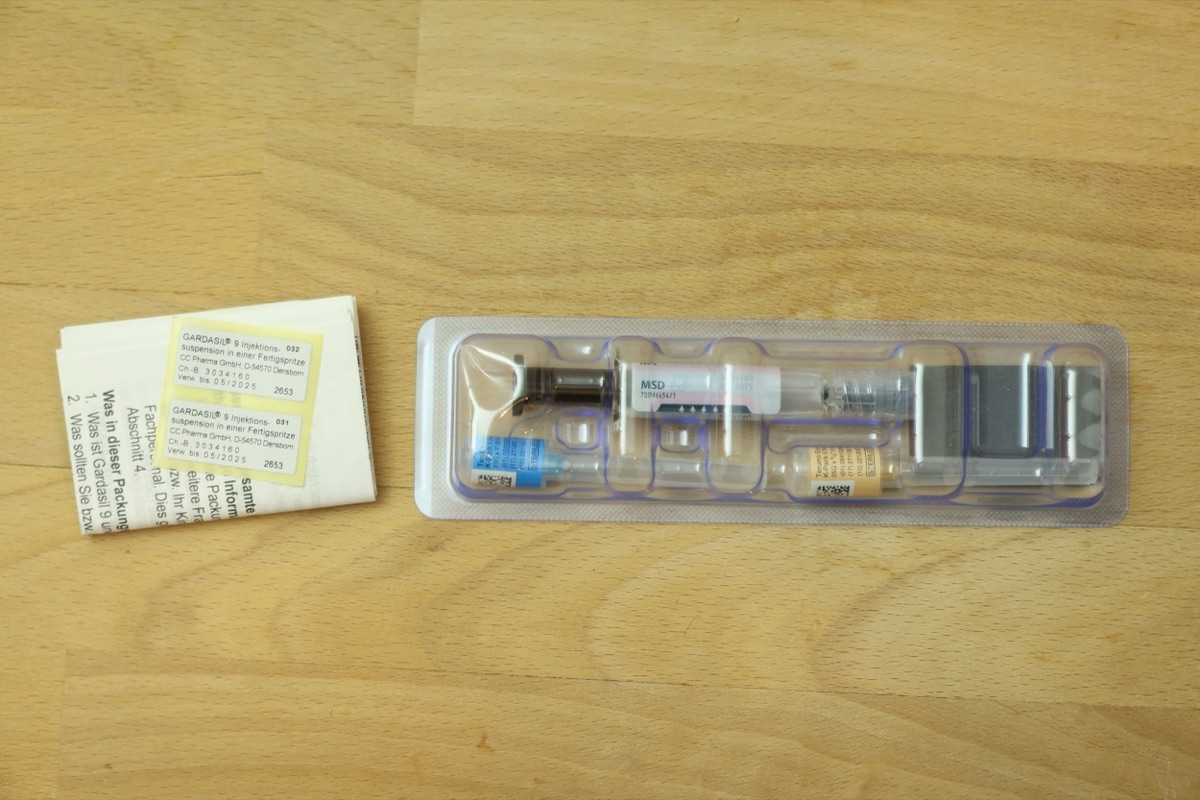
A generation of young women in England is quietly growing up free of a cancer that used to kill them - and for the first time, we can prove it. A study published in The Lancet on June 18, 2026, reports that not a single woman aged 20 to 24 died of cervical cancer in England across the five years from 2020 to 2024. It is the first time that has ever happened in the records. The reason is not a new drug or a smarter scan, but a vaccine these women were offered in school as 12- and 13-year-olds more than a decade ago.
This is the clearest evidence yet that the HPV vaccine does not merely prevent abnormal cells and precancerous lesions - it prevents death. Here is exactly what the researchers found, how the programme works, and why public-health experts now talk openly about eliminating cervical cancer for good.
- Published: The Lancet, June 18, 2026 - ‘Cervical cancer mortality trends following HPV vaccination in England, 2001-24’ (DOI 10.1016/S0140-6736(26)00918-9)
- Who: Queen Mary University of London, led by Prof. Peter Sasieni and Dr Milena Falcaro, funded by Cancer Research UK
- Headline finding: zero cervical cancer deaths among women aged 20-24 in England, 2020-2024 - the first time on record (about 23 would have been expected without the vaccine)
- Lives saved so far: an estimated 200 cervical cancer deaths already prevented across England
- Coverage: roughly 90% of the first fully vaccinated generation received the vaccine through school and catch-up programmes
- Why it is possible: HPV causes almost all (more than 95% of) cervical cancers - so a vaccine can stop it
1. The number that says it all: zero
For decades, cervical cancer killed a steady trickle of young women in England every year. Then it stopped. In the five-year period 2020-2024, no woman aged 20 to 24 in England died of cervical cancer at all - the first time that has happened since records began. Based on historical rates, the researchers estimate around 23 deaths would have been expected in that age band over those years.
The decline did not appear from nowhere; it tracks the vaccine moving through the population. Deaths in this youngest, best-vaccinated group fell sharply in the late 2010s and then to nothing once the cohorts offered the vaccine at age 12-13 reached their early twenties.
| Women aged 20-24 in England | Cervical cancer deaths |
|---|---|
| 2015-2019 (partially vaccinated cohorts) | about 5 (roughly 80% below expected) |
| 2020-2024 (vaccinated cohorts) | 0 (vs ~23 expected) |
2. From preventing lesions to preventing deaths
Earlier research had already shown the vaccine slashing infections, precancerous lesions and even cervical cancer cases by around 90% in vaccinated cohorts. What had never been demonstrated at a national level was the thing that matters most: fewer people dying. Cancer can take years to develop, so the proof had to wait until the first vaccinated children grew up.
That moment has now arrived. “This is the first study to highlight the impact of HPV vaccinations on cervical cancer mortality,” said lead researcher Professor Peter Sasieni. Across all age groups, the team estimates the programme has already prevented roughly 200 cervical cancer deaths in England - and, as Sasieni notes, “as vaccinated generations grow older, we’ll see many more lives saved.”
3. Why cervical cancer is a cancer we can vaccinate against
Most cancers are a tangle of many causes. Cervical cancer is unusual: more than 95% of cases are caused by the human papillomavirus (HPV), a common virus passed on by skin-to-skin contact. Persistent infection with a few high-risk types - especially HPV 16 and 18 - drives the overwhelming majority of tumours.
Because a virus is the root cause, stopping the virus stops the cancer. The vaccine trains the immune system to block infection before it can take hold, which is why it works best when given to children before any exposure. The version now used in many countries, Gardasil 9, protects against nine HPV types, including the ones responsible for most cervical cancers - as well as several other HPV-driven cancers of the throat, anus and genitals.
HPV does not only cause cervical cancer. It is also behind a large share of anal, vulval, vaginal, penile and oropharyngeal (throat) cancers. That is why England extended the programme to boys in 2019 - protecting them directly, and helping protect everyone through reduced spread.
4. How England did it
England has offered the HPV vaccine through schools since 2008, originally to girls aged 12-13, with catch-up offers up to age 25. Delivering it in classrooms rather than clinics is the quiet secret to the result: it reaches almost everyone, across every postcode and income level, which pushed coverage up toward 90% in the cohorts that are now adults. In 2019 the programme was extended to boys, and it is now given as a single dose, making it simpler and cheaper to deliver.
The pay-off is a near-complete shield for the first fully covered generation. Children vaccinated at 12-13 now show close to zero risk of dying from cervical cancer before the age of 30.
5. The bigger picture: a world goal within reach
England’s zero is more than a national milestone - it is a proof of concept for a global ambition. In 2020 the World Health Organization set out to eliminate cervical cancer as a public health problem, defined as fewer than 4 cases per 100,000 women per year, via its ‘90-70-90’ targets for 2030: 90% of girls fully vaccinated by 15, 70% of women screened with a high-accuracy test, and 90% of those who need it receiving treatment.
The stakes are enormous. Cervical cancer is still the fourth most common cancer in women worldwide, with around 660,000 new cases and 350,000 deaths a year (2022) - and about 94% of those deaths occur in low- and middle-income countries, where vaccines and screening have been hardest to reach. That gap is now starting to close: large national HPV vaccination programmes have recently launched in India, China and Pakistan, and single-dose schedules make rollout dramatically cheaper.
What still needs to happen
The result is a triumph, not a finish line. A few honest caveats keep it in perspective:
- Coverage is not yet universal. UK uptake has slipped to roughly 76-86% by age 15 - below the WHO’s 90% target - so catch-up vaccination still matters.
- Screening still saves lives. The vaccine does not cover every cancer-causing HPV type, and millions of older, unvaccinated women remain at risk, so cervical screening remains essential.
- The need is greatest where access is lowest. The countries carrying most of the burden are the ones still building their programmes - which is exactly where the next wave of lives can be saved.
Still, the direction of travel is unmistakable. “Thanks to HPV vaccination and cervical screening, a future where almost nobody gets cervical cancer is now firmly in sight,” said Michelle Mitchell, chief executive of Cancer Research UK, calling the result “an incredible milestone.” A shot given to a 12-year-old in a school gym has turned, two decades on, into a year with no young woman lost. That is about as hopeful as public health gets.
Sources
- The Lancet: Cervical cancer mortality trends following HPV vaccination in England, 2001-24 (DOI 10.1016/S0140-6736(26)00918-9)
- Cancer Research UK: New data shows the HPV vaccine is saving lives from cervical cancer
- Queen Mary University of London: Cervical cancer deaths plummet to record low thanks to HPV vaccine
- News-Medical: HPV vaccination linked to sharp decline in cervical cancer deaths · Al Jazeera: Could the HPV vaccine eliminate cervical cancer deaths?
- World Health Organization: Global strategy to eliminate cervical cancer
Curated by Jerry Cards - jerrycards.com. We research the week’s most consequential science, health, and technology news so you don’t have to. More at jerrycards.com/news.