
 العربية
 Español
 中文
中文 Deutsch
 Français
 Português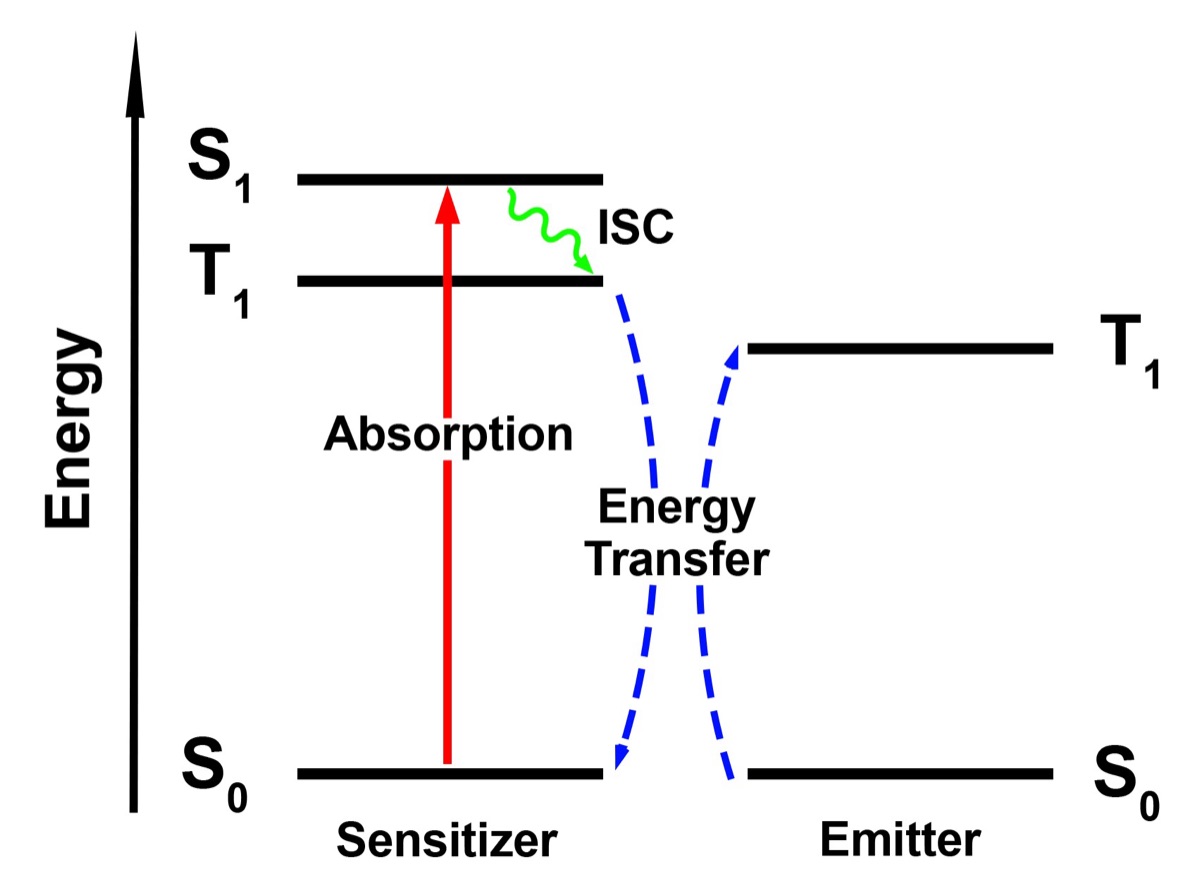
Sunlight is mostly the wrong kind of light for some of our most useful tools. Ultraviolet light sterilizes water, cures inks and resins, hardens dental fillings, and powers the photocatalysts that break down pollutants - but UV makes up only about 6% of the sunlight that reaches the ground. So here is a tantalizing idea: instead of harvesting the UV that already exists, what if you could manufacture more of it, on demand, out of the abundant visible light all around us?
A team at Kyushu University in Fukuoka, Japan, has just taken a concrete step toward exactly that. Writing in Nature Communications on June 23, 2026, they describe a solid material that ‘upgrades’ ordinary visible light into higher-energy ultraviolet - and, crucially, does it at the intensity of plain outdoor sunlight, with no lasers or concentrated lamps. It is a long-standing goal in photochemistry, and it arrives wrapped in a rather lovely human story.
- What: a solid-state material that converts visible light into higher-energy ultraviolet light (‘photon upconversion’)
- How: triplet-triplet annihilation - fusing the energy of two visible photons into one UV photon
- The fix: alkyl side-chains on the molecule dihydroindenoindenedene (DHI) set neighbors at the perfect distance - close enough to pass energy, far enough not to quench it
- Numbers: solid-state fluorescence quantum yield above 60%; 1.9% visible-to-UV efficiency - at natural sunlight intensity, where most solids manage essentially nothing
- Where: Kyushu University - Nature Communications, June 23, 2026 (DOI 10.1038/s41467-026-73898-0)
- Bonus: caps 14 years of research; cheap starting materials, straightforward synthesis, patent filed
1. Why making UV from visible light is ‘uphill’
Normally, light loses energy when it interacts with matter. A material absorbs a photon and re-emits one of lower energy (longer wavelength) - blue in, green out. That is the everyday direction, and it is why a glow-in-the-dark sticker charged by bright light emits a softer color.
Going the other way - taking low-energy visible light and producing higher-energy UV - runs against that grain. You cannot get there with a single photon; one visible photon simply does not carry enough energy. You have to add two photons together. That is the entire game, and it is called photon upconversion.
The most efficient way to add photons at low light levels uses two kinds of molecule. A donor (sensitizer) absorbs a visible photon and shuttles the energy into a long-lived ‘triplet’ excited state - a kind of energy storage that lasts long enough to be useful. It hands that triplet energy to a nearby acceptor (emitter) molecule. When two excited acceptors collide, they annihilate: one drops back down while shoving its energy onto the other, which is briefly lifted to a high enough state to spit out a single higher-energy UV photon. Two visible in, one UV out.
As co-author Yoichi Sasaki, an Associate Professor in Kyushu University’s Faculty of Engineering, summed it up: “What we do here is ‘add together’ the energy from two visible light photons to make one ultraviolet photon.”
2. The problem: it kept failing in solids
TTA upconversion has worked well for years - but mostly in liquid solution, where molecules drift freely and can find each other to swap energy. The trouble is that almost every real-world use - a coating, a window film, a panel, a printed layer - needs a solid. And in solids, the same process tends to collapse.
The reason is geometric. Pack flat, plate-like organic molecules tightly together and their π-electron clouds overlap. That overlap opens an escape route: the delicate triplet energy leaks away (a process called quenching) before two excited molecules ever manage to meet and annihilate. Sasaki described the bind precisely:
“In solids, molecules are packed tightly, and the π electron clouds… can overlap. When that happens, triplets easily fizzle out before they ever meet. Molecules must be close enough for energy transfer but separated enough to prevent quenching of excitons.”
In other words, you need a Goldilocks distance: close enough to pass energy, far enough not to lose it. Hitting that window in a packed solid is the puzzle that had stalled the field.
3. The fix: build the spacers into the molecule
The Kyushu team’s answer is what they call sterically protected π-electron systems - a clean piece of molecular design. They built an organic semiconductor molecule, dihydroindenoindenedene (DHI), and attached small alkyl side-chains to its sp³ carbon atoms.
That sp³ detail is the trick. An sp³ carbon forms four bonds pointing rigidly outward in three dimensions (think of a tiny tripod-plus-stalk), unlike the flat sp² carbons that make up the light-absorbing core. By anchoring the chains to those rigid 3D positions, the molecule carries its own built-in spacers: neighbors are propped apart at a fixed, well-controlled distance. The light-active π cores stay near enough to hand off triplet energy, but their electron clouds no longer crowd together and bleed it away.
The result is a solid that does what solids were not supposed to do:
| Metric | Result | Why it matters |
|---|---|---|
| Solid-state fluorescence quantum yield | > 60% | The emitter stays bright in the solid instead of going dark |
| Visible-to-UV upconversion efficiency | 1.9% | ~2 UV photons produced per 100 visible photons absorbed |
| Light intensity needed | Natural sunlight | No lasers or concentrators - the hard part for solids |
Sasaki put the headline number in plain terms: “This means roughly two UV photons are produced for every hundred visible-light photons absorbed.” And he met the obvious objection head-on: “It may sound low, but it runs on natural sunlight alone. Most solid-state materials cannot realize this even at much higher light intensity.” That is the real advance here - not a record efficiency, but a working solid that operates in the gentle, diffuse light we actually get outdoors.
4. Why it matters: making the useful 6% bigger
Because UV is such a small slice of sunlight, anything that lets us conjure more of it from visible light opens doors. The researchers point to a practical wish-list:
- Solar-driven photocatalysis - using sunlight to power reactions (splitting water, breaking down pollutants) that normally need a UV lamp
- Air and water purification - UV is a workhorse disinfectant; a sunlight-fed source is attractive off-grid
- Low-intensity 3D printing and curing - resins, coatings and adhesives that set under UV
- Everyday UV chemistry - hardening dental fillings, gels and similar materials
It is worth being clear about altitude: this is a materials breakthrough, not a finished device. But it changes the mental model. Sunlight stops being a fixed menu you can only filter and starts being a resource you can partly re-tune toward the colors you need. The fact that the starting materials are inexpensive, the synthesis is straightforward, and a patent is already filed all point toward a path out of the lab.
5. A 14-year story - and a retirement gift
There is a human thread running through this paper. The work is the culmination of more than 14 years of research led by Nobuo Kimizuka, now Professor Emeritus at Kyushu University’s Research Center for Negative Emissions Technologies and a pioneer of upconversion chemistry. The key result came together in May 2024, and graduate students Naoyuki Harada, Hayato Shoyama and Nutnicha Boonmong, with then-Assistant Professor Kiichi Mizukami and Sasaki, raced to bring years of effort together.
They handed Kimizuka the finished manuscript just 11 days before he left the lab - something Sasaki called “a heartfelt retirement gift.” Kimizuka’s own verdict: “This discovery is the culmination of over 14 years of our research and marks a major milestone in photon-upconversion and molecular self-assembly research.” The study was supported by the Japan Science and Technology Agency and the Japan Society for the Promotion of Science.
What we still do not know
- How high the efficiency can climb. 1.9% is a meaningful result at sunlight intensity, but it is still modest in absolute terms; pushing it up is the next frontier.
- How it scales and lasts. Moving from a lab sample to durable, large-area coatings or panels - and confirming long-term stability under real sun - is engineering work yet to come.
- Which application lands first. Purification, photocatalysis and printing are all plausible, but the route from material to product is unwritten.
None of that dims the core achievement: a solid that quietly takes ordinary daylight and hands back something more energetic - a small, elegant act of turning the light we have into the light we want.
Sources
- Harada, Shoyama, Boonmong, Mizukami, Watanabe, Zhao, Ehara, Sasaki & Kimizuka, ‘Sterically protected π-electron systems for efficient solid-state photon upconversion,’ Nature Communications, June 23, 2026 (DOI 10.1038/s41467-026-73898-0)
- Kyushu University news release (via EurekAlert!): ‘Harvesting UV light from sunlight just got solid’
- Phys.org: Solid-state material turns visible light into high-energy UV at sunlight intensity · ScienceDaily: New solid-state material converts sunlight into higher-energy UV light
- Image: ‘Jablonski diagram describing the sensitizer and emitter interaction in triplet-triplet annihilation upconversion,’ by Wikimedia Commons user Argoncarbon, File:TTAUC.png, CC BY-SA 4.0
Curated by Jerry Cards - jerrycards.com. We research the week’s most consequential tech, science, and health news so you don’t have to. More at jerrycards.com/news.