
 العربية
 Español
 中文
中文 Deutsch
 Français
 Português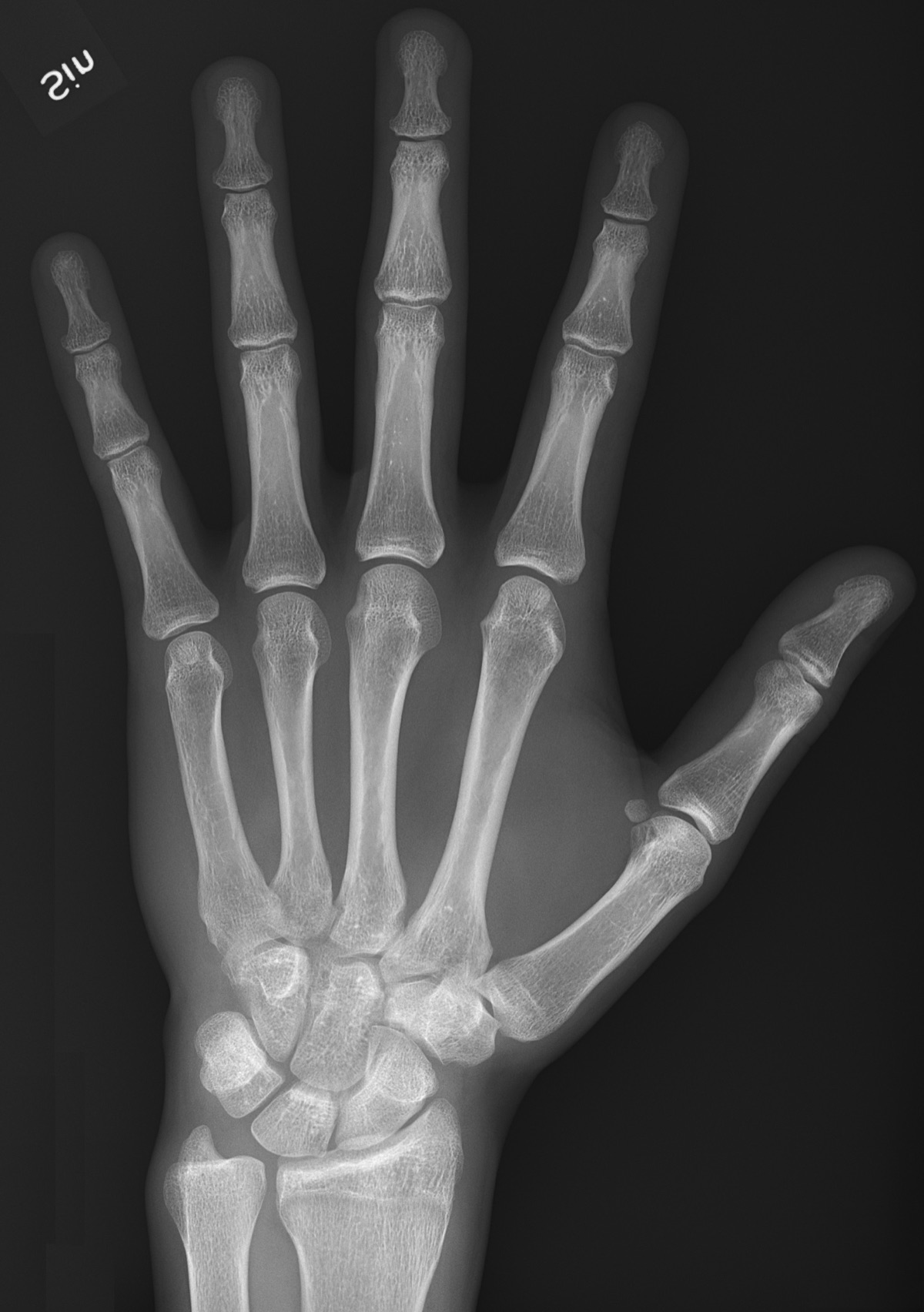
For as long as modern biology has existed, regeneration has been someone else's superpower. A salamander can regrow a severed leg - bone, muscle, nerves and all - while an adult mammal answers the same injury with a scar. The textbook explanation was simple: somewhere on the evolutionary road to warm blood and big brains, we traded the ability away. A new study from Texas A&M University, published in Nature Communications, makes the case that we did not lose it at all. We switched it off - and it can be switched back on.
Working in mice, the team showed that delivering two well-characterized growth signals in the right order can coax an already-healed amputation site to do something adult mammals are not supposed to do: rebuild the missing skeleton, joint and connective tissue from cells that were already there.
- Who: Ken Muneoka and Larry Suva, Texas A&M College of Veterinary Medicine and Biomedical Sciences
- Published: Nature Communications, 2026 (DOI 10.1038/s41467-026-72066-8) - released April 23, 2026, with a fresh wave of coverage in mid-June 2026
- Model: adult mice, digit amputation
- Method: two growth factors in sequence - FGF2 first, then BMP2 a few days later
- Result: regrowth of bone, a synovial joint, articular cartilage, tendon and ligament - with no transplanted stem cells
- Big idea: mammalian regeneration appears to be dormant, not absent
1. The dogma it challenges
Regenerative medicine has long rested on a working assumption: to rebuild a complex body part, you have to bring in new building blocks - stem cells grown in a dish, scaffolds, transplanted tissue. The Texas A&M result points somewhere cheaper and stranger. The cells that did the rebuilding were native to the wound. They had simply defaulted to making scar tissue. Redirected with the right signals, the same cells built bone and joint instead.
As co-author Larry Suva put it, the capacity is not absent - “it's just obscured.” Or, in Ken Muneoka's framing: “Regenerative failure in mammals can be rescued.” The cells, Suva added, “that we thought to be unprogrammable, in fact are.”
2. How the two-step switch works
The protocol's cleverness is in its timing. The researchers did not intervene at the instant of injury. They let the amputation heal the way a mammal normally heals - the wound closed over with scar. Only then did they act.
- Step one - FGF2 (fibroblast growth factor 2). Applied to the closed wound, FGF2 nudged local cells out of their scarring program and into forming a blastema-like structure - the cluster of unspecialized, progenitor-like cells that salamanders use to regenerate, and that adult mammals were thought unable to make.
- Step two - BMP2 (bone morphogenetic protein 2). A few days later, once that blastema-like mass had formed, BMP2 delivered the build order, instructing the cells to differentiate and assemble into patterned tissue.
“You first shift the cells away from scarring,” Muneoka explained, “and then you provide the signals that tell them what to build.” Two messages, in sequence: stop scarring; start building.
3. What actually grew back
This is the part that separates the study from a hopeful headline. The regrown digit was not just a lump of bone - it contained the coordinated set of tissues you would expect at that level of the limb.
| Structure regrown | What it is |
|---|---|
| Phalangeal & sesamoid bone | The skeleton of the digit |
| Synovial joint | A true articulating joint |
| Articular cartilage | The smooth bearing surface of the joint |
| Tendon | Connective tissue linking muscle to bone |
| Ligament | Connective tissue linking bone to bone |
Muneoka's own summary is the honest one: “We regenerated what you would expect to see at that level of injury. The structures are there - just not in a perfect form.” The regrown parts were real and correctly arranged, if not flawless copies of the originals.
4. Why two already-known signals is the good news
FGF2 and BMP2 are not exotic chemistry. Both are well-studied human growth factors, and BMP2 is already used in the clinic to stimulate bone growth - it is an established component of certain spinal-fusion procedures. A regeneration recipe built from signals medicine already understands - rather than gene edits or lab-grown organs - is, in principle, a shorter path from mouse to clinic. That does not make translation easy; it makes it conceivable.
Amphibians like salamanders and axolotls regrow lost limbs by building a blastema - a pool of progenitor cells that rebuilds the missing part. Adult mammals normally cannot; we seal wounds with fibrosis instead. But there were always hints the program was buried rather than deleted: mammalian fetuses can regenerate, and even adult mice can regrow the very tip of a digit. By reaching further up the digit and rebuilding joint structures with a two-signal sequence, this study turns those hints into a working switch.
The honest caveats
- This is mouse work. Digit-level regeneration in a mouse is a long way from a human finger, let alone a whole limb.
- The copies are imperfect. The regrown structures were not exact replicas of the original anatomy.
- Early stage. Regeneration depends on many pathways acting together; FGF2-then-BMP2 is a powerful proof of principle, not a finished therapy.
- Scale is unproven. Reawakening a blastema in a small digit is not the same challenge as regrowing large, load-bearing structures.
None of that dims the headline finding. For decades the working belief was that the mammalian body had thrown away the blueprint for regeneration. This study says the blueprint is still on file - and we are beginning to learn how to read it back out.
Sources
- Muneoka, Suva, et al.: Digit regeneration in mice is stimulated by sequential treatment with FGF2 and BMP2 (Nature Communications, 2026; DOI 10.1038/s41467-026-72066-8)
- Texas A&M Stories: What if humans could regrow tissue? · ScienceDaily: Humans may have hidden regenerative powers
- SciTechDaily: Humans may have hidden regenerative powers · Tech Times: FGF2 and BMP2 override scarring in mice
Curated by Jerry Cards - jerrycards.com. We research the week's most consequential tech, science, and business news so you don't have to. More at jerrycards.com/news.