
 العربية
 Español
 中文
中文 Deutsch
 Français
 Português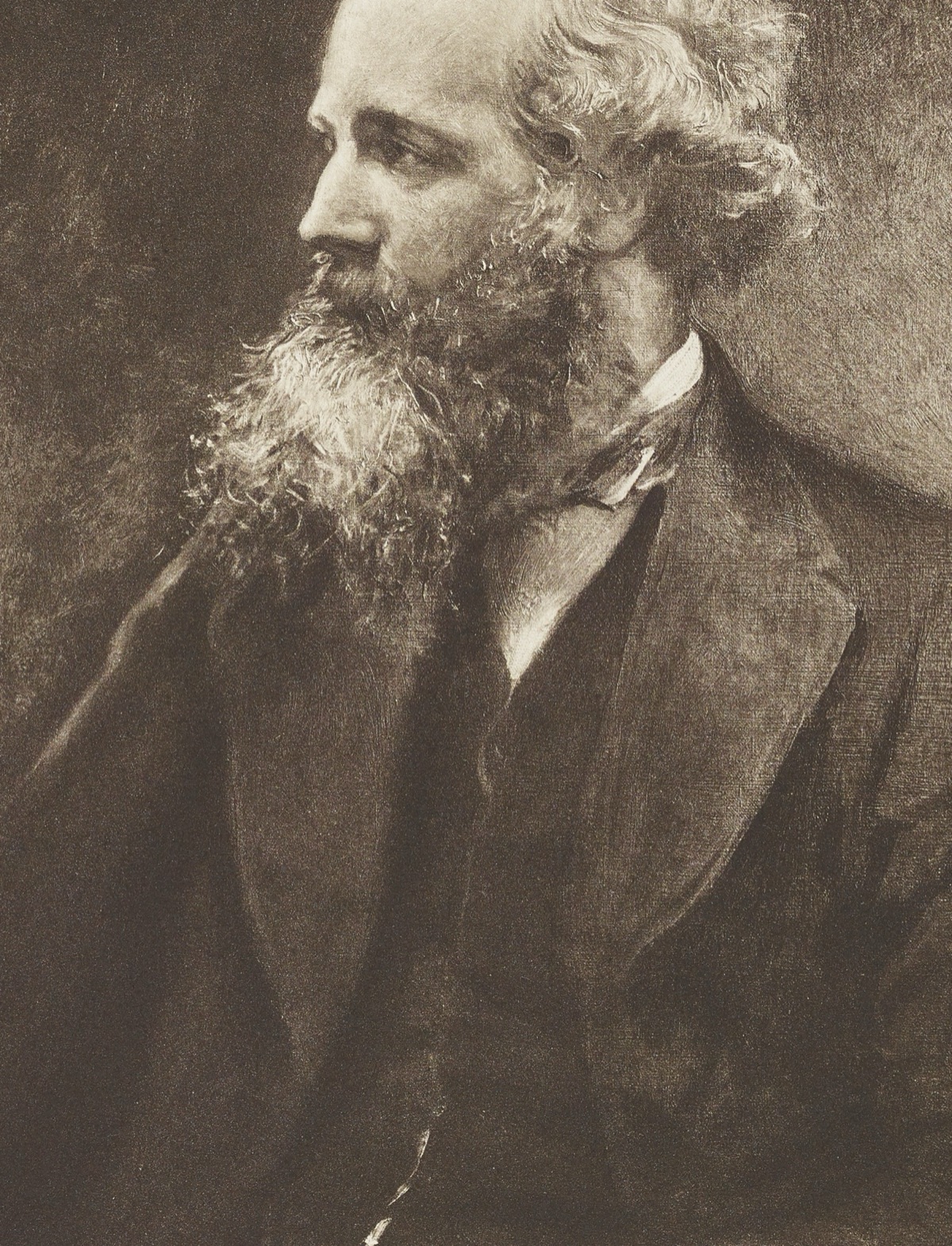
Look at the device you are reading this on. The Wi-Fi carrying these words, the cellular signal in your pocket, the GPS that knows where you are, the screen glowing in front of you - every one of them is a working answer to a set of equations written down more than a century and a half ago. In 1865, the Scottish physicist James Clerk Maxwell published a paper titled “A Dynamical Theory of the Electromagnetic Field,” and in it he did two extraordinary things at once: he united three of nature’s great mysteries - electricity, magnetism and light - into a single theory, and he predicted a whole universe of invisible waves that no one had ever detected. When those waves were finally caught in a laboratory, the wireless age began.
This is a tribute to the quiet page of mathematics that built the connected world.
- Who: James Clerk Maxwell (1831–1879), Scottish physicist, later the first Cavendish Professor of Physics at Cambridge
- The paper: “A Dynamical Theory of the Electromagnetic Field,” read to the Royal Society on 8 December 1864 and published in its Philosophical Transactions, vol. 155 (1865)
- The big idea: electricity and magnetism are one electromagnetic field, governed by one set of equations
- The surprise: the field can travel as a wave - and that wave moves at the speed of light, because light is an electromagnetic wave
- The prediction: other, invisible electromagnetic waves must exist - what we now call radio, confirmed by Heinrich Hertz in 1886–1888
- The legacy: radio, TV, radar, mobile phones, Wi-Fi, GPS and 5G - all of wireless
1. Three mysteries, one field
For most of history, electricity, magnetism and light were three unrelated wonders. Lightning and static sparks were one thing; the pull of a lodestone on a compass needle was another; and light was a mystery all its own. In the early 1800s, Hans Christian Ørsted and André-Marie Ampère showed that electric currents make magnetism, and Michael Faraday showed the reverse - that a moving magnet makes electricity. Electricity and magnetism were clearly linked. But no one had a single theory that held them together.
Maxwell’s leap was to stop thinking about charges and wires and to think instead about the invisible field filling the space around them - a real, physical thing carrying energy through every point of empty space. Building on Faraday’s intuition of “lines of force,” he wrote down a set of equations describing how electric and magnetic fields are created, how they curl around each other, and how a change in one gives birth to the other. The two forces were no longer separate. They were one electromagnetic field.
2. The missing piece: displacement current
The keystone was a term Maxwell added that no experiment had demanded. The existing law for magnetism (Ampère’s law) said that electric currents create magnetic fields. Maxwell realised it was incomplete: a changing electric field, even with no wire and no moving charge, must also create magnetism. He called this the displacement current.
It sounds like a technicality. It was anything but. With that one addition, the equations became symmetric and self-consistent - a changing electric field makes a magnetic field, a changing magnetic field makes an electric field - and, crucially, they now had a new kind of solution: a wave, in which electric and magnetic fields take turns creating each other, marching together through empty space with nothing to carry them but themselves.
3. The number that changed everything: light
Then Maxwell asked the obvious question: how fast would such a wave travel? The equations gave an answer built entirely from two constants that laboratory scientists had already measured - one for electricity, one for magnetism. In modern notation the speed comes out as
c = 1 / √(μ₀ × ε₀)
- a velocity determined purely by the electric and magnetic properties of empty space. When Maxwell put in the measured numbers, the result was almost exactly the measured speed of light. That could not be a coincidence. Light, he concluded, is simply an electromagnetic wave - and optics is a branch of electromagnetism. He had already glimpsed this in an earlier paper, “On Physical Lines of Force” (1861–62), where he wrote that we “can scarcely avoid the inference that light consists in the transverse undulations of the same medium which is the cause of electric and magnetic phenomena.” In the 1865 paper he stated it plainly:
“The agreement of the results seems to show that light and magnetism are affections of the same substance, and that light is an electromagnetic disturbance propagated through the field according to electromagnetic laws.”
— J. C. Maxwell, 1865
In a single insight, two of the oldest questions in science - what is light? and what connects electricity and magnetism? - collapsed into one answer.
4. The four equations
Maxwell first wrote his theory as twenty equations in twenty variables - powerful but unwieldy. In the 1880s the self-taught English engineer Oliver Heaviside (with Josiah Willard Gibbs and Heinrich Hertz) recast them, using the new language of vector calculus, into the four elegant statements every physics and engineering student now learns as “Maxwell’s equations”:
| Equation | What it says |
|---|---|
| Gauss’s law | Electric charges create electric fields that point out from positive charge and in toward negative |
| Gauss’s law for magnetism | There are no isolated magnetic poles; magnetic field lines always form closed loops |
| Faraday’s law | A changing magnetic field creates an electric field - the principle behind every electric generator |
| Ampère–Maxwell law | Electric currents and changing electric fields (Maxwell’s displacement current) create magnetic fields |
Four lines. Together they describe every electric and magnetic phenomenon in the universe, from a compass needle to a lightning bolt to the light of a distant star - and they hold as perfectly today as they did in 1865.
5. The prediction comes true: radio is born
Maxwell’s boldest claim was that visible light is only one sliver of a vast spectrum of electromagnetic waves, most of them invisible. He predicted them on paper and died in 1879 without ever seeing one caught.
Between 1886 and 1888, at the University of Karlsruhe, Heinrich Hertz built a spark generator and a simple loop detector and became the first person to deliberately produce and receive electromagnetic waves - measuring them racing across his lab at the speed of light, exactly as Maxwell’s equations demanded. Asked about the use of his discovery, Hertz modestly saw none. Within a generation it had become radio; today the unit of frequency - the hertz - bears his name.
From that spark came the entire wireless world: radio and television, radar and microwave ovens, satellite links and fibre optics, and every device that speaks without a wire. Your mobile phone call, your Wi-Fi, your Bluetooth earbuds, your GPS fix, your 5G connection - each is a Maxwell wave, generated, shaped and read according to the laws he wrote in 1865.
6. Why it still matters
Maxwell’s theory was the first field theory in physics, and it became the template for everything that followed. When a young Albert Einstein went hunting for the deep puzzle that became special relativity in 1905, he was staring straight at Maxwell’s electromagnetism: the equations insist that light always travels at the same speed, and following that clue led Einstein to rewrite space and time themselves. Einstein kept a portrait of Maxwell on his study wall alongside Newton and Faraday, and said that “one scientific epoch ended and another began with James Clerk Maxwell.” The field concept he pioneered runs straight through to the quantum field theories that describe the fundamental particles today.
Richard Feynman gave Maxwell the grandest tribute of all:
“From a long view of the history of mankind - seen from, say, ten thousand years from now - there can be little doubt that the most significant event of the 19th century will be judged as Maxwell’s discovery of the laws of electrodynamics.”
— Richard Feynman
And there was more to the man. The same Maxwell made the first durable colour photograph in 1861, worked out the statistical law that governs how gas molecules move (the Maxwell–Boltzmann distribution), dreamed up the thought experiment known as Maxwell’s demon, proved that Saturn’s rings must be made of countless separate particles, and founded the Cavendish Laboratory at Cambridge. But it is the electromagnetic field that changed the world most.
We remember the inventions - the radio, the phone, the glowing screen. The deeper marvel is what made them inevitable: a handful of equations showing that electricity, magnetism and light are one, and that the same field can carry a message invisibly across a room, a city, or the void between worlds. Before Maxwell, we lit lamps and watched compasses. After him, we could speak without wires - and we have not stopped since.
Sources & further reading
- Wikipedia: A Dynamical Theory of the Electromagnetic Field · James Clerk Maxwell · Maxwell’s equations
- Wikipedia: On Physical Lines of Force (1861–62) · Heinrich Hertz · Oliver Heaviside
- The Feynman Lectures on Physics: Vol. II, Ch. 1 - Electromagnetism (the ‘most significant event of the 19th century’ quote)
- Image: photogravure portrait of James Clerk Maxwell (Photographische Gesellschaft, Berlin), public domain, via Wikimedia Commons
Curated by Jerry Cards - jerrycards.com. Our 致敬 (tribute) series celebrates the landmark papers and discoveries that quietly built the modern world. More at jerrycards.com/news.