
 العربية
 Español
 中文
中文 Deutsch
 Français
 Português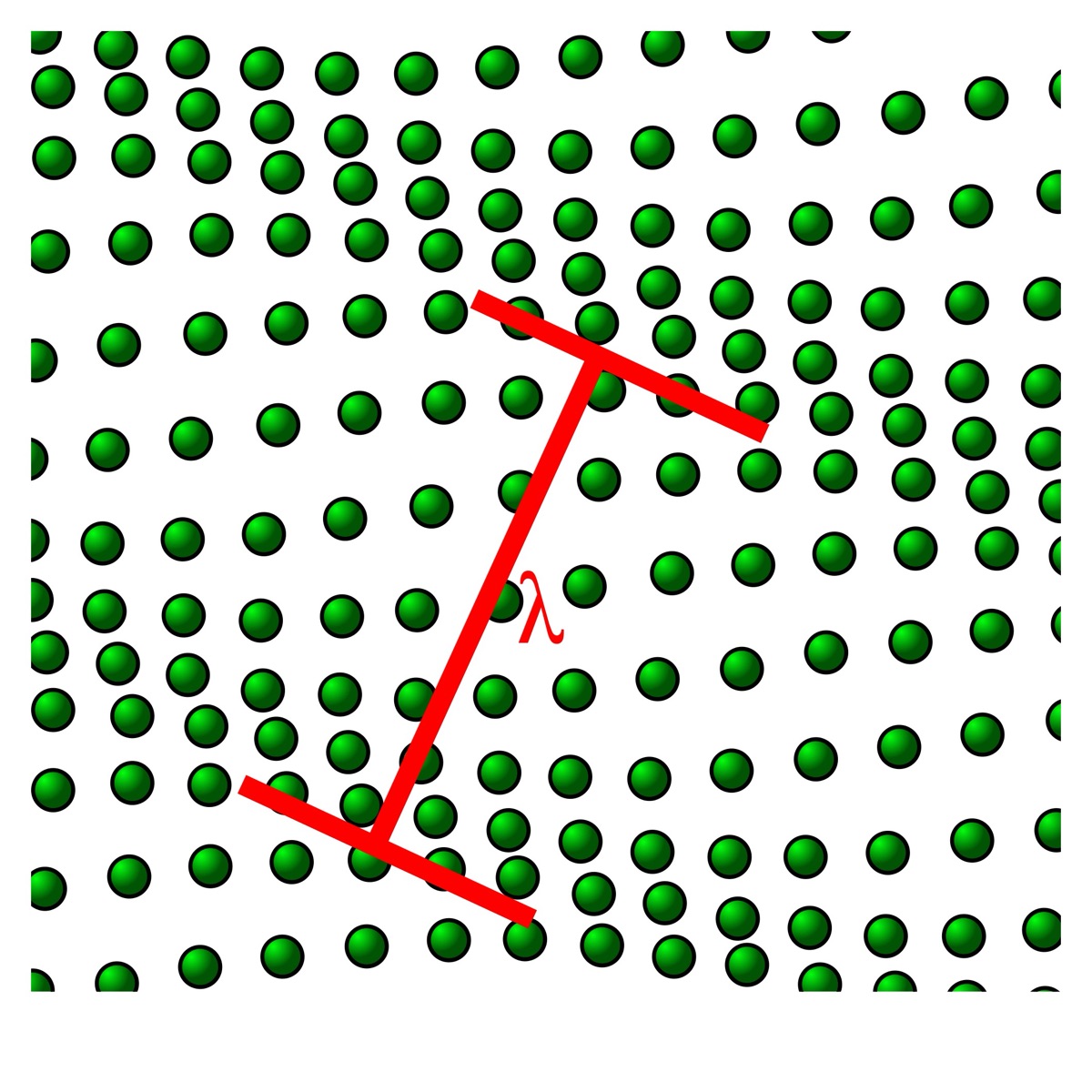
Scientists just found a way to make sound behave like light — one clean, controllable packet at a time. Physicists at McGill University, working with the National Research Council of Canada and Princeton University, have built a chip-scale device that emits precise, controllable bursts of phonons — the quantum particles of sound. The trick is disarmingly elegant: they drive electrons through an ultra-pure crystal faster than the speed of sound inside it, and the ‘supersonic’ electrons shed their extra energy as sharp pulses of sound-like vibration instead of the usual waste heat. It is a small, cold, beautiful piece of physics — and it points toward talking to submarines, seeing deeper inside the body, and a laser made of sound.
- What: a device that generates controllable bursts of phonons (quantized sound), on demand
- How: electrons driven through a two-dimensional crystal at supersonic speed emit their energy as sound instead of heat
- Who: McGill University, with the National Research Council of Canada and Princeton University
- Conditions: near absolute zero, from 10 millikelvin to about 3.9 kelvin
- Why it matters: sound reaches places light and radio cannot — deep ocean, solid metal, living tissue
- Could enable: phonon lasers, through-barrier and underwater communication, sharper medical imaging, ultra-sensitive sensors
- Published in: Physical Review Letters (2026)
1. What Is “Quantum Sound”?
We normally think of sound as a continuous wave — a pressure ripple moving through air, water, or a solid. But zoom in far enough, and sound is grainy. Inside a crystal, the atoms sit in a repeating lattice, and a sound wave is really the whole lattice jiggling in step. Quantum mechanics says that jiggle can only carry energy in fixed, indivisible amounts. Each of those smallest units is a phonon.
A photon is the smallest possible packet of light. A phonon is the smallest possible packet of sound — a single quantum of vibration in a crystal lattice. Light is built from photons; heat and sound in a solid are built from phonons. The catch is that phonons are far harder to make one clean batch at a time. As McGill physicist Michael Hilke puts it, “Phonons are hard to generate and harness in a controlled way, so we are exploring new regimes.”
Being able to produce phonons in controlled, well-defined bursts — rather than as the random hiss we call heat — is the whole game. It is the difference between a light bulb and a laser, applied to sound.
2. The Trick: Electrons That Move Faster Than Sound
The device is built from an ultra-pure, two-dimensional crystal — a sheet in which electrons are confined to a channel only a few atoms wide, so pristine that electrons can glide long distances without scattering. When the team pushes an electrical current through this channel hard enough, the electrons reach supersonic speed: they travel faster than sound moves through the crystal itself.
At that point something has to give. Just as a jet crossing the sound barrier throws off a sonic boom, these supersonic electrons cannot simply coast — they dump their surplus energy into the lattice as bursts of phonons. Crucially, in the presence of a magnetic field the emission becomes resonant: the phonons come out in sharp, well-defined pulses at specific conditions rather than as a random smear, which is exactly what makes the output controllable. (The formal name for the effect, and the paper’s title, is resonant magnetophonon emission by supersonic electrons.)
All of this happens deep in the cold. The experiments ran between 10 millikelvin and about 3.9 kelvin — hundredths of a degree to a few degrees above absolute zero — where electrons stop behaving like a warm, jostling crowd and start moving in orderly, collective, quantum lockstep. Only then does the effect stand out cleanly. As Hilke describes it, “At absolute zero temperatures — that is, the world of quantum physics — no sound is created unless electrons travel collectively at the speed of sound or above.”
Interestingly, the electrons behaved beyond what existing theory predicted once the team pushed them well past the sound barrier. “Our study goes further by pushing the system well beyond that point and showing that existing theories need to be reassessed,” Hilke says — a sign that there is genuinely new physics to map here, not just a new gadget.
3. Why Controllable Sound Is a Big Deal
Almost all of our communication runs on light and its cousins: fiber optics, radio, Wi-Fi, electrical signals. That works wonderfully in air, vacuum, and glass fiber. But there are whole environments where light and radio simply stop — and in exactly those places, sound sails through.
As Hilke frames the motivation: “Modern communication is largely based on light, including electromagnetic waves and electrical currents. In a medium such as oceans, sound can travel, whereas light and electrical currents cannot.”
| Medium | Light & radio | Sound (phonons) |
|---|---|---|
| Vacuum / open space | Travels freely | Cannot travel (needs a medium) |
| Deep seawater | Strongly absorbed, very short range | Travels for kilometres |
| Solid metal / shielding | Blocked | Passes through |
| Living tissue | Scatters, limited depth | Penetrates (the basis of ultrasound) |
Light and sound turn out to be complementary rather than rivals: light owns the open air and the vacuum of space; sound owns the dense, opaque, and enclosed. A source of clean, controllable, quantum-grade phonons gives engineers a precision tool for that second world.
4. What It Could Unlock
The researchers point to a cluster of possibilities that a reliable, controllable phonon source would open up:
- The phonon laser. A laser produces a coherent, tightly organized beam of photons. A phonon laser would do the same for sound — a pure, coherent beam of vibration — enabling exquisitely precise measurement and sensing.
- Communication where light fails. Signaling through deep ocean, through metal hulls and shielded infrastructure, or through the earth — environments where radio and light are absorbed or blocked.
- Sharper medical imaging. Ultrasound already listens with sound; controllable quantum sound could sharpen imaging and open new ways to probe living tissue and biological materials.
- Ultra-sensitive sensors. Because phonons couple to motion, temperature, and strain, a clean phonon source is a natural heart for a new class of quantum sensors.
5. The Honest Road Ahead
This is a laboratory milestone, and the fun is in what is left to solve. Two honest caveats, stated plainly:
- It is very cold. The device works near absolute zero, so today it belongs on a lab bench with a dilution refrigerator, not in a submarine or a hospital corridor. Turning it into deployable hardware is a long-horizon project.
- The theory is still catching up. The electrons behaved beyond current predictions once pushed past the sound barrier — which is exciting, but it means the physics needs to be re-examined before it can be fully engineered.
The next steps are concrete and hopeful. The team plans to rebuild the device from other materials — graphene among them — to push the electrons to even higher speeds and, eventually, toward warmer, more practical temperatures. In other words, the proof of principle is done; now comes the engineering.
The Team & The Paper
The work was led at McGill University by a team including Associate Professor of Physics Michael Hilke, with collaborators at the National Research Council of Canada and Princeton University (whose group grows some of the world’s purest two-dimensional electron crystals).
Paper: Z. T. Wang, M. Hilke, N. Fong, D. G. Austing, S. A. Studenikin, K. W. West & L. N. Pfeiffer, “Resonant Magnetophonon Emission by Supersonic Electrons in Ultrahigh-Mobility Two-Dimensional Systems,” Physical Review Letters, vol. 136, 2026. DOI: 10.1103/m1nb-j1h6.
Sources
- ScienceDaily / McGill University: Scientists create quantum sound device that could transform communications
- SciTechDaily: Scientists create “quantum sound” device that works near absolute zero
- Physical Review Letters (peer-reviewed paper, DOI 10.1103/m1nb-j1h6)
- The Eastern Herald: A quantum sound device could someday communicate where radio and light cannot
- Image: ‘Lattice wave’ illustration by Florian Marquardt (Wikimedia Commons, CC BY-SA 3.0) — a schematic of a wave rippling through a crystal lattice, used here as a representative illustration of a phonon (not the actual experimental device).
Curated by Jerry Cards — jerrycards.com. We research the week’s most fascinating tech and science so you don’t have to. More at jerrycards.com/news.