
 العربية
 Español
 中文
中文 Deutsch
 Français
 Português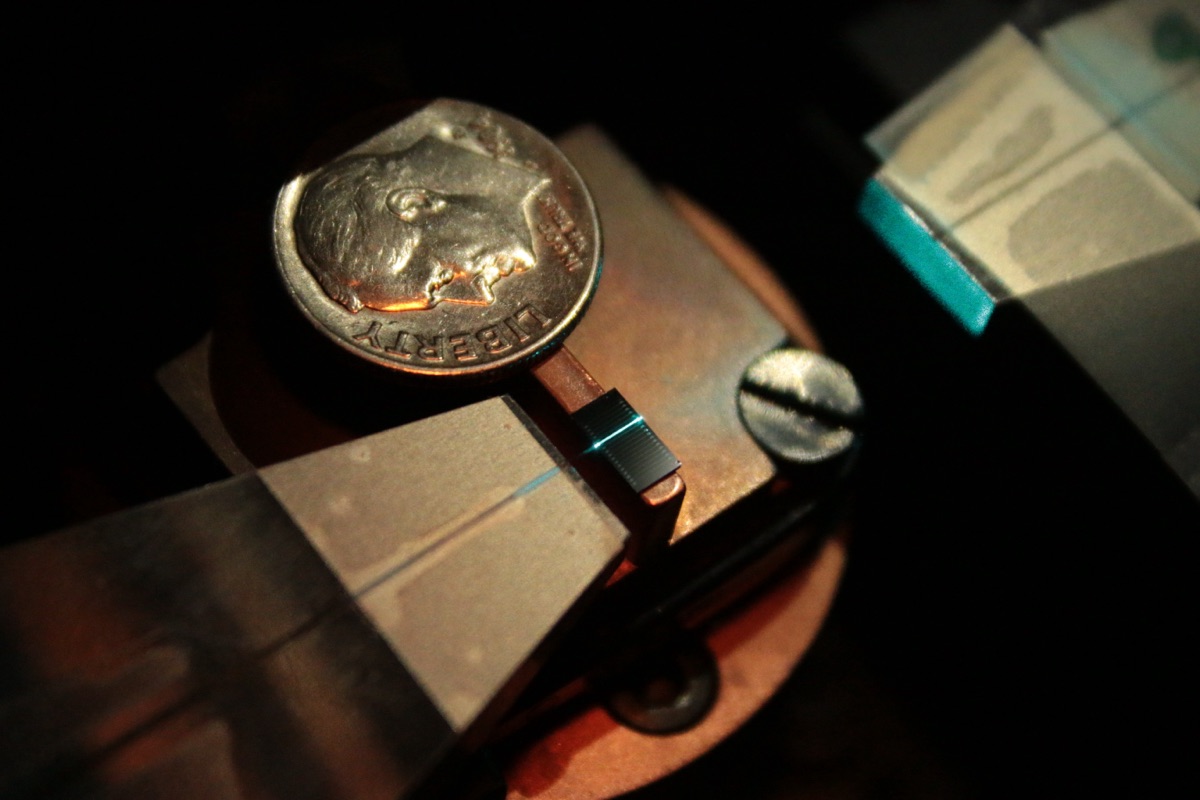
For roughly seventy years, computers have run on electrons. A team of physicists in Australia has just shown how to hand more of that job to light. Researchers at Monash University have built what they describe as the first fully integrated valleytronic circuit: a single, compact chip that can generate a light signal, steer it along a chosen path, and read it back out - all within the same device, and all at ordinary room temperature. The work was published in Nature Photonics.
It is a genuinely positive milestone for an idea the computing world has chased for years: moving and processing information with particles of light instead of electric current. Here is what the team built, the physics that makes it work, and why it points toward computers that are both faster and far more energy-efficient.
- Who: Monash University School of Physics and Astronomy - lead author Dr Chi Li, co-first author Dr Kaijian Xing, with Dr Haoran Ren, Prof Michael S. Fuhrer and Prof Stefan A. Maier, plus collaborators in Singapore, Germany, China and Japan
- What: the first chip to generate, steer and read valley-encoded light signals in one integrated device
- How: atom-thin 2D materials stacked onto light-shaping metasurfaces
- Demo: encoded and processed two separate images at the same time
- Bonus: works at room temperature - no cryogenic cooling
- Published in: Nature Photonics, May 2026 (DOI 10.1038/s41566-026-01916-0)
1. What just happened
Photonics - using light to carry and process data - is not new; it already moves the world’s internet traffic through optical fiber. The hard part has always been doing the interesting computational steps on a chip, and doing all of them together. Typically a lab could build one device to create a special light signal, and a different device to detect it, but stitching the full pipeline into a single integrated circuit remained out of reach.
That is the gap the Monash team closed. “Until now, we could generate or detect these signals, but not do everything in one integrated device,” said Dr Chi Li, the study’s lead author. “What we have built is a complete on-chip system that can create, route and read this information with very high precision.”
2. What is valleytronics? Light with a handedness
To pack information into light, you need a property you can switch and measure. Valleytronics offers a new one.
In certain atom-thin crystals (think of a sheet just one molecule thick), an electron’s allowed energies form two distinct low points - physicists call them “valleys.” Crucially, the two valleys respond to light of opposite handedness: left-circularly polarized light talks to one valley, right-circularly polarized light to the other. That gives engineers a clean binary label - a brand-new channel to encode data in, sitting alongside the usual tricks of brightness and color. Reading the valley is, in effect, reading which way the light spins.
Encoding information this way is attractive because it is fast, low-energy, and adds an extra dimension of data on top of conventional signals - useful both for everyday computing and for quantum hardware.
3. Three jobs, one chip
The device performs the full signal chain in one place. The team’s key engineering move was a stacking approach - layering the ultrathin active material onto pre-made metasurfaces (nanoscale patterns that bend and route light) - which neatly avoids the notoriously difficult task of growing delicate crystals directly on top of photonic structures.
| Stage | What the chip does |
|---|---|
| Generate | The 2D material emits valley-polarized light - a signal that carries the chosen handedness |
| Steer | The metasurface routes that light along a programmed path on the chip |
| Read | The device converts the light back into an electrical signal, on-chip, so the result can be used |
4. The proof: two pictures at once, at room temperature
To show the system could handle real information, the researchers encoded and processed two separate images simultaneously - a demonstration that the chip can juggle more than one stream of data at a time. Just as important for practicality, the whole thing operates at room temperature. Many quantum and exotic-materials devices only work when chilled to near absolute zero, which makes them expensive and awkward; running warm is a meaningful step toward something deployable.
5. Why light-based computing matters now
The timing is pointed. The AI boom has turned energy and heat into the defining constraint of computing - data centers are straining power grids, and a large share of that energy is spent simply shuttling data around. Photons help on exactly those axes:
- Speed and bandwidth. Light is the fastest carrier we have, and many wavelengths can share one path at once.
- Energy and heat. Optical signals can move information with less resistive loss than electrons pushed through wires, which means less waste heat to remove.
- New capabilities. A controllable, readable quantum property like the valley state is also useful for quantum technologies, advanced imaging, and secure communication.
“This is a significant step toward scalable, chip-based technologies that use light instead of electricity to process information,” said senior author Dr Haoran Ren.
6. What is still ahead
This is a laboratory demonstration, and the honest next steps are the usual ones for a young technology: scaling the circuit up, boosting performance, and integrating it with the rest of a computing system. None of that is guaranteed to be easy. But the achievement here is real and specific - the complete create-route-read loop, integrated and running warm - and it gives the field a concrete platform to build on. The broader story is an encouraging one: a credible path toward computers that do more while drawing less power.
Sources
- Chi Li, Kaijian Xing, Haoran Ren et al., “An on-chip programmable valley optoelectronic nanocircuit,” Nature Photonics (2026), DOI 10.1038/s41566-026-01916-0
- ScienceDaily: New light-powered chip could accelerate AI and quantum computing · Phys.org: Tiny on-chip circuit could power next-generation quantum and AI technologies
- SciTechDaily: a tiny chip that uses light instead of electricity · The Quantum Insider: Monash on-chip valleytronic circuit
- Header image: photonic chip routing laser light - credit R. Jacobson/NIST (U.S. public domain), illustrative.
Curated by Jerry Cards - jerrycards.com. We research the week’s most consequential tech, science, and business news so you don’t have to. More at jerrycards.com/news.