
 العربية
 Español
 中文
中文 Deutsch
 Français
 Português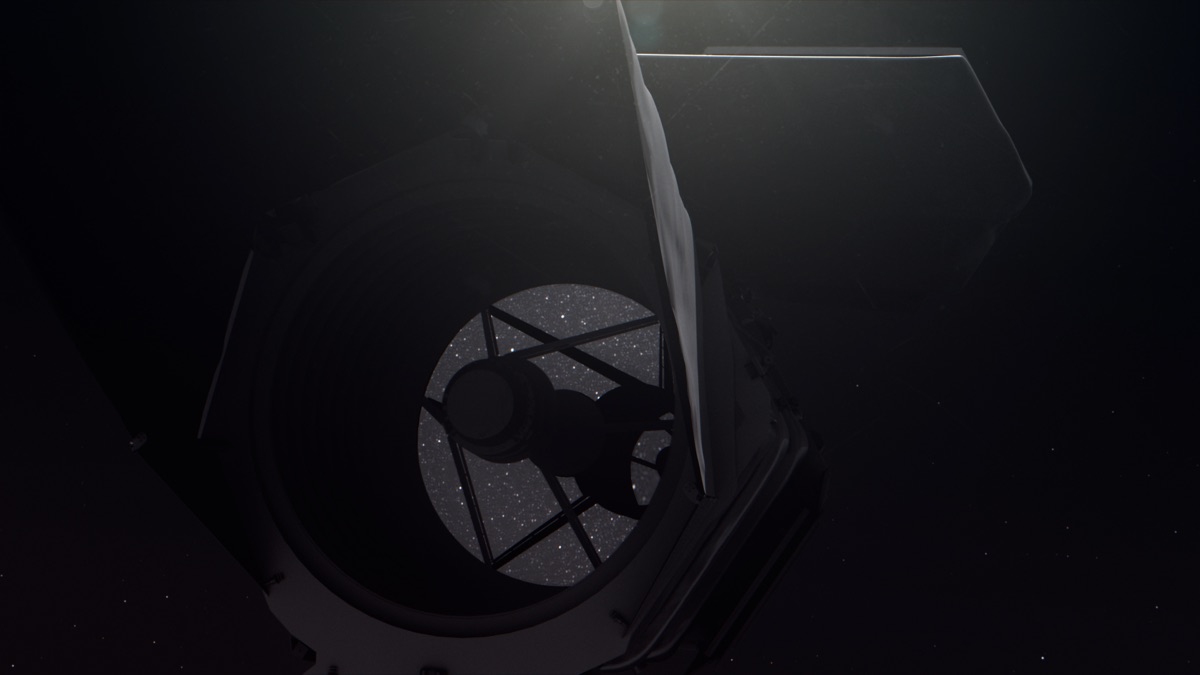
NASA just finished building the most powerful survey telescope it has ever made - and it did it about nine months ahead of schedule. The Nancy Grace Roman Space Telescope, NASA's next flagship observatory, is now standing in a clean room at Kennedy Space Center in Florida, being readied for a launch targeted for no earlier than August 30, 2026, aboard a SpaceX Falcon Heavy. Roman will not replace Hubble or the James Webb Space Telescope - it will do something they cannot: photograph enormous swaths of the sky at Hubble-class sharpness, again and again, fast enough to take a genuine census of the universe.
Here is what Roman is, the woman it is named for, and why its single most eye-catching promise - roughly 100,000 new planets - is essentially a free bonus on top of its real job.
- What: the Nancy Grace Roman Space Telescope, NASA's next great survey observatory
- Primary mirror: 2.4 meters - the same size as Hubble's
- Field of view: about 0.28 square degrees - at least 100x wider than Hubble's, at the same resolution
- Main camera: a 300.8-megapixel Wide Field Instrument, plus a starlight-blocking Coronagraph
- Status: construction completed Nov 25, 2025 - roughly nine months ahead of schedule
- Launch: targeted no earlier than Aug 30, 2026 on a SpaceX Falcon Heavy from Kennedy's Launch Complex 39A, to Sun-Earth L2
- The headline: predicted to find ~100,000 new planets - as a byproduct of its dark-energy survey
1. A Telescope That Sees 100 Times More Sky
Roman's trick is not seeing fainter or sharper than Hubble - it is seeing wider. Its Wide Field Instrument is a 300.8-megapixel infrared and visible-light camera that captures a patch of sky about 0.28 square degrees at a time. That is at least 100 times the field of view of Hubble's cameras, at the same crisp resolution. In practical terms, a single Roman exposure holds roughly the same detail as about 100 separate Hubble images stitched together.
That width is what turns a telescope into a survey machine. Where Hubble and Webb are precision instruments that stare deeply at small targets, Roman can sweep across huge regions of the sky and still resolve individual stars and galaxies - so it can build statistics, not just portraits. Alongside the Wide Field Instrument, Roman carries a Coronagraph Instrument, a technology demonstration that blocks a star's glare to directly image the faint planets and dusty disks around it.
| Specification | Roman |
|---|---|
| Primary mirror | 2.4 m (same as Hubble) |
| Wide Field Instrument | 300.8-megapixel visible / near-infrared camera |
| Field of view | ~0.28 sq deg - 100x wider than Hubble |
| Second instrument | Coronagraph (direct-imaging tech demo) |
| Orbit | Sun-Earth L2 (~1.5 million km from Earth) |
| Rocket | SpaceX Falcon Heavy, Kennedy LC-39A |
2. Named for the Woman Who Made Hubble Possible
The observatory honors Nancy Grace Roman (1925-2018), NASA's first chief astronomer and the person history remembers as the “mother of the Hubble Space Telescope.” In an era when women were routinely steered away from science, Roman built the case for a great space observatory and shepherded the program that became Hubble. It is a fitting tribute that the telescope carrying her name is the one designed to map the sky at the scale she spent her career arguing NASA should reach for.
3. 100,000 New Planets - As a Bonus
The number that travels fastest is the planets. Astronomers predict Roman will discover roughly 100,000 transiting planets - worlds that betray themselves by dimming their star a touch each time they pass in front of it. For scale: in the three decades since the first planet around a Sun-like star was found in 1995, all of astronomy combined has confirmed about 6,300 exoplanets. Roman could multiply humanity's catalogue more than fifteenfold in a single mission.
The elegant part is how it gets them. Roman's exoplanet program is built around the Galactic Bulge Time Domain Survey: staring at the crowded center of the Milky Way over and over, watching the brightness of hundreds of millions of stars. Its primary planet-hunting method there is gravitational microlensing - a brief flare of light when one star (and its planets) passes in front of another - expected to reveal about 1,000 microlensing planets, including the largest catalogue yet of rogue worlds drifting through the galaxy with no star at all.
The 100,000 transiting planets are not the goal of that survey - they are a windfall from the same data. To catch fleeting microlensing events, Roman must already monitor a vast field of stars precisely and repeatedly; those same light curves reveal transiting planets for free. As study co-author Jennifer Yee of the Center for Astrophysics | Harvard & Smithsonian put it, “It’s free science.” Lead author Benjamin Montet, now at the University of New South Wales in Sydney, framed the challenge simply: “Microlensing events are rare and occur quickly, so you need to look at a lot of stars repeatedly and precisely measure brightness changes.”
What kinds of worlds? The 2017 study projected that roughly 75% will be gas giants like Jupiter and Saturn or ice giants like Uranus and Neptune, with most of the rest being mini-Neptunes of about four to eight Earth masses - and a meaningful number sitting in the habitable zones of dimmer, orange stars.
4. The Real Mission: Dark Energy and a Billion Galaxies
As headline-grabbing as the planets are, Roman was built to answer one of the deepest questions in physics: why is the universe's expansion speeding up? The mysterious force behind that acceleration, dark energy, makes up most of the cosmos and remains essentially unexplained. To pin it down, Roman will survey the sky wide and deep enough to measure light from as many as a billion galaxies over its lifetime, tracing how cosmic structure has grown and how the expansion has changed across billions of years. Its combination of a Hubble-sized mirror, a giant field of view, and infrared vision is purpose-built for exactly this kind of statistical, whole-sky cosmology.
5. Finished Early - And Already at the Launch Pad's Doorstep
On November 25, 2025, technicians at NASA's Goddard Space Flight Center in Maryland connected Roman's inner and outer segments, completing the observatory - roughly nine months ahead of schedule, a rarity for a flagship space mission. “With Roman’s construction complete, we are poised at the brink of unfathomable scientific discovery,” said Julie McEnery, Roman's senior project scientist at NASA Goddard.
Since then it has moved fast. Roman was shipped in a climate-controlled container to Kennedy Space Center, and on June 25, 2026 it was rotated from horizontal to vertical in the Payload Hazardous Servicing Facility - a key prelaunch step ahead of final inspections, functional testing, and integration. NASA and SpaceX are now targeting liftoff no earlier than Sunday, August 30, 2026. Roman will travel to the Sun-Earth L2 point, about 1.5 million kilometers from Earth, the same gravitationally stable neighborhood where Webb operates.
Flagship space telescopes are famous for the opposite - Webb, for all its brilliance, ran years behind schedule before its triumphant launch. Roman reaching completion roughly nine months ahead of its schedule means the science starts sooner and the program stayed disciplined, a genuinely encouraging sign for the next generation of NASA observatories.
What to Watch Next
- Launch day: a Falcon Heavy liftoff from LC-39A, targeted for no earlier than Aug 30, 2026, followed by roughly a month-long cruise to L2.
- First light: the first Wide Field Instrument images, which should immediately show off that 100x field of view.
- The planet count: whether the Galactic Bulge survey delivers on the ~100,000-planet prediction as its multi-year survey builds up.
- Dark energy: the first cosmology results that put Roman's real mission - mapping the accelerating universe - to the test.
Sources
- NASA: NASA Completes Nancy Grace Roman Space Telescope Construction · Roman Moves Vertical Ahead of Processing
- NASA Science: Roman Space Telescope mission overview · Roman Predicted to Find 100,000 Transiting Planets
- NASA / Roman GSFC: Observatory technical specifications
- NASA: NASA's tally of exoplanets reaches 6,000
Curated by Jerry Cards - jerrycards.com. We research the week's most consequential tech, science, and business news so you don't have to. More at jerrycards.com/news.