
 العربية
 Español
 中文
中文 Deutsch
 Français
 Português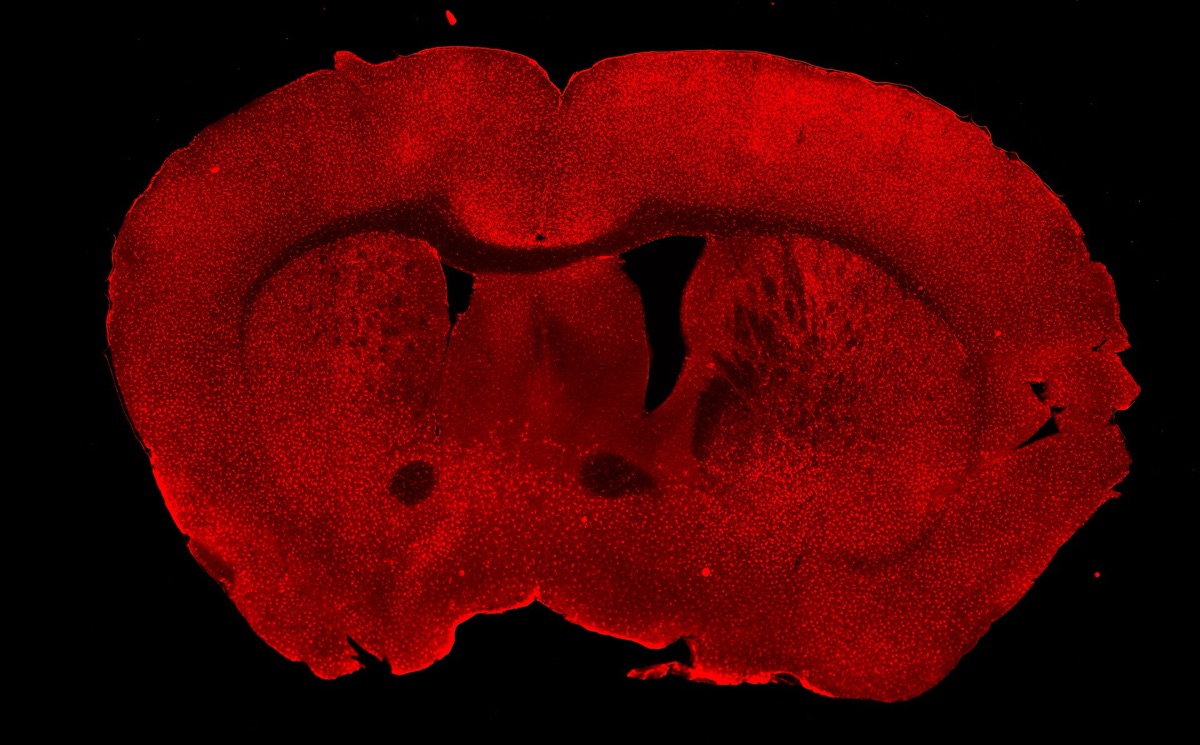
For decades, the fight against Alzheimer's has been framed as a war on plaques. Now a team of European scientists has shown a different way to think about it: instead of only attacking the sticky deposits that build up in the brain, repair the brain's own cleanup crew so it can fight back. In a study published in Cell Death & Disease in June 2026, researchers identified a single natural molecule that re-arms the brain's resident immune cells - and, in mice with Alzheimer's-like disease, restored memory.
The molecule is called OLE, and it works by reprogramming microglia, the brain's first line of defense. Here is what the scientists found, why it is genuinely encouraging, and the honest limits of work that is still at the animal stage.
- What: a natural molecule, OLE (N-oleoyl-leucine), reprograms the brain's immune cells to defend against Alzheimer's
- The pathway: OLE is a product of PM20D1, a gene already linked to Alzheimer's risk
- The effect: treated microglia swarm beta-amyloid plaques, wall them off from neurons, and help clear them
- In mice: a three-month course improved memory and reduced amyloid plaque burden
- In worms: fewer toxic protein aggregates and restored movement
- Team: Institute for Neurosciences (CSIC + Miguel Hernández University of Elche, Spain) and EPFL (Switzerland)
- Published: Cell Death & Disease, 2026 (vol. 17, art. 561) - DOI 10.1038/s41419-026-08791-1
- Stage: preclinical (worms, cells, mice) - not yet tested in humans
1. The Brain's Forgotten Defenders
Your brain comes with its own immune system, and microglia are at the heart of it. These cells make up roughly 5 to 10 percent of the brain and patrol it constantly, sweeping up debris, pruning unneeded connections, and clearing away damaged or misfolded proteins. In a healthy brain, they are tireless caretakers.
In Alzheimer's disease, that changes. As the disease advances, microglia become progressively impaired - they lose their protective edge and stop clearing the toxic beta-amyloid that accumulates between neurons. Much of modern Alzheimer's research has focused on removing that amyloid directly. This study asks a different question: what if you could simply switch the caretakers back on?
2. A Molecule the Body Already Makes
The answer the team landed on is a molecule called OLE - short for N-oleoyl-leucine, a member of a family of fat-and-amino-acid compounds called N-acyl amino acids. Crucially, OLE is not a foreign drug invented from scratch. It is a natural product of PM20D1, a gene that has already shown up repeatedly in Alzheimer's research.
PM20D1 encodes a secreted enzyme that stitches fatty acids onto amino acids to make molecules like OLE. People with lower PM20D1 activity carry a higher risk of Alzheimer's, and in earlier studies, boosting PM20D1 in mice reduced amyloid and eased cognitive decline. What this new work adds is precision: it identifies one specific product of that gene - OLE - and shows exactly what it does to the brain's immune cells.
3. Rewiring the Cleanup Crew
When the researchers treated impaired microglia with OLE, the cells changed behavior in a way that reads almost like a rescue mission. The treated microglia migrated toward beta-amyloid deposits (a process called chemotaxis), surrounded them, and formed a kind of barrier that limited contact between the plaques and nearby neurons - reducing the toxic damage. They also helped clear the deposits, and neurons in their company survived better under Alzheimer's-related stress.
In other words, OLE did not attack the plaques itself. It restored the cells whose job is to handle the plaques. Lead researcher José Vicente Sánchez Mut summed up the core result: “One of the most significant findings is that we have identified a molecule capable of restoring microglia's protective function.”
4. The Evidence, Across Three Systems
The team tested OLE in a ladder of increasingly complex models - worms, cells, and mice - and saw consistent benefits at each rung.
| Model system | What OLE did |
|---|---|
| Roundworms (C. elegans) | Reduced toxic protein aggregates and restored normal movement |
| Lab-grown cells | Microglia migrated to deposits and cleared them; neurons survived better |
| Alzheimer's-model mice | A three-month course improved memory and reduced amyloid plaque burden |
Critically, when the team looked cell by cell in the treated mice, the microglia stood out as the primary responders - consistent with the idea that the benefit really does run through the brain's immune cells.
5. A Complementary Strategy, Not a Replacement
This is the part worth sitting with. Most of the Alzheimer's treatments that have reached patients in recent years work by directly clearing amyloid from the brain. OLE points to a parallel approach: restore the brain's own defenders so they can do the work themselves. The two ideas are not in conflict - a future therapy might one day pair plaque removal with microglial repair. The discovery widens the menu of options at a moment when the field needs as many credible angles as it can get.
The Honest Caveats
- It is early. The results come from worms, cell cultures, and mice - not from people. Many promising Alzheimer's leads have faltered on the way to the clinic.
- The exact mechanism needs nailing down. OLE was given systemically, so the researchers still want to confirm the benefit is driven mainly by microglia rather than other cell types.
- Tau is still to come. The work focused on amyloid; the team flags testing against tau pathology - the other hallmark of Alzheimer's - as a next step, along with exploring related N-acyl amino acids.
Even with those limits, the tone from the researchers is hopeful. The decline of microglia in Alzheimer's, they note, appears to be something that can be reversed - “pointing to new therapeutic and research avenues.” For a disease affecting more than 55 million people worldwide, a fresh, mechanistically grounded reason for optimism is worth paying attention to.
Sources
- Pozzi, V., Gräff, J., Sánchez Mut, J. V., et al. “The PM20D1-OLE pathway induces microglia rewiring to ameliorate Alzheimer disease.” Cell Death & Disease, 2026, vol. 17, art. 561. DOI 10.1038/s41419-026-08791-1
- ScienceDaily: Scientists reprogram brain immune cells to fight Alzheimer's
- Inside Precision Medicine: OLE identified as a potential Alzheimer's therapy targeting microglia
- Medical Xpress: An experimental molecule reprograms the brain's defenses against Alzheimer's
- Image: fluorescently labeled microglia in a coronal mouse-brain section, by Syed07 via Wikimedia Commons, CC BY 4.0.
Curated by Jerry Cards - jerrycards.com. We research the week's most consequential tech, science, and health news so you don't have to. More at jerrycards.com/news.