
 العربية
 Español
 中文
中文 Deutsch
 Français
 Português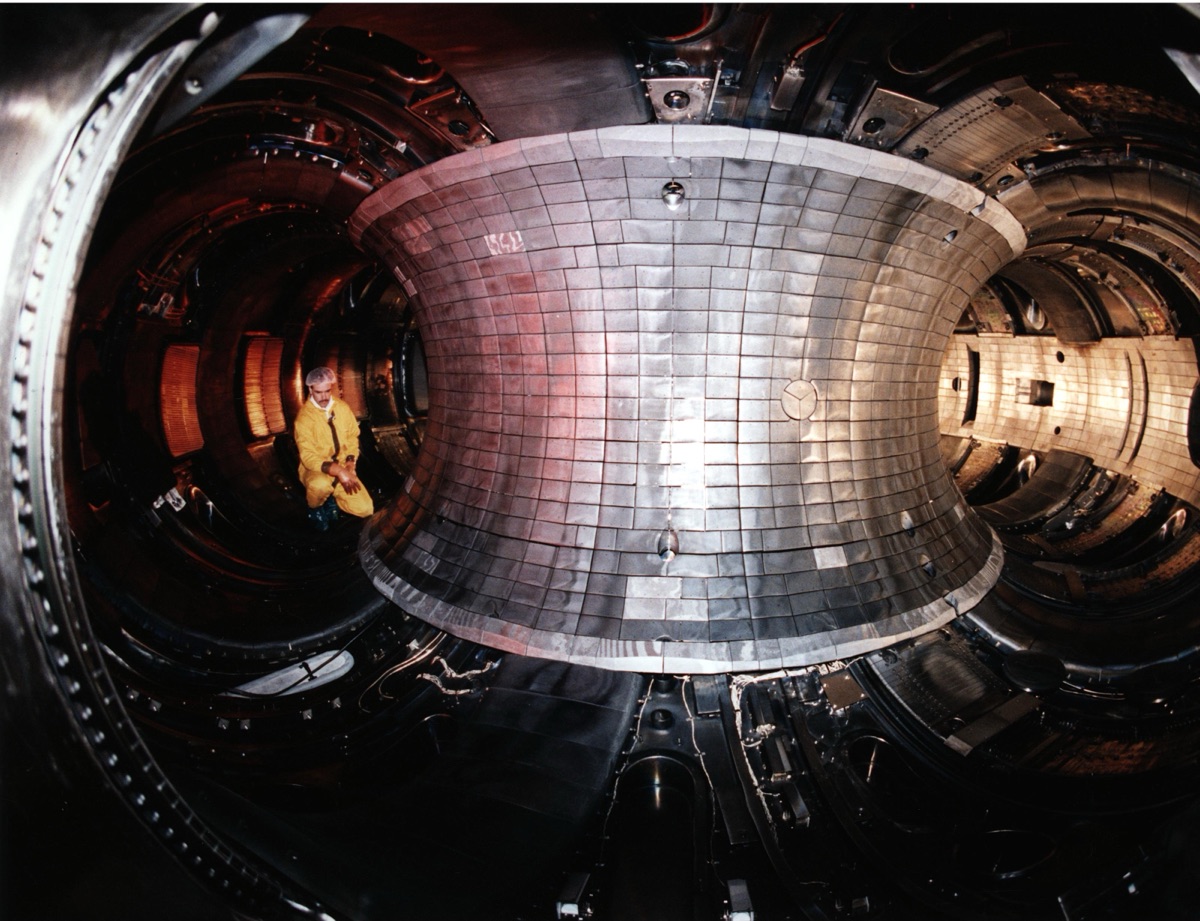
For the first time, a quantum computer has simulated the chemistry of a fusion reactor's fuel. On July 6, 2026, a team from Oak Ridge National Laboratory (ORNL), Cleveland Clinic, and IBM announced that they had used IBM quantum hardware to model FLiBe - the fluorine-lithium-beryllium molten salt that future fusion power plants plan to use to breed their own tritium fuel. It is a small calculation with an outsized meaning: it takes direct aim at one of the last great obstacles between us and clean, near-limitless fusion energy, and it marks another step in quantum computing's quiet graduation from lab curiosity into genuine scientific instrument.
Here is what the team actually did, why the chemistry of a molten salt stands between humanity and the energy of the stars, and why this is a problem quantum computers were seemingly born to solve.
- Who: Oak Ridge National Laboratory, Cleveland Clinic, and IBM
- When: Announced July 6, 2026; preprint on arXiv (2606.30402), posted June 29, 2026
- What: The first-known computation of a fusion material on a quantum computer
- The material: FLiBe, a molten salt of fluorine, lithium and beryllium - a leading candidate to breed tritium fuel inside a fusion reactor
- How much: Nine molecular configurations of FLiBe, with and without tritium
- Accuracy: Matched the exact classical benchmark to within ~0.3-0.7 kcal/mol - inside chemical accuracy
- Why it counts: Part of the U.S. Department of Energy's Genesis Mission uniting high-performance, AI and quantum computing
1. The Fuel Problem Hiding Inside Fusion
Fusion is the reaction that lights the Sun, and it is the great prize of clean energy: fuse light nuclei together and they release enormous energy with no carbon emissions and no long-lived, high-level waste. The most practical recipe on Earth fuses two heavy forms of hydrogen - deuterium and tritium. Deuterium is effectively unlimited; you can pull it from seawater. Tritium is the catch.
Tritium is radioactive, decays with a half-life of about 12.3 years, and barely exists in nature - the entire civilian world supply is measured in mere tens of kilograms. A fusion plant cannot simply buy its fuel; it has to make it. The plan is elegant: surround the plasma with a breeding blanket rich in lithium. Every fusion reaction hurls out a high-energy neutron, and when that neutron strikes a lithium-6 nucleus it splits into helium and a brand-new tritium atom. Done right, a reactor breeds slightly more tritium than it burns - and becomes self-sustaining.
Fusion: deuterium + tritium → helium-4 + a fast neutron
Breeding: that neutron + lithium-6 → helium-4 + a fresh tritium atom
The blanket wrapped around the plasma catches escaping neutrons and turns lithium into new tritium - closing the fuel cycle so the reactor makes what it burns.
2. Why FLiBe - and Why Its Chemistry Is So Hard
One front-runner for that blanket is FLiBe, a molten salt of lithium fluoride and beryllium fluoride (Li2BeF4). It is thermally stable, carries heat well, and is rich in the lithium a reactor needs to breed tritium - while its beryllium doubles as a neutron multiplier that boosts the breeding. That combination is why designs from big tokamaks to compact reactors keep circling back to it.
But breeding the tritium is only half the battle. You then have to get it out. And here the chemistry turns subtle. Once a tritium atom appears inside the salt, does it stay chemically bound as tritium fluoride (TF) - a corrosive, hard-to-remove cousin of hydrofluoric acid that can attack a reactor's structure - or does it drift free as tritium gas (T2) that engineers can simply pump away? That single distinction helps decide whether the fuel cycle is clean and workable or a corrosion-and-containment headache. And it hinges on binding energies and electronic structure so delicate that classical supercomputers struggle to pin them down reliably.
3. What the Quantum Computer Actually Computed
The team drew nine representative clusters of FLiBe from ab initio molecular dynamics - snapshots of how the atoms genuinely arrange themselves in the liquid - and computed their ground-state energies, with and without a tritium atom present, on IBM quantum hardware.
The results mapped the real scales of the problem: conformational energy differences between fragmented and intact clusters of roughly 12 kcal/mol, and tritium binding energies that varied by around 110 kcal/mol on average across configurations - a spread wide enough that getting it right matters, and getting it wrong would mislead a reactor designer. But the headline number is accuracy.
| Metric | Value |
|---|---|
| FLiBe configurations computed | 9 (with and without tritium) |
| Agreement with the exact benchmark (full configuration interaction) | within 0.7 kcal/mol |
| Mean absolute deviation | 0.3 kcal/mol |
| Chemical-accuracy threshold | ~1 kcal/mol |
Matching full configuration interaction - the exact, gold-standard classical solution - to within 0.3-0.7 kcal/mol means the quantum results landed inside chemical accuracy, the roughly 1 kcal/mol window within which computed chemistry becomes trustworthy enough to guide real decisions. In other words: not a toy demonstration, but numbers a materials scientist could actually use.
4. Why Reach for a Quantum Computer?
Molten-salt chemistry with electron-rich atoms like fluorine and beryllium is a textbook case of strong electron correlation - the many-electron entanglement that governs how molecules behave and that classical computers can only approximate before the cost explodes combinatorially. Simulating quantum systems is exactly what a quantum computer is built to do.
The team used what IBM calls quantum-centric supercomputing: a hybrid approach in which classical CPUs and GPUs handle the bulk of the work and hand only the hardest, most quantum-mechanical core to the quantum processor, via a technique called extended sample-based quantum diagonalization (ext-SQD). It is the same playbook IBM recently used to simulate a 12,635-atom protein with Cleveland Clinic and to model real magnetic materials - quantum hardware working alongside classical machines rather than replacing them.
“Quantum computers ... are key tools that accelerate the discovery and design cycles needed to produce sufficient tritium to fuel fusion reactors.”
- Tom Beck, Oak Ridge National Laboratory
5. The Bigger Picture: Quantum Computing Grows Up
The work is part of the U.S. Department of Energy's Genesis Mission, an effort to weave together high-performance computing, artificial intelligence, and quantum computing across the national laboratories and aim them at the country's biggest scientific challenges - clean energy foremost among them. The project draws on a collaboration spanning DOE national labs, universities, and industry, with Cleveland Clinic's Kenneth M. Merz Jr. and ORNL's Thomas Beck among the leads.
Step back and a pattern emerges. In 2026 alone, IBM's quantum machines have simulated real magnetic materials, assembled a never-before-seen half-Mobius molecule, modeled proteins thousands of atoms across, and now opened up the chemistry of a fusion fuel. None of these is a stunt; each is a real scientific result. Quantum computing is quietly crossing the line from someday to useful now.
“Bringing quantum, AI, and classical computing together is essential to tackling our society's most fundamental scientific challenges.”
- Jerry Chow, IBM
What This Doesn't Mean (Yet)
- These are small clusters, not a reactor. The team modeled nine molecular configurations, not a full breeding blanket. Scaling from molecules to engineering is a long road.
- Fusion still has to work. This cracks a chemistry sub-problem; net-energy-gain fusion plants are still being built and tested around the world.
- Quantum hardware is still maturing. Today's results lean on heavy classical support and careful error handling; fully independent, large-scale quantum chemistry is still ahead.
But the direction of travel is unmistakable. A problem that helps decide whether fusion's fuel cycle can close was, for the first time, handed to a quantum computer - and it returned answers accurate enough to matter.
Sources
- IBM Newsroom: Oak Ridge National Lab, Cleveland Clinic, and IBM achieve first-known computations of fusion materials on a quantum computer (July 6, 2026)
- Oak Ridge Leadership Computing Facility: modeling the chemistry of a fusion reactor material
- IBM Quantum blog: modeling the chemistry of fusion molten salts
- Preprint: Quantum Computations on Fusion Blanket Molten Salts (arXiv:2606.30402)
- The Quantum Insider: quantum simulations for fusion materials
- Image: U.S. Department of Energy (Tokamak Fusion Test Reactor tritium system), public domain
Curated by Jerry Cards - jerrycards.com. We research the week's most consequential tech, science, and business news so you don't have to. More at jerrycards.com/news.