
 العربية
 Español
 中文
中文 Deutsch
 Français
 Português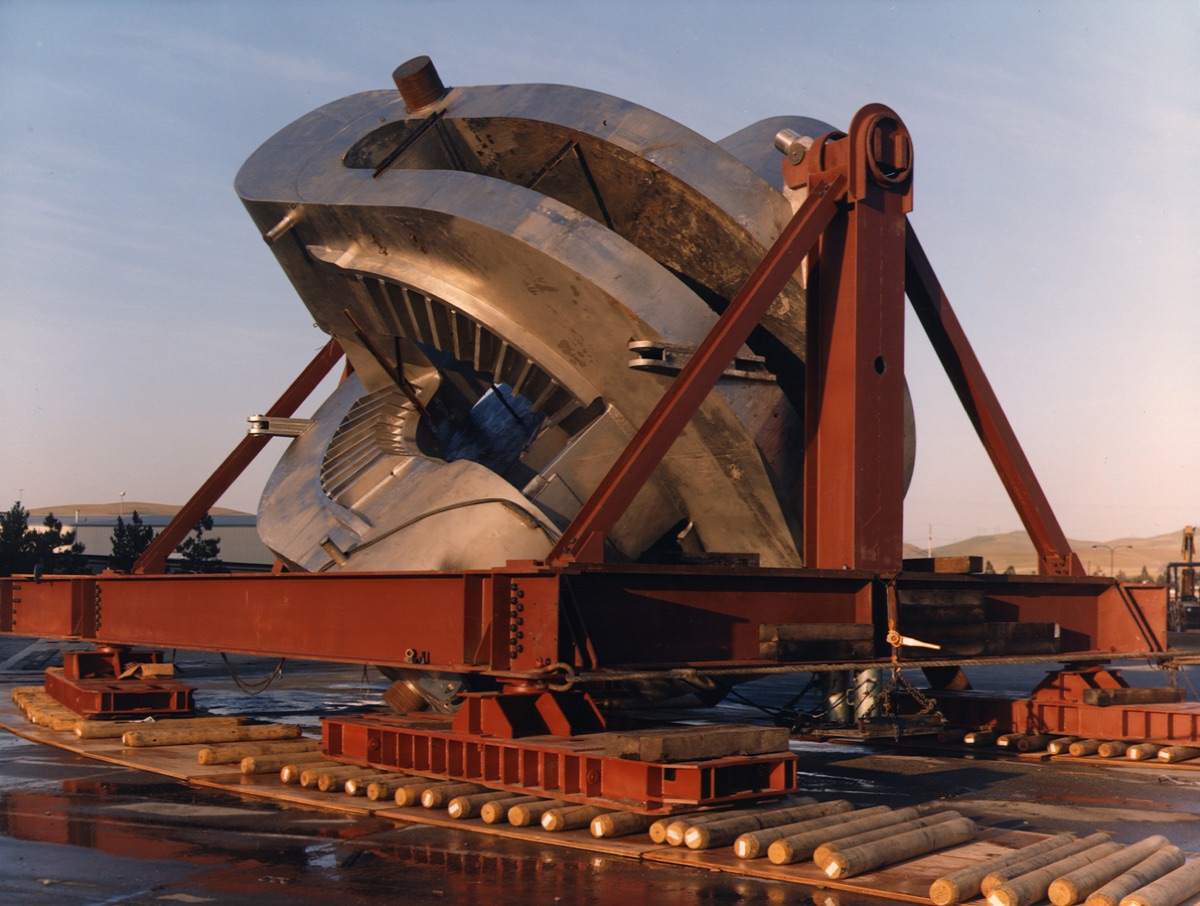
Every power plant on Earth today, from the coal station down the road to the most advanced nuclear reactor, ultimately does the same humble thing: it makes heat, boils water, and spins a turbine. On June 19, 2026, a startup in Madison, Wisconsin skipped that entire chain - and lit several light bulbs with electricity drawn straight out of a plasma. Realta Fusion says it is the first private fusion company to demonstrate direct energy conversion (DEC) of plasma kinetic energy into electricity on a real fusion machine. It is a small demonstration with an outsized idea behind it - and, refreshingly, the company has been candid about exactly what it did and did not prove.
- Who: Realta Fusion, a University of Wisconsin-Madison spinout based in Madison, WI
- When: demonstrated June 19, 2026; announced June 30, 2026
- What: a direct energy converter attached to the end of WHAM (the Wisconsin HTS Axisymmetric Mirror) drew multiple amps at ~100 volts, enough to light several bulbs
- The claim: the first private fusion company to show direct energy conversion of plasma kinetic energy into electricity on a real fusion device
- The appeal: DEC can exceed 90% efficiency versus roughly 33% for a steam turbine
- The honest limit: WHAM does not yet burn fusion fuel, so this harvested the plasma's input energy - not real fusion output - and it is not net electricity
1. What Actually Happened
Realta's engineers built a prototype electricity converter and mounted it on one end of WHAM, the experimental magnetic-mirror machine the company operates in collaboration with the University of Wisconsin-Madison's Physical Sciences Laboratory. When they ran it, the converter delivered a steady flow of current - multiple amps at around 100 volts - and used it to illuminate a handful of ordinary light bulbs.
Modest wattage, but a meaningful proof-of-concept: the electricity came directly from the motion of charged particles in the plasma, without ever passing through heat, steam, or a spinning generator. Chief executive Kieran Furlong was blunt about the significance: “People have been talking a big game about DEC for years, so we just went out and did it. We’re the first private fusion company to achieve DEC of plasma kinetic energy into electricity on a real fusion machine.”
2. Why Skipping the Turbine Is Such a Big Deal
The reason DEC excites fusion engineers is pure thermodynamics. Conventional plants are heat engines: they convert thermal energy into electricity, and that step is fundamentally lossy. A modern steam turbine in a nuclear plant turns only about a third of the available energy into electricity; the rest escapes as waste heat. Direct energy conversion sidesteps the heat engine altogether by capturing the energy of charged particles before it ever becomes heat.
| Conversion method | Approx. electrical efficiency |
|---|---|
| Direct energy conversion (DEC) | over 90% |
| Steam turbine (today's thermal power plants) | ~33% |
That efficiency gap is the whole point. As Furlong describes it, capturing power straight from the plasma is like “spinning a flywheel of electricity” - energy you can recirculate to run the machine itself.
3. How Direct Energy Conversion Works
The trick fits the machine. A magnetic mirror confines plasma not in a doughnut, like a tokamak, but in a straight line - a magnetic bottle that is pinched tighter at both ends. Those pinches act like mirrors, reflecting most charged particles back toward the center. The particles that do slip out stream away along the field lines in a focused beam.
That escaping beam is exactly what a direct energy converter feeds on. By placing a series of collector plates held at rising electrical potential in the path of the outflowing charged particles, the converter forces them to climb an electric hill, slowing them down. Their lost motion shows up as voltage across the plates - and that voltage drives a current straight into a circuit. In short: the particles' kinetic energy becomes electricity directly, no turbine required.
Tokamaks trap plasma in a closed loop, so there is no natural “exit” to tap. A linear magnetic mirror deliberately lets a stream of charged particles escape out its ends - handing a direct energy converter a ready-made beam to decelerate and harvest. The geometry that once looked like a weakness (particles leaking out the ends) becomes the feature.
4. What This Is - and What It Isn't
To Realta's credit, the company drew the lines clearly, and accuracy matters here. This demonstration is a milestone for the converter, not a fusion power plant switching on.
- It did not harvest fusion energy. WHAM does not yet burn deuterium-tritium fuel, so the converter captured the plasma's input kinetic energy - not the high-energy helium nuclei (alpha particles) a real fusion reaction would produce. It proves the hardware works; it does not prove fusion energy was converted.
- It is not net electricity. The bulbs were lit with a small fraction of the energy put into the machine. As chief scientific officer Dr. Derek Sutherland put it, “This is a first demonstration, but still a meaningful technical milestone and proof-of-concept that DEC can be done at a scale to light things up” - adding that it is “not yet a demonstration of net-electricity or a large-scale conversion of fusion power directly into electricity. Those are milestones for our future fusion machines.”
- The efficiency figures are targets. The 90%-plus number is the potential of the technique; the demonstration validates the approach, not the final performance of a commercial converter.
For context, fusion's headline scientific milestone - releasing more energy from the reaction than the lasers delivered to it - was first achieved at the National Ignition Facility in December 2022. The frontier now is engineering and economics: turning brief bursts of physics into continuous, affordable power. Direct energy conversion is one of the levers companies are pulling to get there.
5. The Bigger Picture: Making Fusion Pay
Even a perfect fusion reaction has to power itself. Heating and holding a plasma costs a great deal of electricity, and a plant only sells what is left over. This is where a high-efficiency converter changes the math.
Realta's plan for its first-generation plants - which it targets for the mid-2030s - is a hybrid: roughly 80% of the power would come from a conventional thermal cycle running at up to 45% efficiency, with the remaining 20% from DEC at over 90%. The company's argument is that the direct-conversion slice would offset much of the energy needed to start and sustain the plasma, lifting the overall energy gain and trimming the cost per kilowatt-hour by an estimated 10-20%. It is not the whole game - but in an industry where economics is now the hard part, a double-digit cost cut is a serious lever.
A University of Wisconsin-Madison spinout pursuing a compact, high-temperature-superconductor magnetic-mirror design. It raised a $36 million Series A led by Future Ventures (with Khosla Ventures among its backers), is one of the companies selected for the U.S. Department of Energy's Milestone-Based Fusion Development Program, and was named a World Economic Forum Technology Pioneer for 2026.
What We Still Don't Know
- How it performs on real fusion output - the converter still has to be tested against actual alpha particles once a D-T-burning machine is running.
- Whether the 90%-plus efficiency holds at scale, across larger particle flows and continuous operation.
- How the hybrid thermal-plus-DEC plant pencils out in practice, and whether the mid-2030s timeline holds - fusion schedules are famously optimistic.
- How the magnetic-mirror approach stacks up against tokamaks and other designs as all of them chase net electricity.
None of that dims what happened in Madison. For decades, direct energy conversion has lived mostly in physics papers and pitch decks. This week, a real machine turned a plasma's motion into current and lit a few bulbs with it - a small glow that points at a cleaner, cheaper way to harvest the energy of the stars.
Sources
- TechCrunch: Realta Fusion generates electricity directly from a fusion reaction, an apparent first
- PR Newswire: Realta Fusion becomes first commercial fusion company to convert plasma energy into electricity (company announcement)
- The Next Web: Realta Fusion powers a bulb straight from its reactor
- WisPolitics: Realta Fusion touting first-of-a-kind demonstration
Curated by Jerry Cards - jerrycards.com. We research the week's most consequential tech, science, and business news so you don't have to. More at jerrycards.com/news.