
 العربية
 Español
 中文
中文 Deutsch
 Français
 Português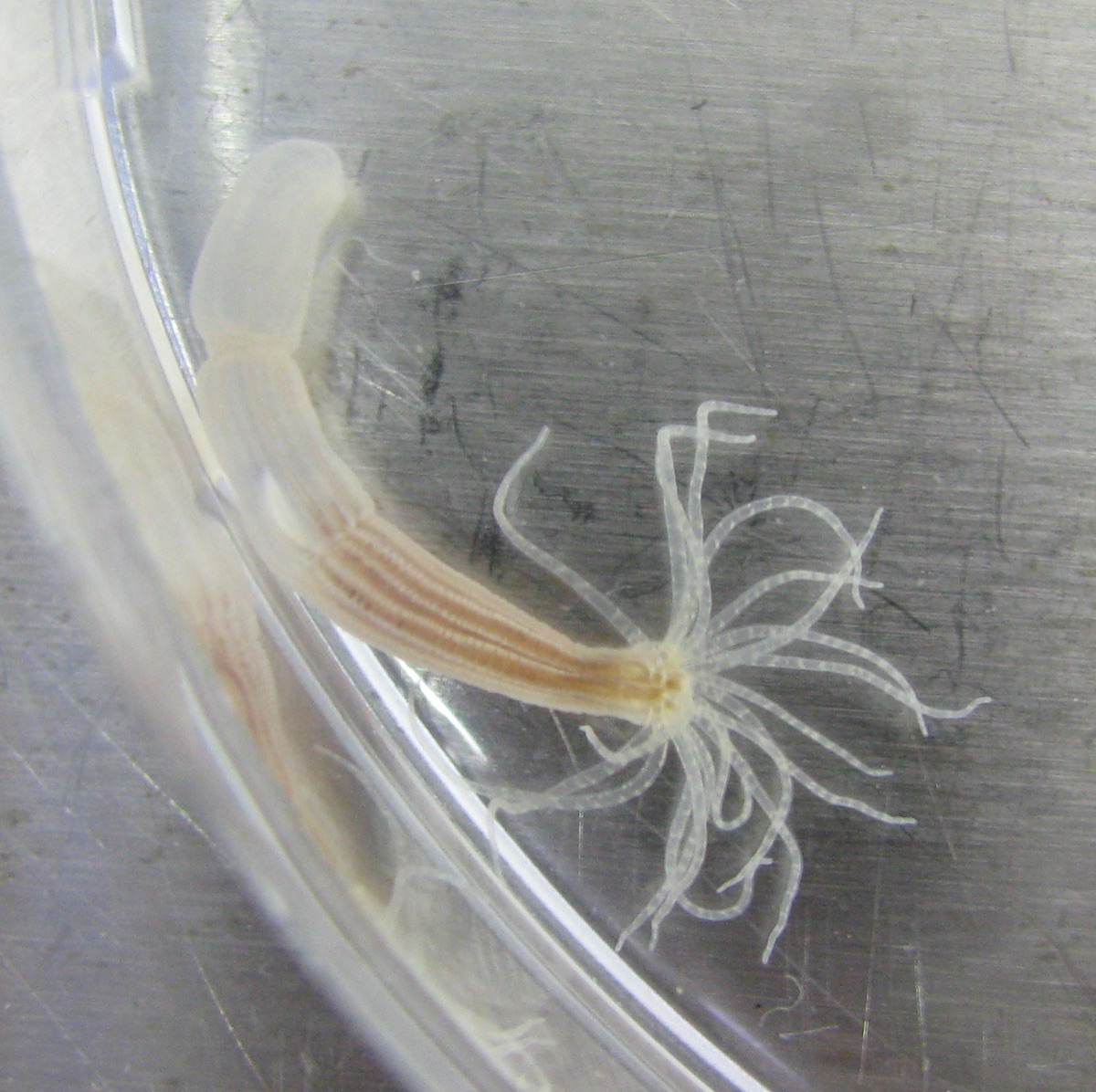
Hundreds of millions of years before the first human immune cell existed, the ocean had already worked out how to fight viruses - and it did not solve the problem the way we did. A new study of the starlet sea anemone has uncovered a protein that looks almost identical to one of the cornerstones of human antiviral immunity, yet does the exact opposite job - and, in a genuine surprise, is still essential for the animal to survive an infection. It is one of those quietly profound results that reshapes how biologists think about where our immune system came from.
- The animal: the starlet sea anemone, Nematostella vectensis - a thumbnail-sized marine model organism
- The protein: CARDIB, which structurally resembles the human antiviral protein MAVS
- The reversal: in humans MAVS switches antiviral defense on; in the anemone CARDIB normally acts as a brake that suppresses immune signaling
- The twist: delete CARDIB with CRISPR and the anemone can no longer fight the virus - so the brake is essential
- Why it matters: sea anemones split from our lineage >600 million years ago, so this reveals a second, independent blueprint for antiviral immunity
- Published: Nature Ecology & Evolution, June 26, 2026 (DOI 10.1038/s41559-026-03112-3)
1. How humans sound the viral alarm
To see why the anemone result is startling, start with our own cells. When a virus infects a human cell, it leaves behind tell-tale molecules - stretches of viral RNA that look nothing like our own. Sensor proteins spot that RNA and pass the signal to a protein called MAVS (mitochondrial antiviral-signaling protein), which sits on the surface of our mitochondria. MAVS is the switch: once triggered, it sets off a cascade that raises the alarm across the cell and summons the antiviral response, including the interferons that put neighbouring cells on high alert. In short, MAVS is an activator - a fire alarm you very much want to go off.
2. The sea anemone runs the same part in reverse
Led by PhD candidate Ton Sharoni and Prof. Yehu Moran of the Hebrew University of Jerusalem, with Adam M. Reitzel of the University of North Carolina at Charlotte, the team went looking for the anemone's version of this machinery. They found a protein that closely resembles MAVS - and named it CARDIB. But when they tested what it does, the logic was flipped. Rather than switching the antiviral response on, CARDIB normally works as a brake, quietly damping the immune signaling down.
On its own, a molecular brake sounds like the last thing you would want during an infection. That is exactly what makes the next experiment so interesting.
| Human MAVS | Sea anemone CARDIB | |
|---|---|---|
| Looks like | Keystone antiviral signaling protein | A close structural match to MAVS |
| Normal role | Switches antiviral defense ON | Acts as a brake - suppresses signaling |
| When removed | Antiviral response collapses | Animal becomes far more vulnerable; virus multiplies |
| Bottom line | Essential - by switching defense on | Essential - by the opposite logic |
3. The CRISPR test that settled it
To find out whether CARDIB actually mattered, the researchers used CRISPR gene editing to delete it from the anemones, then exposed the animals to a viral challenge. The result was unambiguous: without CARDIB, the anemones became much more vulnerable to infection. Viruses multiplied readily, and the animal's antiviral defenses failed to switch on properly. The brake, it turned out, was not optional.
“Although CARDIB acts as a brake on the immune system under normal conditions, that brake turns out to be essential for mounting an effective antiviral response.”
- Ton Sharoni, lead author, Hebrew University of Jerusalem
How can a suppressor be indispensable? The likely answer is that living immune systems have to be tuned, not just switched. An antiviral response that never turns off, or that fires at the wrong moment, is dangerous to the host - so a well-placed brake can be what lets the whole system engage cleanly and forcefully when it is actually needed. In the anemone, evolution appears to have built its antiviral circuitry around regulation of that kind.
4. Why ask a sea anemone at all?
Sea anemones, corals and jellyfish belong to an ancient group called the cnidarians, which diverged from the lineage leading to humans more than 600 million years ago. That deep split is precisely what makes them so valuable. Anemones such as Nematostella have quietly kept evolutionary experiments that were lost or overwritten on the branches leading to humans, mice and the other usual lab animals. Study only ourselves and our close relatives, and those alternative solutions stay invisible. Look at a 600-million-year-cousin, and they come back into view.
It helps that Nematostella vectensis - the starlet sea anemone - is a workhorse laboratory model with a sequenced genome and tools like CRISPR already established, which is what made a clean gene-deletion experiment possible in the first place.
5. The bigger idea: more than one way to build an immune system
The textbook story of innate immunity often reads as though there is a single ancestral antiviral pathway that everything inherited and tweaked. This result complicates that in the best way. Here is a protein that resembles one of our own immune keystones, yet has been wired into a fundamentally different logic - and it works. Evolution, it seems, reached the same goal - surviving viruses - by more than one route.
“Humans and sea anemones both need protection from viruses, but this work shows that evolution can organize those defenses in fundamentally different ways.”
- Prof. Yehu Moran, senior author, Hebrew University of Jerusalem
Beyond the elegance, there is a practical thread. Much of medicine is about tuning immune responses - turning them up against infections and cancers, and calming them down in autoimmune and inflammatory disease. Discovering that a MAVS-like protein can serve as an essential brake hints that the natural world holds design principles for immune regulation we have not yet catalogued. The more blueprints biology reveals, the more ideas we have to work with.
What this is - and isn't
- This is foundational biology, not a treatment. The work explains how one ancient animal defends itself; it is not a drug or therapy, and no clinical claims follow from it directly.
- The reversal is the headline. The striking, well-supported finding is that a MAVS-like protein acts as a suppressor in the anemone yet is required for effective antiviral defense - shown by deleting it and watching the animal lose control of the infection.
- Details of the downstream circuitry are still being mapped. Exactly how a brake ends up enabling a strong response is the kind of question this discovery opens rather than closes.
Sources
- Sharoni, T., Reitzel, A. M., Moran, Y. et al. “An ancient anthozoan protein reveals an alternative evolutionary path of antiviral signaling.” Nature Ecology & Evolution (June 26, 2026).
- EurekAlert! / Hebrew University of Jerusalem: Sea anemone flips a human antiviral strategy on its head
- Phys.org: Sea anemones reveal antiviral defense that reverses the human immune playbook
Curated by Jerry Cards - jerrycards.com. We research the week's most consequential tech, science, and business news so you don't have to. More at jerrycards.com/news.