
 العربية
 Español
 中文
中文 Deutsch
 Français
 Português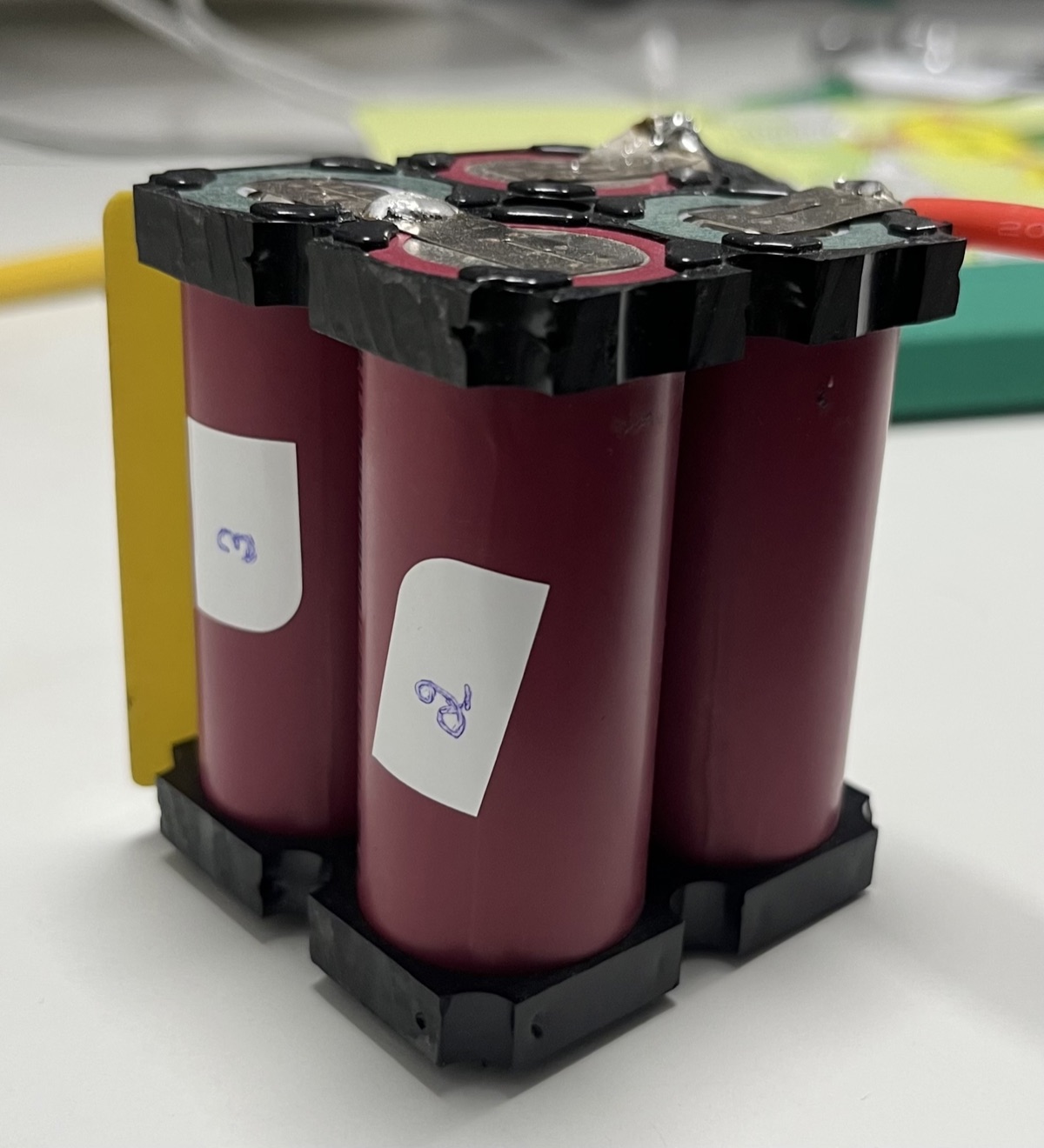
For a decade, sodium-ion batteries were the perpetual understudy - cheaper than lithium, made from one of the most common elements on Earth, and always a few years from being good enough. A new independent teardown suggests that day has quietly arrived. Engineers in Germany took apart a commercial sodium-ion cell from China, ran it through the same lab gauntlet they use on the world's best lithium batteries, and came away with a verdict that would have sounded fanciful a few years ago: on the things factories actually struggle to get right, it matches Tesla.
Here is exactly what they found, why sodium is suddenly so compelling, and the honest limits that keep this a story about smart engineering rather than hype.
- Who: engineers at RWTH Aachen University, Germany, led by senior author Prof. Dirk Uwe Sauer
- What: a full teardown and lab characterization of a commercial Hina sodium-ion cell - Hina is a spin-out of the Chinese Academy of Sciences
- Headline result: matches Tesla-class manufacturing quality - internal resistance varied just 5.3% across 120 cells
- Design: uses the same tabless, double-aluminum current collector as Tesla's 4680 cell - a first for a commercial sodium-ion battery
- The edge: sodium is hundreds of times more abundant than lithium; no cobalt or nickel; cheap aluminum on both electrodes
- The honest limits: still trails lithium on energy density and on cold-weather charging
1. The Test: a German lab took a Chinese battery apart
The work comes from RWTH Aachen University, one of Europe's leading battery-engineering groups. The team - first author Christian Siebert, co-author Moritz Schuette, and senior author Prof. Dirk Uwe Sauer - obtained a commercial sodium-ion cell from Hina (HiNa Battery Technology), a company spun out of the Chinese Academy of Sciences that already supplies cells for vehicles and grid storage. Rather than take a spec sheet at face value, they did what independent labs do: they took the cell apart, measured its materials and internal architecture, and ran a battery of electrical and thermal tests.
The point of a teardown is not to find the single best cell in the world. It is to see whether a real, mass-produced product lives up to the engineering claims around it - and how it stacks up against the lithium cells that define the state of the art. The results were published in Cell Reports Physical Science, a peer-reviewed Cell Press journal.
2. Built Like a Tesla
Two findings stood out. The first is about consistency, which is the quiet superpower of great battery manufacturing: a pack is only as good as its most uneven cell, so cell-to-cell uniformity is the difference between a reliable product and an erratic one. Across 120 cells, the team measured internal resistance varying by just 5.3% - the kind of tight spread that signals tightly controlled, high-yield mass production, rivaling the best lithium cells on the market.
The second is about internal design. The Hina cell uses a tabless, double-aluminum current-collector architecture, which lowers internal resistance and spreads heat evenly - and which, as the researchers note, “mirrors the current design of Tesla batteries.” That tabless approach is the headline feature Tesla introduced with its 4680 cell, and the team says this is the first commercially available sodium-ion battery to use it. Put plainly: a sodium cell is now matching lithium on consistency and high-power performance.
“We were positively surprised by how uniform the cells are.” - Moritz Schuette, RWTH Aachen University
3. Why Sodium Is Suddenly Exciting
If sodium-ion can match lithium on the hard parts of manufacturing, its raw-materials advantage becomes the whole story - and that advantage is enormous.
| Factor | Sodium-ion | Lithium-ion |
|---|---|---|
| Crustal abundance of the key metal | Sodium ~2.3% (6th most abundant element) | Lithium ~0.002% (trace element) |
| Cobalt / nickel needed | No | Often yes (in many chemistries) |
| Current collectors | Cheap aluminum on both sides | Pricier copper on the anode side |
| Energy density (per kg) | Lower (today ~140-175 Wh/kg) | Higher (LFP ~150-190; top NMC ~250-300) |
Because lithium cells need copper foil on the anode, switching the anode to aluminum - which sodium chemistry allows on both electrodes - removes a meaningful, structural cost. Add the abundance gap, and you get a battery whose supply chain is not hostage to lithium price spikes or cobalt bottlenecks. Sodium is, quite literally, in the sea and in ordinary salt.
4. Sodium-Ion's Commercial Moment
This teardown lands right as sodium-ion crosses from labs and demos into showrooms.
- CATL, the world's largest battery maker, has a sodium-ion line called Naxtra rated up to 175 Wh/kg with a roughly 500 km driving range, slated for mass production by the end of 2026 and aimed at replacing a sizable share of entry-level lithium-iron-phosphate (LFP) packs.
- CATL and automaker Changan have put the world's first mass-production sodium-ion passenger vehicle on the road.
- MIT Technology Review named sodium-ion batteries one of its 10 Breakthrough Technologies of 2026.
The independent verification from Aachen matters precisely because it is independent: it is one thing for a manufacturer to publish flattering numbers, another for a skeptical lab on a different continent to take the cell apart and confirm the build quality is real.
Sodium-ion is also chasing a safety edge. In a separate study in Nature Energy (April 7, 2026), a team at the Chinese Academy of Sciences' Institute of Physics, led by Prof. Yong-Sheng Hu, built a sodium cell with a built-in “smart firewall” - a special electrolyte that turns solid above ~150 °C, choking off the runaway heating that causes battery fires. Their research cell reached 211 Wh/kg and withstood temperatures up to ~300 °C with no thermal runaway. That is still a lab result, not a shipping product - but it points to where the chemistry is headed.
5. The Honest Limits
None of this means sodium is about to replace lithium everywhere. The same teardown was clear-eyed about the gaps:
- Energy density. Sodium-ion still stores less energy per kilogram than top lithium cells, so it is heavier for a given range. Its natural first homes are affordable, shorter-range cars, two- and three-wheelers, and stationary grid storage - where cost and longevity matter more than squeezing out maximum range.
- Cold-weather charging. The researchers flagged low-temperature charging as “a clear weakness.” Notably, cold-weather discharge - actually using the battery in the cold - held up well, which is one of sodium's traditional strengths.
- Room to refine. The teardown found unevenly distributed copper in the cathode, a reminder that even a strong commercial cell has engineering headroom left.
These are the limits of a young, rapidly improving technology - not deal-breakers, and exactly the kind of problems that get chipped away generation after generation.
What It Means
The significance here is not a single record-setting cell. It is that a battery chemistry built from one of the most abundant elements on the planet has reached lithium-class build quality in real, mass-produced form - confirmed not by its maker, but by an independent lab. That is how a cheaper, cleaner, more widely available energy future actually gets built: not with one miracle battery, but with a good-enough chemistry that almost anyone can manufacture at scale, from materials that are everywhere. The understudy just stepped into the light.
Sources
- Christian Siebert, Moritz Schuette, Dirk Uwe Sauer, et al., “Cell teardown and characterization of a Hina commercial sodium-ion battery,” Cell Reports Physical Science (Cell Press), 2026, DOI 10.1016/j.xcrp.2026.103323
- Electrek: Chinese sodium-ion battery matches Tesla on build quality, teardown finds · SciTechDaily: this sodium battery from China matched Tesla in a head-to-head test
- CATL & Changan: world's first mass-production sodium-ion passenger vehicle · CATL Naxtra: 175 Wh/kg, 500 km range, 2026 mass production
- MIT Technology Review: sodium-ion batteries, 10 Breakthrough Technologies 2026 · Nature Energy (Apr 7, 2026): sodium cell with a thermal-runaway “smart firewall”
Curated by Jerry Cards - jerrycards.com. We research the week's most consequential tech, science, and business news so you don't have to. More at jerrycards.com/news.