
 العربية
 Español
 中文
中文 Deutsch
 Français
 Português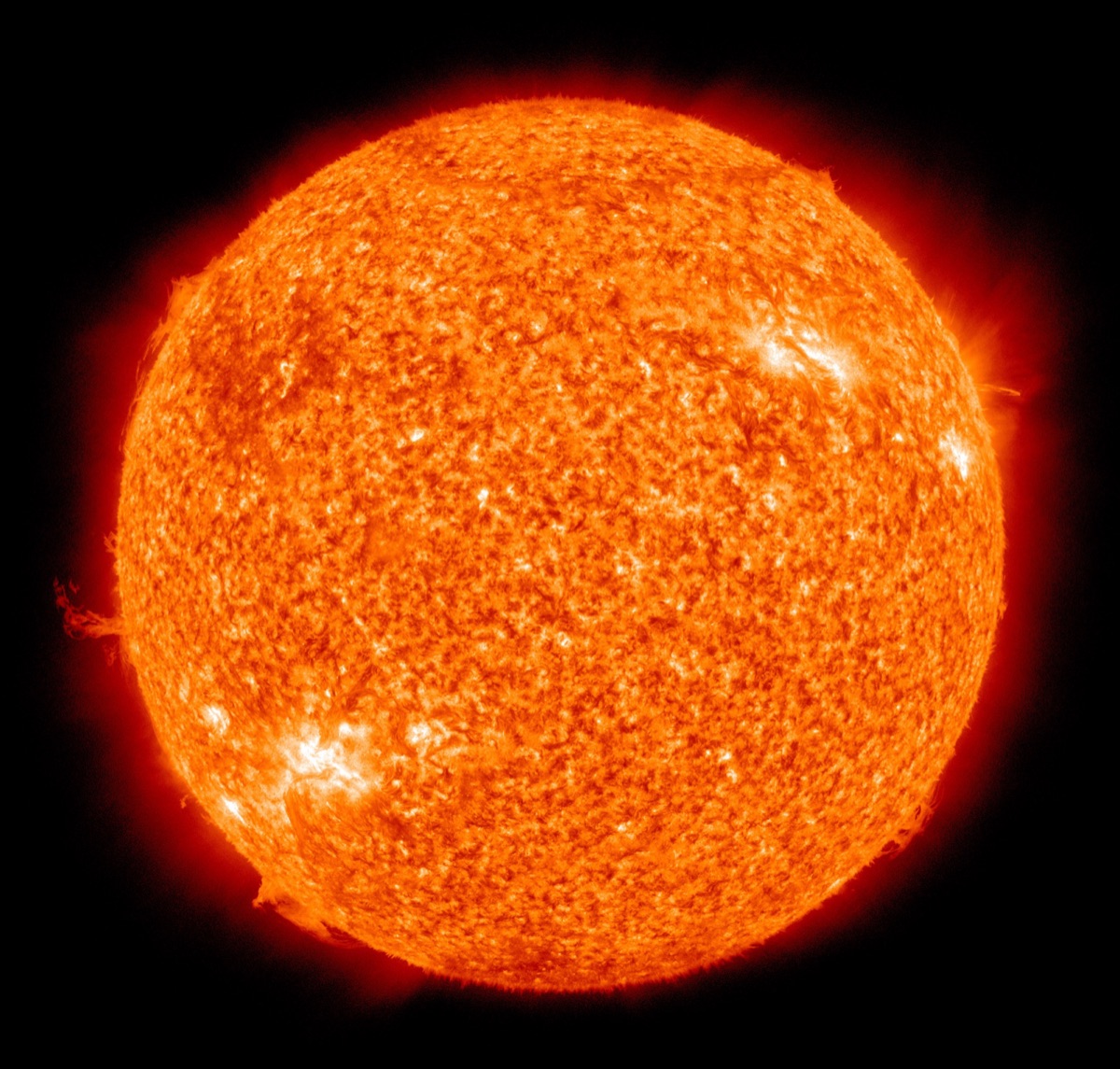
For centuries we have watched the Sun rise and fall through its 11-year rhythm of storms and calm - but we have never been very good at predicting how wild the next stretch will be. Now a physicist has spotted a hidden ‘switch’ buried in that rhythm: a single, repeatable moment when the Sun’s most violent space weather shuts off almost overnight - and the state of the Sun at that instant forecasts the strength of the next cycle up to seven years ahead.
- What: a newly identified ‘switch-off’ point in the solar cycle that predicts the next cycle’s peak strength
- Who: Professor Sandra Chapman, University of Warwick (Centre for Fusion, Space and Astrophysics)
- Where: presented at the Royal Astronomical Society’s National Astronomy Meeting (NAM 2026), Birmingham, July 2026
- The signal: when sunspot activity migrates below about 15° solar latitude, the most extreme space weather ends abruptly
- The payoff: the sunspot count at that moment forecasts the next cycle’s maximum - roughly six to seven years in advance
- Track record: correctly signalled that Solar Cycle 25 would beat its official forecast
1. The Sun’s 11-year heartbeat
The Sun runs on an approximately 11-year cycle, driven by its churning magnetic field. Near the start of a cycle, dark, magnetically intense sunspots begin appearing at higher solar latitudes, around 30°-35° north and south. As the cycle builds toward solar maximum, the spots grow more numerous and, crucially, emerge progressively closer to the Sun’s equator - a well-known pattern first mapped in the nineteenth century and immortalised in the ‘butterfly diagram.’
Sunspots are where the action is. Their tangled magnetic fields store enormous energy, and when that energy snaps loose it drives solar flares and coronal mass ejections (CMEs) - billion-tonne clouds of magnetised plasma hurled into space. When one sweeps past Earth, it lights up the auroras and stirs the planet’s magnetic field. The catch has always been the same: forecasting how strong an upcoming cycle will be is notoriously hard, and reliable predictions have usually arrived only around solar minimum, leaving little lead time.
2. The switch-off moment
Working with the long historical record of solar activity, Professor Sandra Chapman of the University of Warwick found that the Sun does not simply fade toward quiet. Instead, at a specific point in the declining phase of every cycle, the very most extreme space weather stops almost overnight - a clean, sharp cut-off rather than a gentle taper.
‘The Sun doesn’t gently go to sleep and then gently wake up again. Instead, we’ve discovered that the most extreme space weather switches off quite suddenly at a specific point in every solar cycle. By identifying that point, we’ve found a new way to predict how active the next solar cycle is likely to be.’
— Professor Sandra Chapman, University of Warwick
That switch-off is the key. The number of sunspots present at the moment the extreme activity shuts off carries information about the cycle still to come - which means it can be read as an early forecast of the next solar maximum, some six to seven years before that peak actually arrives.
The Sun is not a solid ball; it rotates differentially, spinning faster at its equator (about 25 days per turn) than near its poles (about 35 days). That mismatch continually stretches and winds up the Sun’s magnetic field, storing the twist that powers big eruptions. Chapman’s work points to a threshold near 15° latitude: once the active sunspot regions have migrated below it - toward a fast, co-rotating band around the equator - the differential-rotation ‘winding’ that fuels the largest coronal mass ejections loses its grip. The engine for the most violent space weather effectively switches off, even though smaller spots linger.
3. A forecast that already passed its first test
The most persuasive thing about a new prediction method is a prediction that came true - and this one has one. The approach indicated that Solar Cycle 25 would be stronger than the cautious official forecast issued in 2019, which pegged the peak at a sunspot number of just 105-125.
The Sun agreed. Solar Cycle 25 reached maximum in October 2024 at a smoothed sunspot number of about 161 - comfortably above that early forecast - and it put on a show. The powerful geomagnetic storms of May 2024 produced some of the most widely seen auroras in decades, visible across unusually low latitudes, as far south as Devon and Cornwall in the UK.
| Solar cycle | Forecast | What happened |
|---|---|---|
| Cycle 25 | 2019 panel: peak of 105-125 | Peaked Oct 2024 near 161 (smoothed) - stronger than predicted |
| Cycle 26 | New switch-off method: about 100-120 (early estimate) | Peak expected in the mid-2030s; forecast to be refined in ~2 years |
4. What it says about Solar Cycle 26
Using the switch-off method, Chapman has made a very early call on the next cycle, Solar Cycle 26: a moderate peak of roughly 100-120 sunspots, broadly similar to - or a touch gentler than - the current one. It is an early projection, and she is candid about that. A sharper number should follow in about two years, once Cycle 25 itself passes the newly identified switch-off point and the forecast can lean on direct observation rather than an estimate.
‘We’re about two years away from the switch-off point for the current Solar Cycle 25. At the moment, we have to estimate where that point will be, but once we reach it we can use observations alone to make a much more precise prediction for Solar Cycle 26. That will still give us around seven years’ warning of how strong the cycle is likely to be.’
— Professor Sandra Chapman
5. Why an early forecast is such a big deal
Space weather is not just a light show. Strong solar storms can disturb the satellites that carry our communications and navigation, add drag that nudges spacecraft off course, ripple through power grids, reroute polar flights, and raise radiation exposure for astronauts. As humanity places ever more of its infrastructure in orbit and plans crewed missions back to the Moon and on to Mars, knowing the Sun’s mood in advance becomes genuinely valuable.
- More lead time. Reliable forecasts have typically arrived only near solar minimum. A six-to-seven-year horizon is a step change for planning satellite launches, grid upgrades and mission schedules.
- A physical, observable trigger. The method rests on something you can actually watch - the latitude and count of sunspots - rather than on a purely statistical guess.
- A better front-row seat for the auroras. Knowing whether the coming cycle will be strong or mild helps everyone from grid operators to weekend aurora chasers plan ahead.
What we still don’t know
- It is new work, not yet peer-reviewed. The result was presented at the National Astronomy Meeting 2026; like all conference science, it now heads into the wider scrutiny of publication and replication.
- The Cycle 26 number is an early estimate. The 100-120 figure is expected to be refined in about two years, once Cycle 25 reaches its own switch-off point.
- One cycle forecasting the next. The method reads a pattern seen across many historical cycles; confirming it will mean watching the switch-off play out in real time.
The takeaway
There is something quietly wonderful about finding a new secret in the most familiar object in the sky. The Sun has been keeping this rhythm for billions of years, and the clue was hiding in plain sight all along - in the slow march of sunspots toward the equator and the sudden hush that follows. If it holds up, this single ‘switch-off’ signal could give us our earliest, clearest look yet at what our star will do next - a reminder that careful attention to a familiar pattern can still open a window years into the future.
Sources
- Royal Astronomical Society (NAM 2026): How the Sun goes to ‘sleep’ could reveal future space weather when it wakes
- Phys.org: How the sun goes to ‘sleep’ could reveal future space weather when it wakes
- Discover Magazine: A New Solar ‘Switch-Off’ Signal Could Help Predict Future Space Weather
- SIDC / Royal Observatory of Belgium: Solar Cycle 25 reached its maximum in October 2024
Curated by Jerry Cards - jerrycards.com. We research the week’s most consequential tech, science, and business news so you don’t have to. More at jerrycards.com/news.