
 العربية
 Español
 中文
中文 Deutsch
 Français
 Português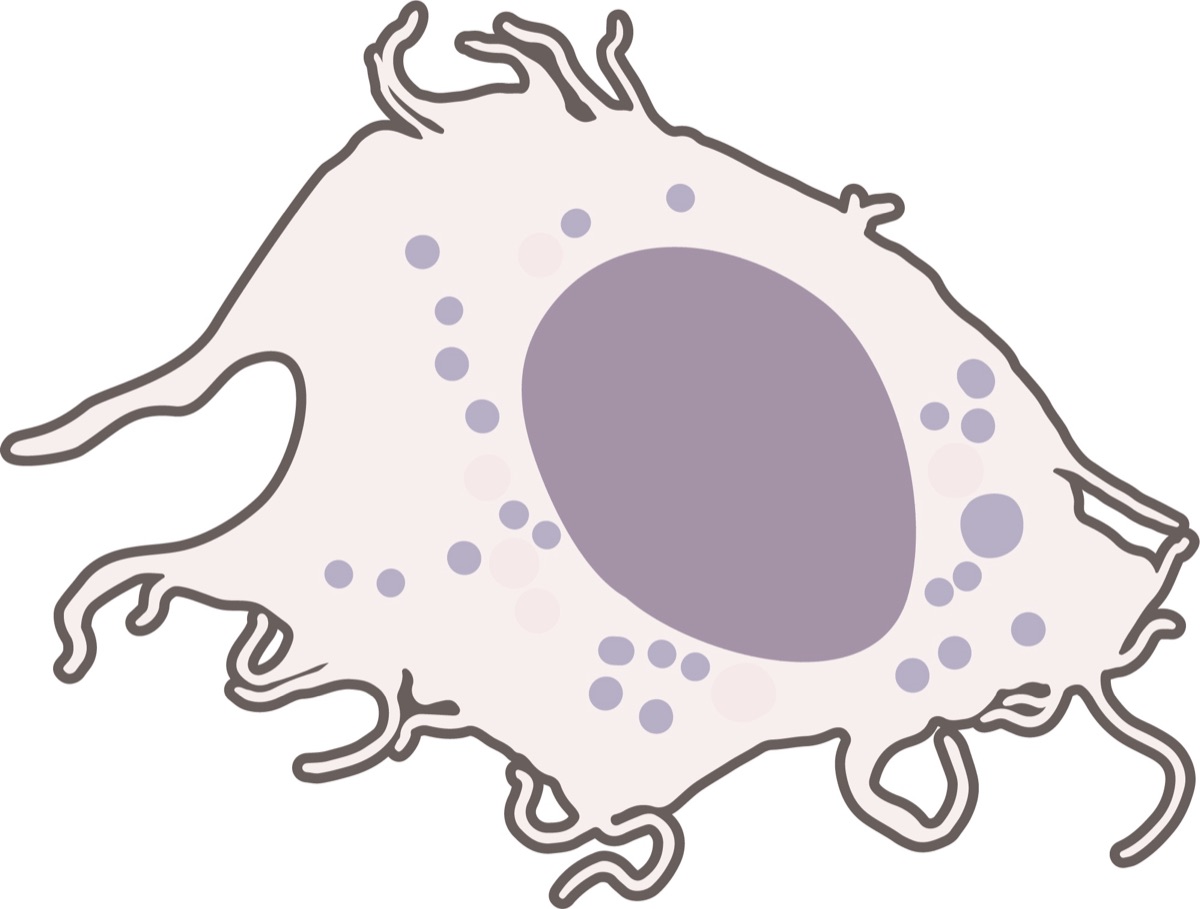
Roll your ankle badly, blow out a knee, tear a ligament - and long after the swelling goes down, the damage can quietly keep going. The reason is not the injury itself but the cleanup crew that never clocks out. A new study from the University of Alabama in Huntsville (UAH), published in the Nature journal Scientific Reports, describes a strikingly gentle way to send that crew home and let a joint heal: not a drug, not surgery, but soft, steady sound. Continuous low-intensity ultrasound, the researchers found, can coax inflammatory immune cells out of attack mode and toward repair.
- Who: a University of Alabama in Huntsville (UAH) team, led by Prof. Anuradha Subramanian
- The tool: continuous low-intensity ultrasound - soft, steady sound waves, far below the energy of medical ultrasound used to break up kidney stones
- The target: macrophages, the immune cells that both cause and calm inflammation after an injury
- The result: the ultrasound shifted inflammatory M1 macrophages toward a reparative M2-like state - turning down inflammation genes and turning up repair genes
- Why it matters: lingering inflammation after a joint injury drives post-traumatic osteoarthritis (~1 in 8 osteoarthritis cases); this is a drug-free way to interrupt it
- The honest caveat: a laboratory, cell-level study - animal trials come next
1. The cleanup crew that won't stand down
When tissue is injured, your body dispatches macrophages - versatile immune cells that swallow debris, fight infection, and orchestrate healing. Crucially, they can shift moods. In a pro-inflammatory M1 state they act as defenders, clearing damaged tissue and raising the alarm. In a reparative M2 state they switch to healers, damping inflammation and helping rebuild. A healthy recovery is a hand-off: M1 first, then M2.
“Following injury, the body recruits inflammatory ‘defender’ macrophages (M1) to clear damaged tissue and healer macrophages (M2) to support repair and recovery,” explains Prof. Anuradha Subramanian, who led the work. The problem is when that hand-off never happens. “In an ‘M1’ state, macrophages promote inflammation to fight damage or infection, but prolonged M1 activity can also harm healthy tissue,” she notes. A joint stuck in M1 mode sits in a slow, grinding loop of inflammation that gradually wears cartilage down - the road to post-traumatic osteoarthritis (PTOA), which accounts for roughly one in eight osteoarthritis cases.
2. Talking to cells with sound
The UAH team's question was disarmingly simple: could you gently persuade those over-eager defenders to switch to repair? Their tool was continuous low-intensity ultrasound - the same family of technology as a prenatal scan or a physical-therapy device, dialed to a soft, sustained hum rather than a high-energy pulse. Mechanical vibration, it turns out, is a language cells can hear: the pressure waves gently deform the cell and its surroundings, and the cell responds by changing which genes it switches on.
To find out what the cells were actually doing, the researchers used transcriptomics - a read-out of thousands of genes at once - and paired it with a computational clustering analysis to spot which groups of genes moved together. That let them see not just a single marker flip, but the coordinated shift of a whole inflammatory program.
Most lab experiments trigger inflammation with a generic irritant. The UAH team went a step closer to reality: they provoked the macrophages with fibronectin fragments - the molecular debris that cartilage and connective tissue actually shed as they break down. Those fragments are real danger signals inside a damaged joint, so the cells were reacting to something much closer to a true injury than a standard lab trigger. It is a small design choice that makes the result more believable.
3. From attack mode to repair mode
The headline finding: continuous low-intensity ultrasound downregulated the genes tied to inflammation and upregulated markers of the reparative, M2-like state. The inflamed cells did not just quiet down - their genetic program tilted toward healing.
| Macrophage mood | Role after injury | Effect on the joint |
|---|---|---|
| M1 (inflammatory) | Defender: clears debris, raises the alarm | Helpful early; damaging if it lingers |
| M2-like (reparative) | Healer: quiets inflammation, supports rebuilding | Protects cartilage, promotes recovery |
| + ultrasound | Nudges M1 → M2-like | Aims to break the inflammatory loop |
“Our findings suggest that continuous low-intensity ultrasound may help restore this balance by promoting a more reparative macrophage response,” Subramanian said. The appeal is that the intervention is entirely physical - no drug, no incision, just mechanical energy the body already tolerates well.
4. Why a sound wave beats a pill (if it works)
Post-traumatic osteoarthritis is a maddening condition precisely because the triggering event is often known - a specific injury on a specific day - yet there is no accepted way to stop the slow slide toward joint degeneration that can follow. Anti-inflammatory drugs blunt symptoms but carry side effects and do not reliably rewrite the healing program. A tool that gently re-tunes the immune response itself would be different in kind.
Ultrasound is also a practical dream for this job: it is inexpensive, portable, non-invasive, and already a fixture in clinics and physical-therapy rooms. If the effect holds up, the vision is a simple wand or wearable that an injured joint could be treated with over days or weeks - coaching its own immune cells back toward repair.
The honest caveats
- This is a cell-level, laboratory study. The experiments were done on cultured macrophages, not in animals or people. It shows the mechanism is plausible, not that it heals a real joint.
- Next comes the harder test. The team's stated next step is to validate the findings in animal models of early post-traumatic osteoarthritis and to study long-term tissue repair.
- Dose and delivery still matter. Exactly how much ultrasound, how often, and how it behaves deep inside a living joint are open engineering questions.
As Subramanian frames the road ahead: “The next steps will involve validating these findings in animal models of early post-traumatic osteoarthritis and studying how ultrasound-based modulation affects long-term tissue repair in joint injury settings.”
Healing is not only about killing germs or patching tissue - it is about timing, about the immune system knowing when to switch from fighting to rebuilding. This study suggests we may be able to help that switch along with nothing more than gentle sound. It is early, but it is the kind of quietly hopeful idea - drug-free, low-cost, non-invasive - that is worth rooting for.
Sources
- Khan, Trippany, Subramanian & Roy, “Continuous low-intensity ultrasound influences the transcriptomic profile in M1 macrophages by downregulating inflammation and promoting M2-like markers,” Scientific Reports 16, 22017 (2026), DOI 10.1038/s41598-026-53228-6
- University of Alabama in Huntsville: UAH researchers discover ultrasound-based approach to help reduce harmful inflammation and support joint healing
- ScienceDaily: This ultrasound treatment may help stop arthritis before it starts
- Funding: National Institutes of Health (NIH) R01 grant to Anuradha Subramanian
Curated by Jerry Cards - jerrycards.com. We research the week's most consequential tech, science, and health news so you don't have to. More at jerrycards.com/news.