
 العربية
 Español
 中文
中文 Deutsch
 Français
 Português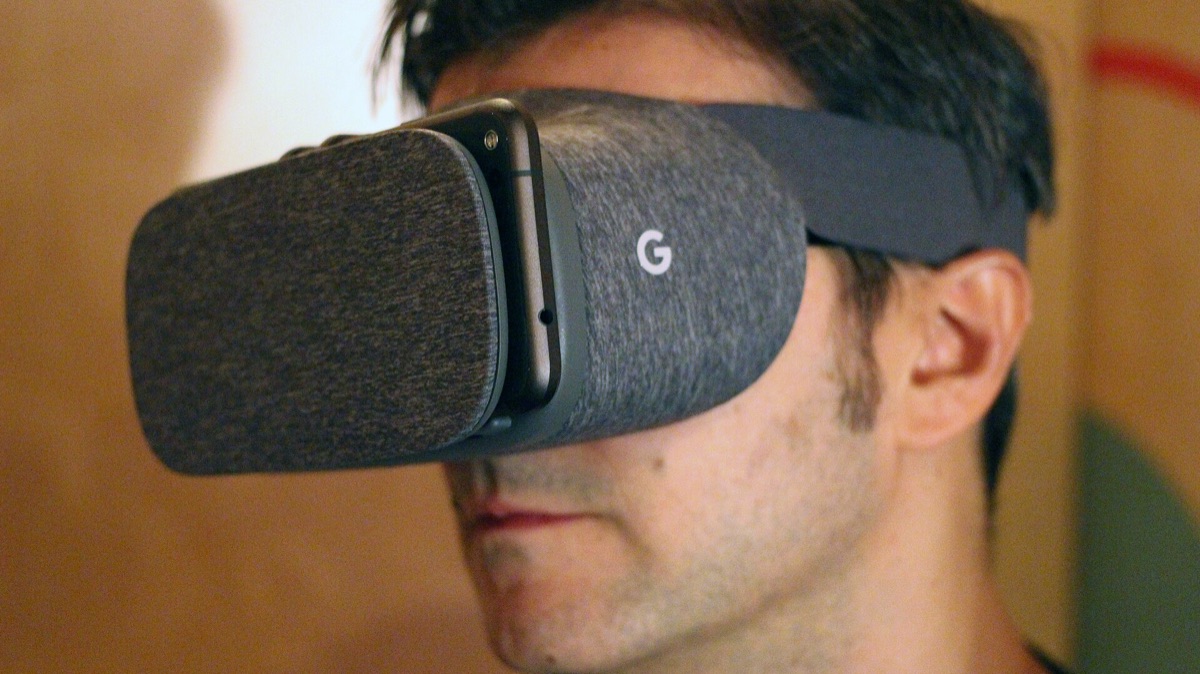
Human beings do not have wings. Our brains have never needed a map for them. And yet, after just one week of ‘flying’ in virtual reality, the part of the brain that recognizes arms, hands, and legs began to treat a pair of feathered wings as if they, too, were parts of the body. It is one of the most vivid demonstrations yet that the brain’s internal model of the body - the ‘body map’ it uses to see and control your limbs - is not locked to the human shape we are born with.
The study, from neuroscientists at Peking University and Beijing Normal University, was published in Cell Reports in May 2026. Here is what they did, what they found, and - just as important - what they did not find.
- Who: 25 healthy volunteers; researchers at Peking University + Beijing Normal University (Beijing, China)
- What: a week of VR ‘flying’ with feathered wings in place of the arms
- Measured: fMRI brain scans before vs after, focused on the visual cortex’s body-part detectors
- Result: those regions responded more to wings, and their activity pattern for wings shifted toward the pattern for human arms
- The catch: the wings did not fully become limbs - the shift was partial
- Paper: ‘Virtual flying experience changes neural responses to seeing wings,’ Cell Reports 45(5):117320
1. A week of learning to fly
Each volunteer put on a VR headset and motion-tracking gear, looked into a virtual mirror, and saw - not a person - a bird-like avatar with two large, rust-colored, feathered wings where the arms would be. Rotating their wrists and flapping their arms drove the wings, which were modeled on real aerodynamics so that flapping actually kept the avatar aloft.
Across four 30-minute sessions over one week, they practiced three things: staying airborne (including gliding out over virtual cliff edges), steering through floating rings, and flapping to swat falling balls out of the air. They got better with practice - some almost immediately, most within three or four sessions.
2. What changed inside the brain
The team zeroed in on a well-studied part of the visual system: the body-selective regions of the occipitotemporal cortex - the patch of visual cortex that responds specifically when you see bodies and body parts (arms, hands, legs) rather than faces, tools, or scenery. (Its classic node is the extrastriate body area.) Before and after the week of flying, participants lay in an fMRI scanner and viewed images, wings among them.
Two things shifted:
| Before training | After a week of flying |
|---|---|
| Body-part regions responded weakly to images of wings | Responded more strongly to the same wing images |
| Activity pattern for wings looked unlike the pattern for human limbs | Pattern for wings shifted toward the pattern for arms (clearest in the right hemisphere) |
| Looser coupling to movement / touch systems | Stronger communication with frontoparietal movement-planning regions |
In plain terms: the brain had started to represent wings a little more like arms, and to wire them into the circuits it uses to move and feel a real limb. Senior author Yanchao Bi summed it up: “Participants began to see the wings as part of their own bodies.” As the paper notes, VR let people “experience embodying artificial non-human body effectors that are never biologically present, such as wings.”
3. Why a flexible body map matters
For decades, neuroscientists have debated how tightly the brain’s body map is bound to the specific body we grow up in. A pair of wings is about as far from a human limb as you can get - no person has ever had one - which makes it a clean test. The result suggests the map is not a fixed blueprint but something that can begin to extend to a brand-new appendage, given the right immersive experience.
The hope is practical. People who use advanced prosthetic arms or robotic limbs often struggle because the brain never fully treats the device as part of the body. If a week of playful VR can nudge the body map toward wings, similar training might help the brain embrace prosthetics, exoskeletons, and other assistive devices as genuine extensions of the self - with knock-on uses for rehabilitation and brain-machine interfaces.
What the study does not show
- The wings did not become arms. The neural pattern for wings moved toward the limb pattern but did not fully arrive - by some measures the wings still sat somewhere between a tool or an animal’s tail and a true limb. This is a nudge, not a rewiring into a working new limb.
- It is about perception, not superpowers. The changes are in how the brain visually represents and processes wings - not evidence that anyone grew a functioning body part or can actually fly.
- Small and short. 25 healthy adults, one week, one lab paradigm; the findings will need replication and longer training to map the true limits of the body map’s flexibility.
- Correlational. fMRI shows the representation changed; pinning down exactly which circuits drive real-world control is work still to come.
Sources
- Xiong, Cai, Wang, Wei & Bi, ‘Virtual flying experience changes neural responses to seeing wings,’ Cell Reports 45(5):117320 (May 7, 2026)
- Science News: 25 people learned to fly with virtual wings - here is how the brain changed
- ScienceAlert: Scientists gave people wings in VR, and it triggered changes in the brain
- Phys.org / Science X: After flying with virtual wings for one week, the brain learns to accept the impossible
Image: a person wearing a VR headset (Maurizio Pesce, Wikimedia Commons, CC BY 2.0) - a representative illustration; the study used a custom VR flight rig.
Curated by Jerry Cards - jerrycards.com. We research the week’s most fascinating tech, science, and health stories so you don’t have to. More at jerrycards.com/news.